Announcing a new book by Vasilis Grollios; see below for details.


11 Saturday Nov 2023
Posted in Uncategorized
Announcing a new book by Vasilis Grollios; see below for details.
05 Sunday Nov 2023
Posted in Uncategorized
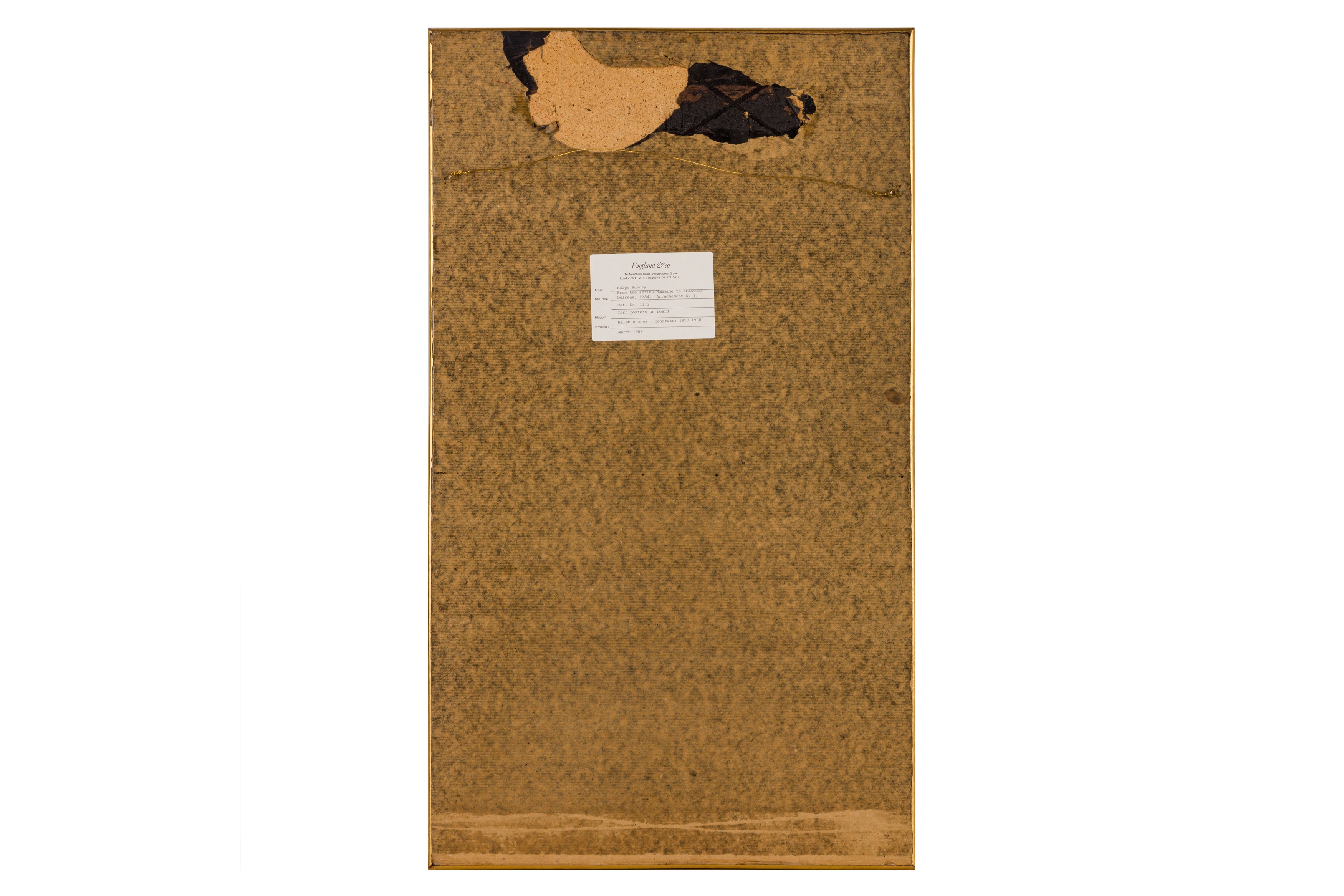
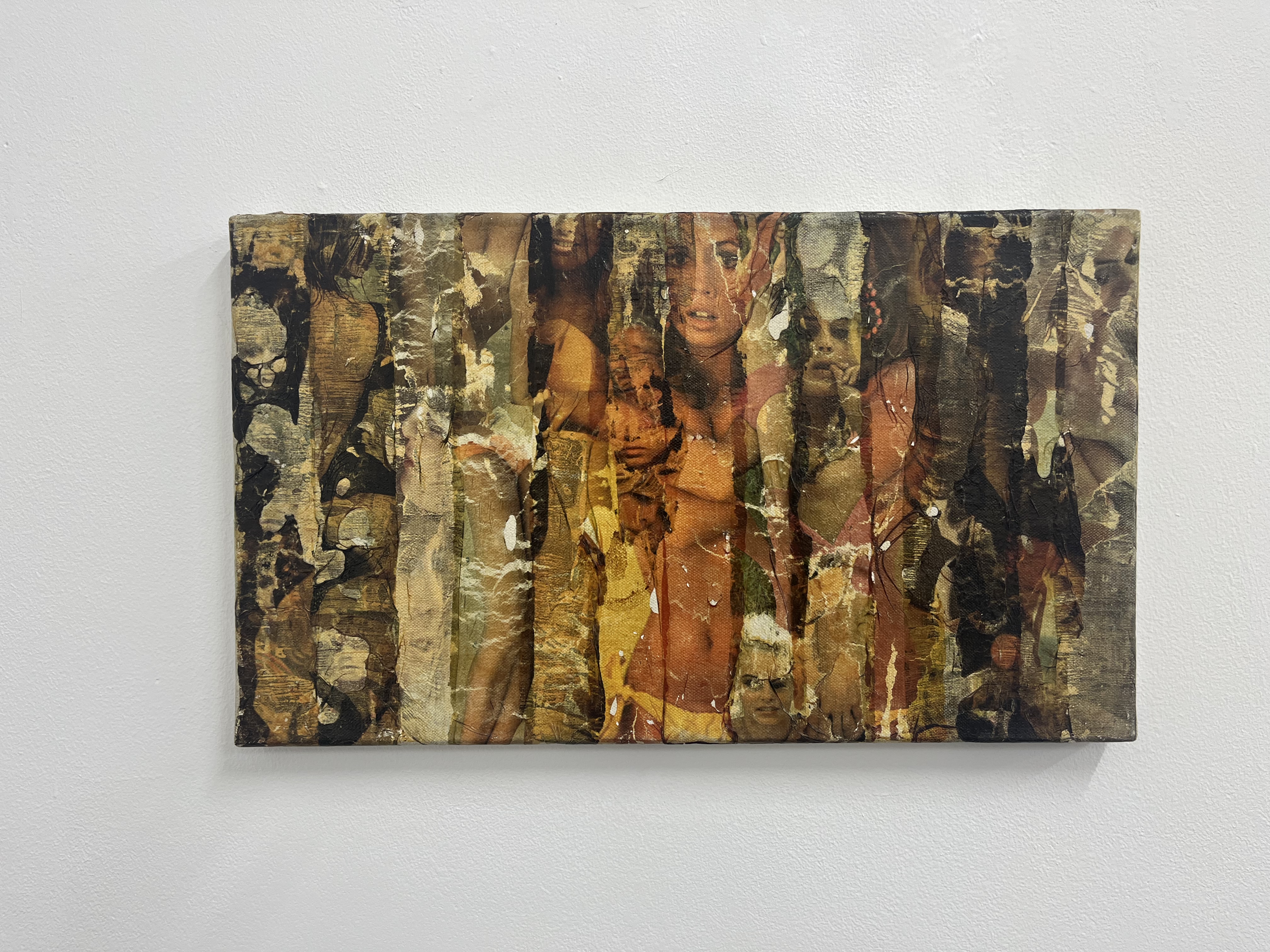
RUMNEY, Ralph. Untitled. 72 x 41 cm; Collage on board. Signed with initials and dated ’23.i.84/R.R’ (lower center).
Provenance: The artist, by whom gifted to the present owners in 1984. Subsequently acquired by us at Chiswick Auctions in 2023 (July 4, 2023 sale, item 64) Exhibited: London, England & Co, Ralph Rumney-Constants: 1950-1988, March 1989, cat.no.11i
Situationist-inspired collage in the psychogeographical tradition, from the series “Hommage to François Dufrêne”. Rumney brings to the forefront numerous elements that were important in his life.

07 Monday Aug 2023
Posted in Uncategorized
Dear readers,
Sharing the announcement below in case some of you are interested. You can reach out to Ken (knabb@bopsecrets.org) directly to get added.
——————————————————————————-
Dear Friends and Contacts,
As an experiment, I am going to facilitate a yearlong exploration of Guy Debord and the Situationist International. I’ve done this same sort of thing previously with several small in-person groups in the Bay Area, but this will be the first time I’ve tried it on Zoom with a larger number of people taking part from elsewhere in the world.
We will be reading and discussing my Situationist International Anthology (Revised and Expanded Edition, 2006) and my annotated translation of Guy Debord’s The Society of the Spectacle (2014).
Participation is free and anyone is welcome to attend, regardless of their political viewpoints or of their knowledge or lack of knowledge of the situationists, as long as they are respectful of the other participants.
The group will meet via Zoom every other Sunday, 5:00-7:00 p.m. Pacific Time, beginning on September 10.
(As many of you know, during the last several years I’ve been leading a literary discussion group [“Exploring the Classics”] that also meets every other Sunday via Zoom. That group will continue, and this new group will meet on the alternate Sundays.)
We will begin with the SI Anthology, which presents the different stages of the situationists’ evolution, from their “psychogeographical” experiments and cultural agitations of the 1950s, through their analyses of the Watts riot, the Vietnam war, the Prague Spring, the Chinese “Cultural Revolution,” and other crises and upheavals of the sixties, culminating in their perpetration of the 1966 “Strasbourg scandal” and their role in triggering the astonishing May 1968 revolt in France. Covering about 50 pages per meeting, this will take us 10 meetings.
Then we will move on to The Society of the Spectacle. Because this book is more concise and more difficult than most of the SI articles, we will be taking our time, reading the whole book aloud and discussing the meanings and implications of each paragraph in detail. Our previous reading of the Anthology articles will also help to clarify what Debord is getting at. Reading about 10 pages per meeting, this will take us 11 meetings.
The two books can be ordered from any of the distributors listed at the bottom of this webpage: https://www.bopsecrets.org/cat.htm. You can also read the books online at the same website (see below).
NOTE: This is not intended to be any sort of political action group or forum for political debate. Our aim will simply be to look at what the situationists actually said and did (in contrast to the wide variety of silly rumors and misconceptions about them). What you do with what you learn is up to you.
Let me know if you’re interested.
Cheers,
Ken
15 Saturday Jul 2023
Posted in Uncategorized
THOMAS, Frédéric; SHOCK, Clairette. Cette soif inassouvie d’une vie à changer. Cuesmes (Mons): Editions du Cerisier, 26 May 2023. 144 p.; 15 x 21.5 cm.; ill. Cover with text in white.
This informative book sheds light on one of the most critical (yet often forgotten) episodes in European labor History: the massive, wildcat “grève du siècle” (Strike of the Century), which took place in Belgium during the winter of 1960-1961. In a compelling essay, Frédéric Thomas explains how the upheaveals brought together radical libertarian socialist group Socialisme ou Barbarie, anti-union Pouvoir Ouvrier Belge (P.O.B.), and the Situationist International. In doing so, it set the stage for a more “radically political” Situationist group, as well as for the incendiary revolts of the late 1960s in France and elsewhere.
But Cette soif inassouvie d’une vie à changer (“An unquenched thirst to change life”) is also about the story of a place, l’Estro armonico. Though short-lived, this café brought together all the who’s who of left-wing political dissidents and artists in the early 1960s in Belgium. Launched by Clairette Shock and her husband Robert Dehoux upon their return from the Belgian Congo, it was there that members of the Situationist International (Attila Kotanyi, and later Guy Debord and Raoul Vaneigem), Surrealists (Louis Scutenaire), graphic designers (Jacques Richez), actors (Francis Blanche) and more would rub shoulders. There was also a space where artists could freely display their works.
The last section of the book reproduces key documents from the Pouvoir Ouvrier Belge era: the one and only issue of the group’s periodical Alternative (July 1961), the leaflet A bas l’armée ! Vive le pouvoir des conseils (October 1962) and the brochure Teilhard est con by Robert Dehoux from 1962. It also includes a postface by Raoul Vaneigem, who remembers the Strike of the Century and his friendship of over 50 years with Clairette.
A worthwhile contribution to a lesser known aspect of Situationist (and related) History. For more information see the publisher’s website here
Note: Our review copy was graciously provided by the Publisher.

06 Tuesday Jun 2023
Posted in Uncategorized
Debord, Guy and Jorn, Asger. Mémoires: Structures Portantes d’Asger Jorn. Copenhagen: Internationale Situationniste, 1959 [but really Dec. 1959]. n.p. [64 p.]; ill.; 28 x 21 cm. Sandpaper wrappers (“papier verré 3M”).
Mémoires is the product of a collaboration between Guy Debord and Asger Jorn in the early years of the Situationist International. Printed in vivid colors – the work of Danish masterprinters Permild & Rosengreen – it is viewed by some as the most important art book of the twentieth century. Debord and Jorn had “worked” together two years earlier – after stealing a large stock of magazines and newspapers, they spent a drunken afternoon collaging elements together. After transferring these collages to lithographic plates, Jorn poured ink over them and the resulting plates were etched and printed. Thus, Fin de Copenhague was born (1957), printed in 200 copies. Mémoires constitutes a continuation of this unique collaboration.
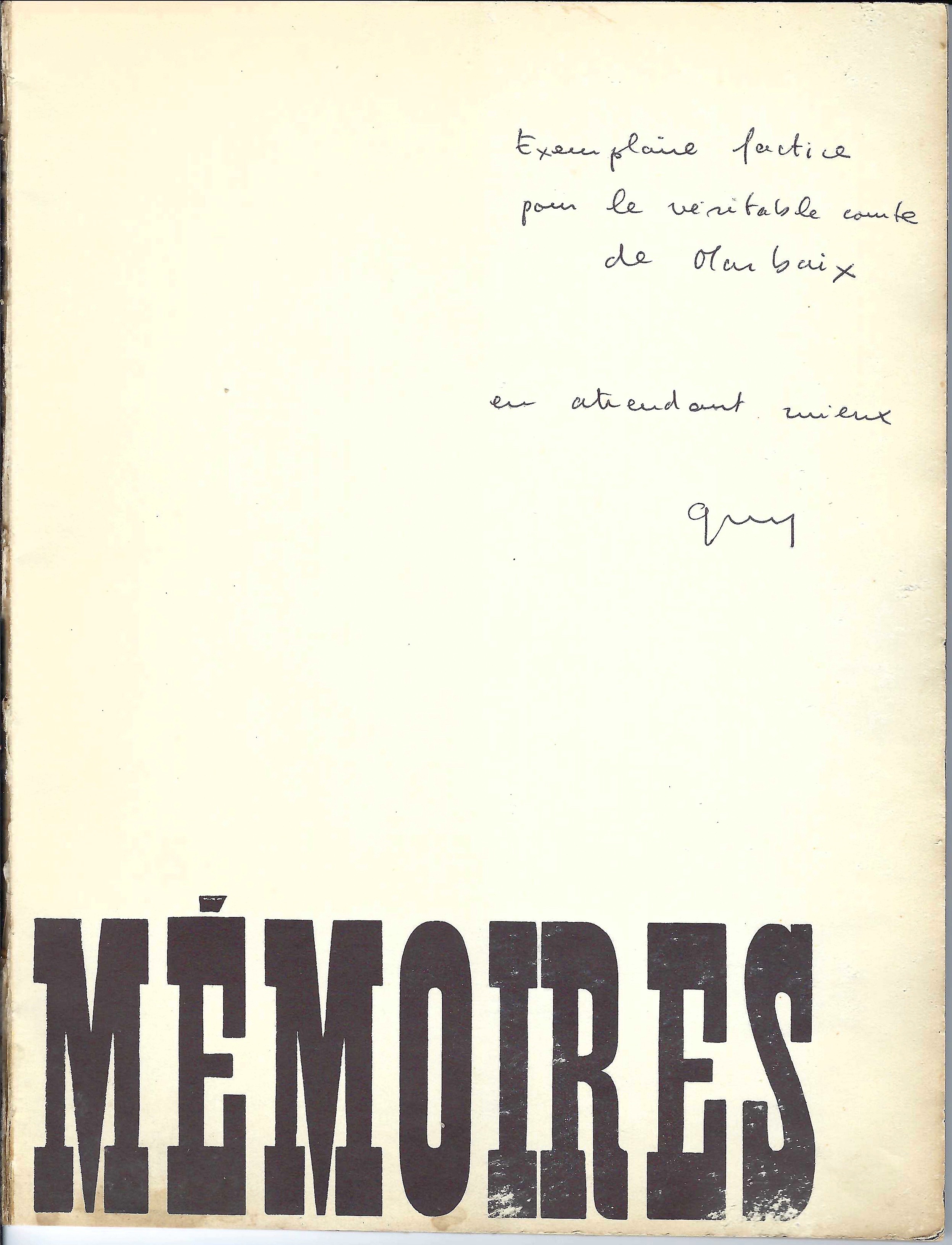
This copy of Mémoires comes with an outstanding dedication from Guy Debord to Ghislain de Marbaix: “”Exemplaire factice pour le véritable comte de Marbaix en attendant mieux. Guy”. But why “exemplaire factice” (in English: imperfect, worn. or dummy copy)? An obvious interpretation is that the copy is of poor quality, with water damage affecting the sandpaper cover and the lower edge of the first and last pages. But there’s more than meets this eye here: as we’ll explain below, this copy is unique in two respects and likely predates the “final” version that was printed in 500 copies.
First, Mémoires is perhaps best known for its unique cover: a single sheet of Viks no.2 grade sandpaper. In this copy, the sandpaper is a papier verré 3M (“abrasif 3M, Made in France by Minesota de France, 9036 6-36”), Because this is an early version of the book, it is likely Debord and Jorn were still experimenting with different types of sandpaper covers. The 3M sandpaper (made in France) is heavier and more abrasive, but also more damage-prone than the Viks no.2 (made in Denmark). One may speculate that the artists ultimately settled on the latter to balance coarseness with durability. Or perhaps, certain copies were taken from Copenhagen to Paris, where a separate sandpaper wrapper was added.
Second, in this copy, the sandpaper is glued to the card wrappers, which has caused the inner cover to detach from those wrappers. Debord & Jorn likely realized their mistake, as in the latter version of book, the sandpaper cover is wrapped around the book’s inner cover but otherwise unattached to the white card wrappers.
In sharing this “exemplaire factice” with de Marbaix, Debord does not shortchange his old friend – quite the opposite, in fact. What may seem like a ragged copy at first glance is instead a unique artifact that hints to the iterative artistic process Debord & Jorn went through in creating this revolutionary artist book.
Addendum: A reader adds the following “H. Navarre in the sand paper is a reference to the French king Henry IV of France, but in second half 1950s, H. Navarre was perhaps more related to a French general that led France to defeat in Indochine, resulting in the recognition of the independent socialist Vietnam.” [VERY INTERESTING AND AGREE THAT DEBORD’S CAUSTIC HUMOUR IS SHOWING HERE]
Addendum 2: Another reader makes the following remarks: “I’m not sure that this copy “predates” the “final” version. Isn’t the book behind the sandpaper covers the same as the normal one? [YES, IT IS!]. If they’re identical, I think that Permild & Rosengreen printed the book first and then Debord (and Jorn and Permild & Rosengreen) tried out a few samples of sandpapers. And the glued version wasn’t working! It’s less possible that they printed a small number of copies and used this specific sandpaper. [I AGREE!] Regarding the number (500) of printed copies. In the case of Mémoires, there’s different numbers circulating. I haven’t found source material stating the precise number of copies printed [NEITHER HAVE I, BUT THIS IS THE MOST COMMONLY QUOTED NUMBER]
About Ghislain de Marbaix. An early member of the Lettrist movement, De Marbaix was one of the participants in the “Scandal of Notre Dame”. On Easter Sunday, 1950, De Marbaix was among a small group of young people that burst into the the famed Notre Dame Cathedral in Paris during High Mass. One of them, Michel Mourre, seized the microphone and proclaimed a blasphemous homily proclaiming “the death of Christ-God, so that Man may live at last” in front of cameras. Ten years later, De Marbaix was a pimp and bar owner: he co-owned the bar “L’Homme de Main”, a favorite of the Situationist crew, from 1960 to 1962. In 1968, along with Randal Lemoine, he penned Monsieur Gontran, giving a glimpse into a life of ill repute . De Marbaix also served as an Assistant Director on Debord’s experimental film Sur le passage de quelques personnes à travers une assez courte unité de temps, released in 1959 (see Guy Debord’s letter to Chantal Delattre dated 4 August 1959 in Correspondance Volume 1). All in all, De Marbaix stood was a man who lived on the fringes of society, the kind of radical figures who fascinated Debord.



About Memoires. For more information, see the following resources:
05 Monday Jun 2023
Posted in Uncategorized
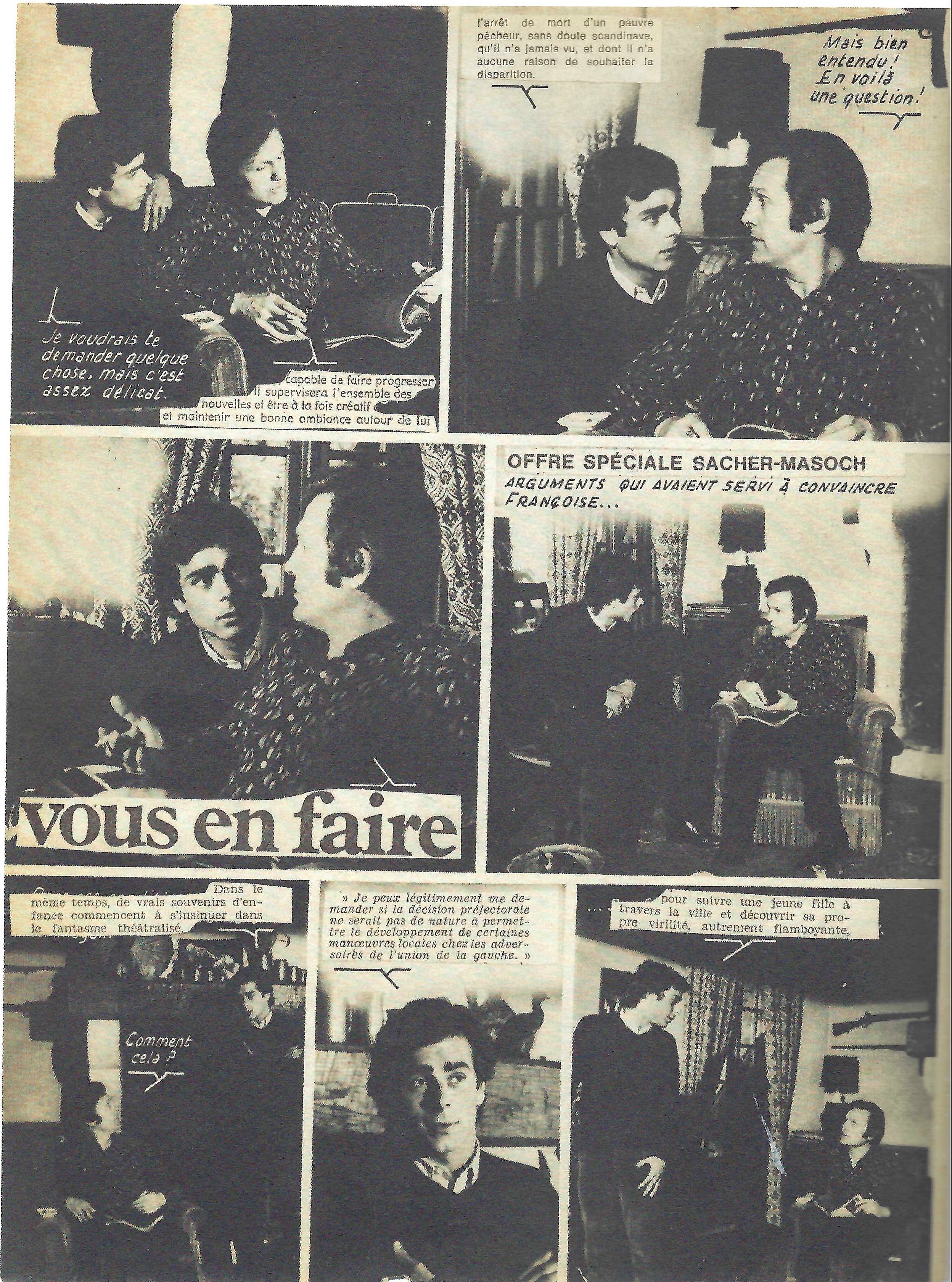
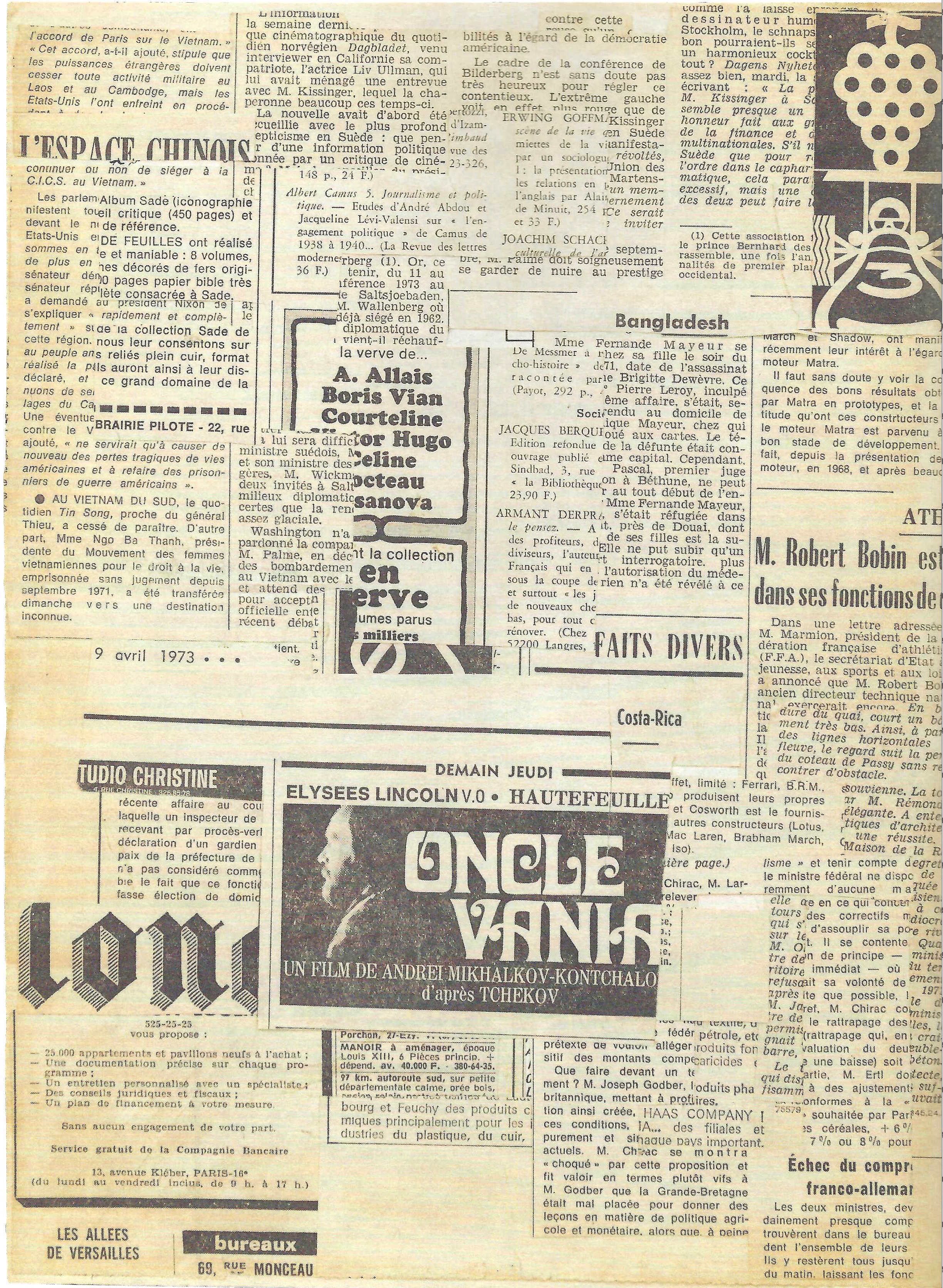
WOLMAN, Gil Joseph. Vivre loin. Paris: Loeve&Co, 2023. n.p. [56 p.]; ill.; 22.5 x 29.5 cm.; black wrappers with text in grey, housed inside 23 x 30 cm. card covers.
Facsimile of a previously unpublished photonovel, created by Wolman in 1973. Leveraging the techniques of collage and detournement, the 56-page work is reminiscent of Situationist detourned comics, as well as Ralph Rumney’s Leaning Tower of Venice.
The political dimension is immediately obvious: on page 1, one can read, “les trois usines d’assemblage de Renault sont fermées” (“Renault’s three assembly plants have been shut down”). This is a reference to the massive work stoppage at the French automaker on April 18, 1973, just as Wolman was putting together this photonovel. Two pages later, one comic bubble reads “LE FREINAGE DES HAUSSES DES PRIX n’est-il pas payé d’un prix trop élevé ?” (“Isn’t it the price of slowing down price inflation too high to bear?”) , a headline from the April 19, 1973 issue of the French daily Le Monde. While we very much hope some enterprising scholar will carry a more thorough analysis of the detournement at play here, the influence of the Situationist aesthetic and discourse are manifest.
We locate no copies on OCLC. Individual copies can be purchased from Galerie Loeve&Co in Paris.



02 Friday Jun 2023
Posted in Uncategorized
WOLMAN, Gil J. Plan of Lisbon. Mixed media on paper. 47 x 27 cm. Framed.
Our latest addition to the archive is this unique work by Gil J. Wolman.
Blend together a plan of Lisbon (1974) and the third issue of Internationale Lettriste (1953), Wolman draws a parallel between the Spanish Civil war (the article “Il faut recommencer la Guerre en Espagne” features prominently in Internationale Lettriste 3) and Portugal’s Carnation Revolution, which ended a half-century of authoritarian rule in the country. The choice of map is a clear allusion to psychogeography and derive, two concepts who find their roots in the Internationale Lettriste.
At the Wolman/Debord exhibition, this work is juxtaposed with two other versions of Internationale Lettriste 3 – the original mock-up and the published version. More details can be found at Studio International here


31 Wednesday May 2023
Posted in Uncategorized
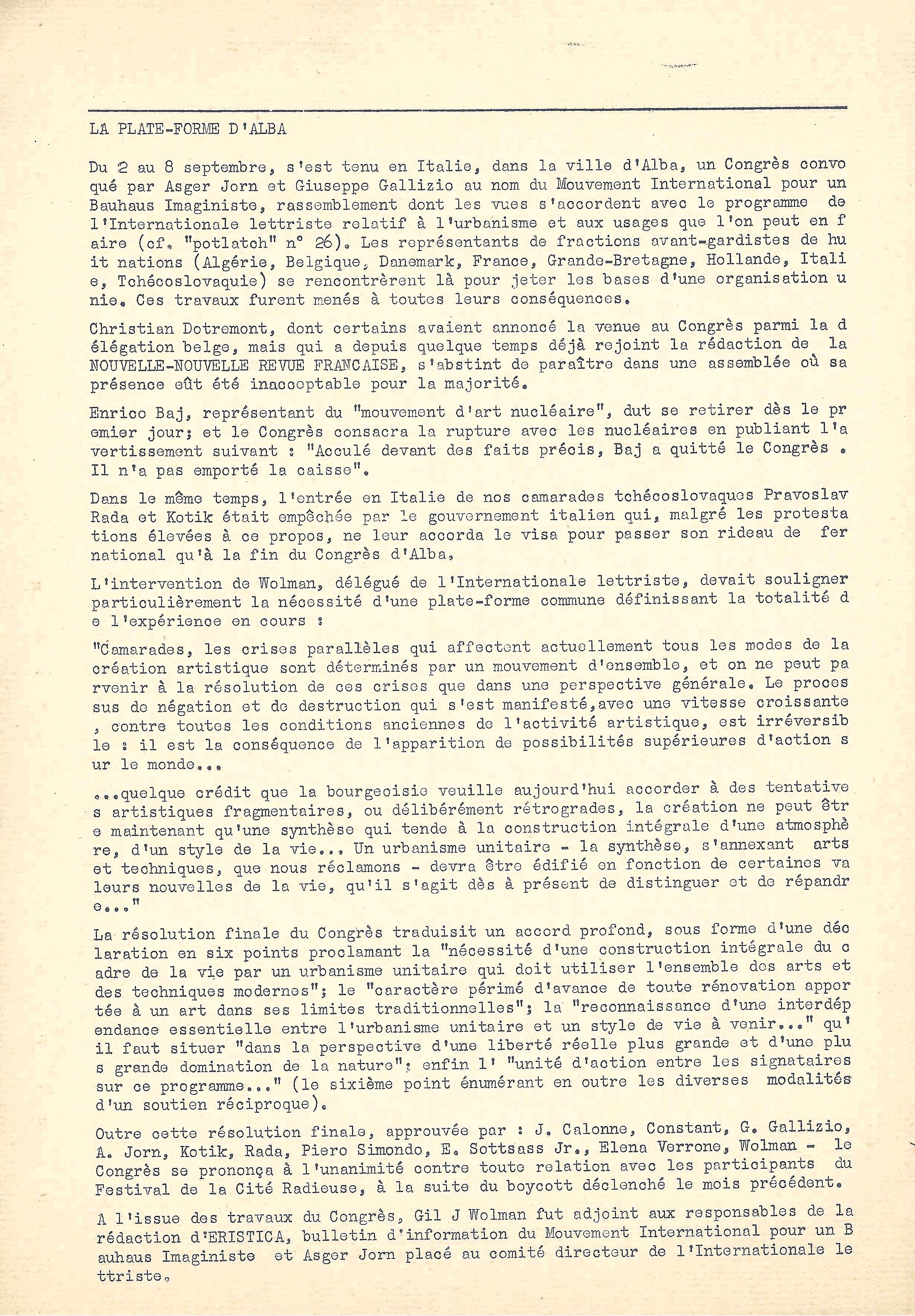
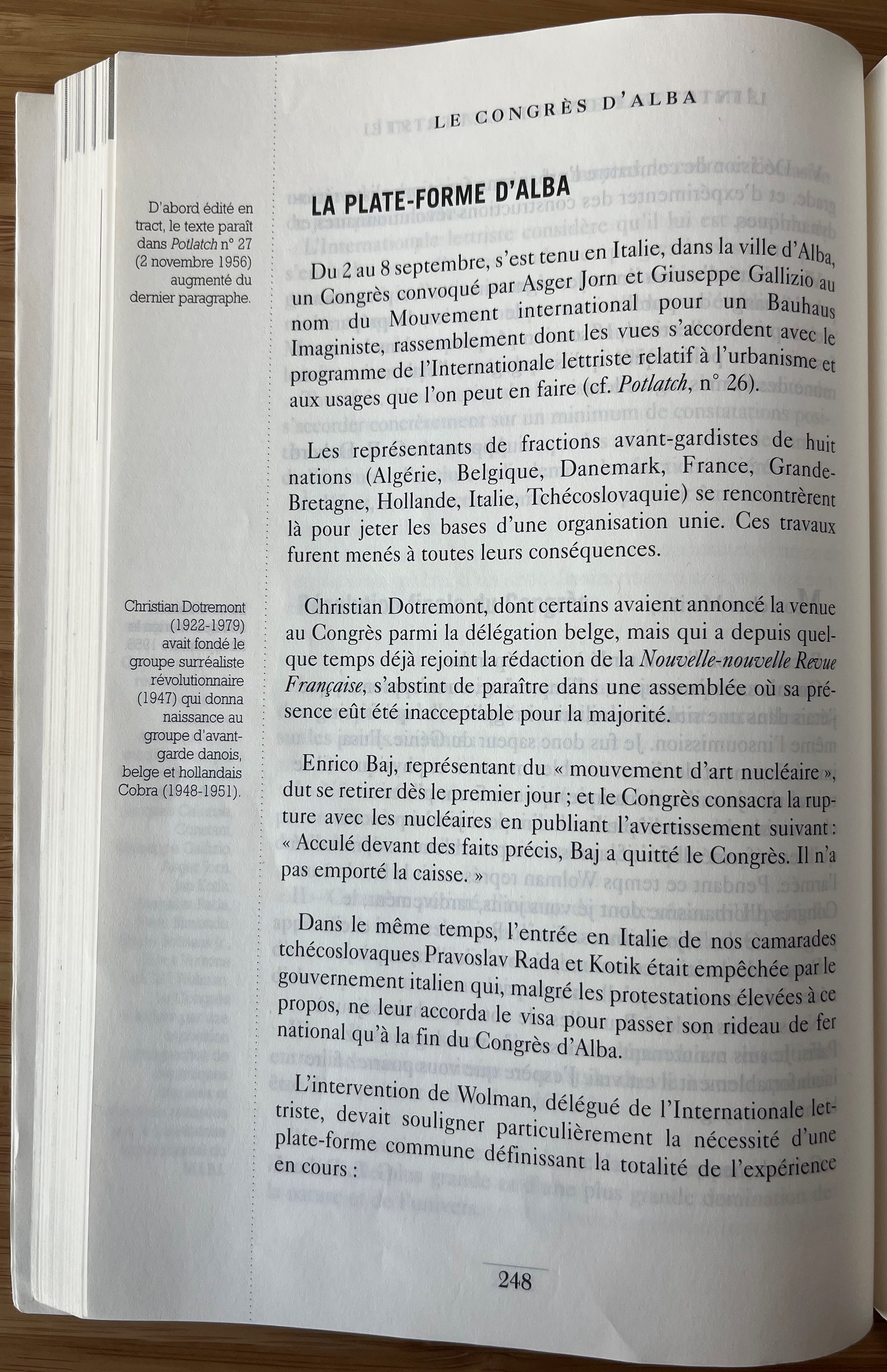
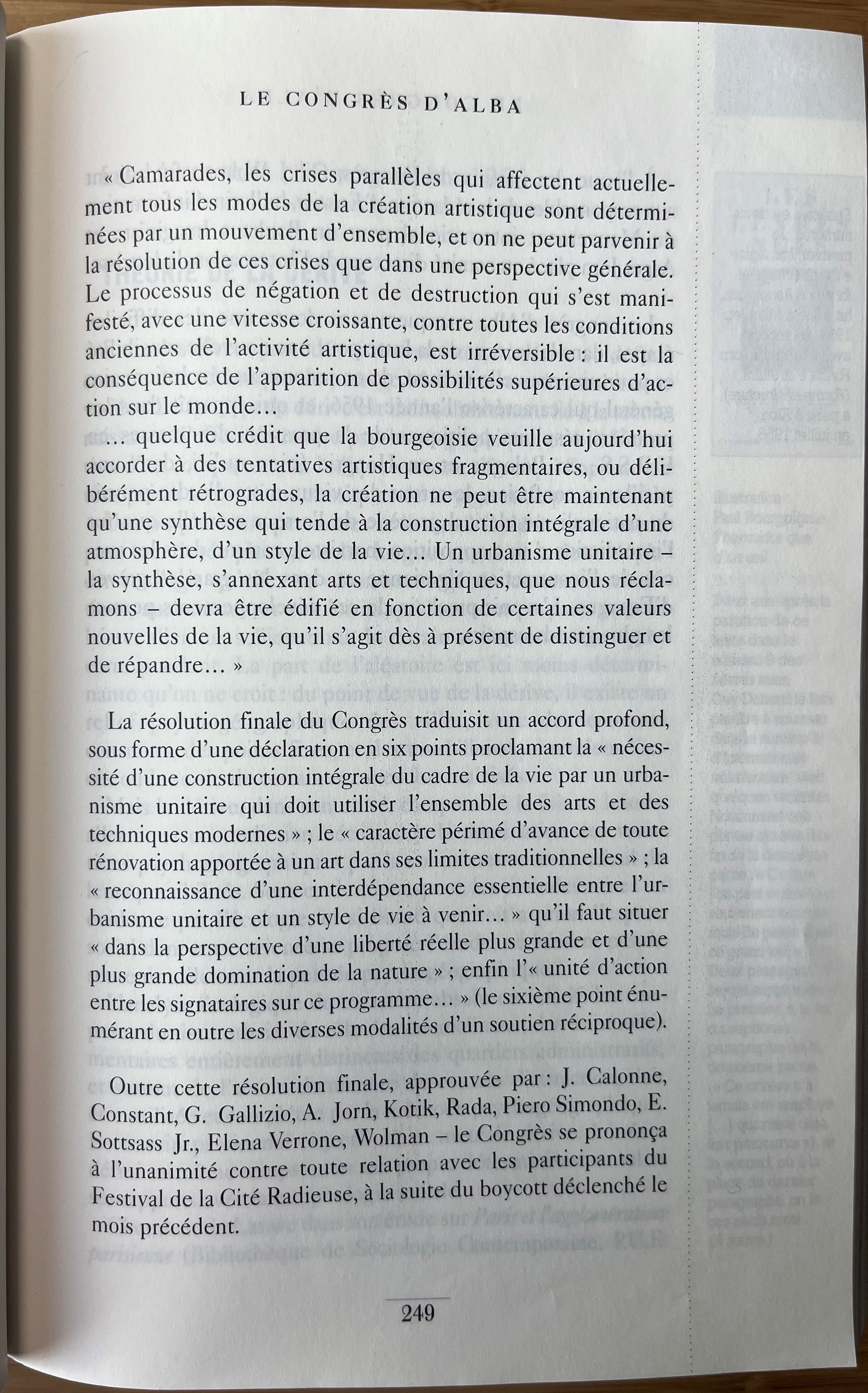
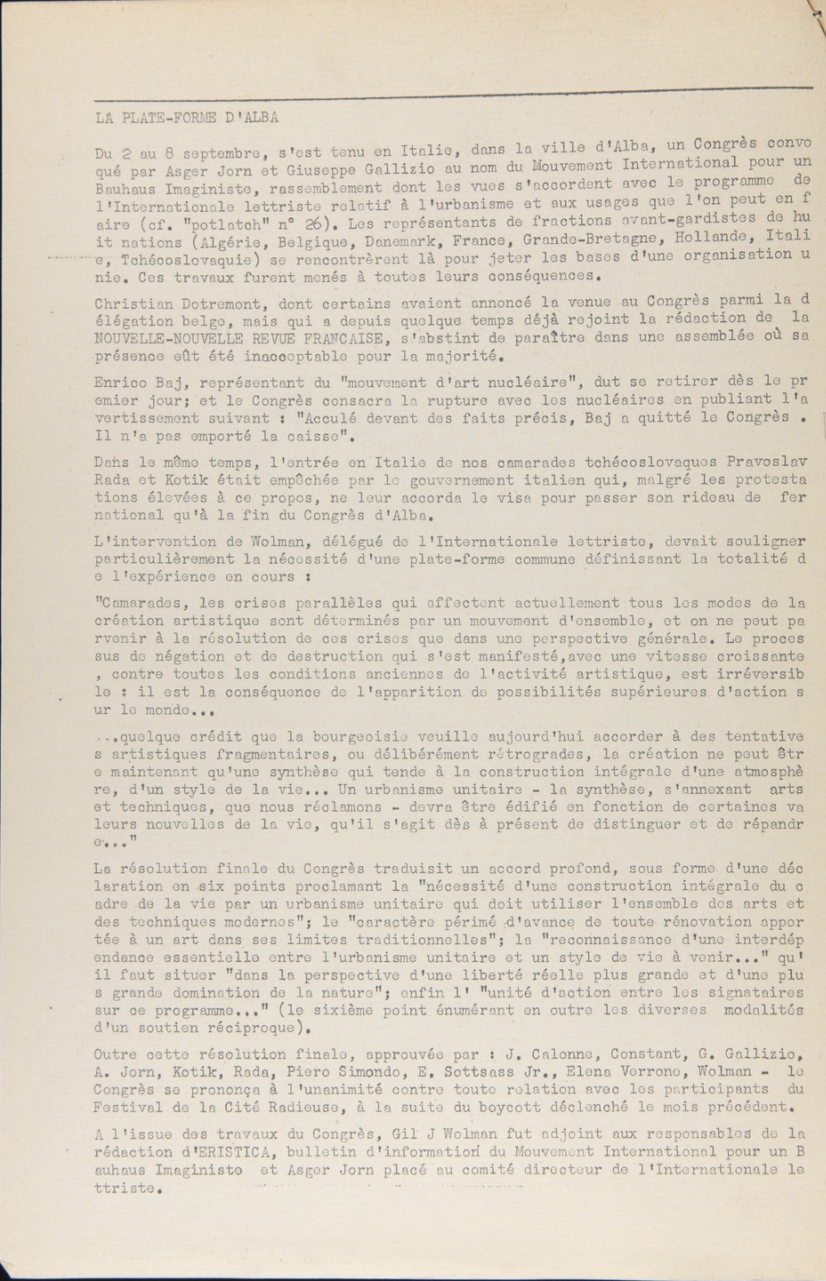
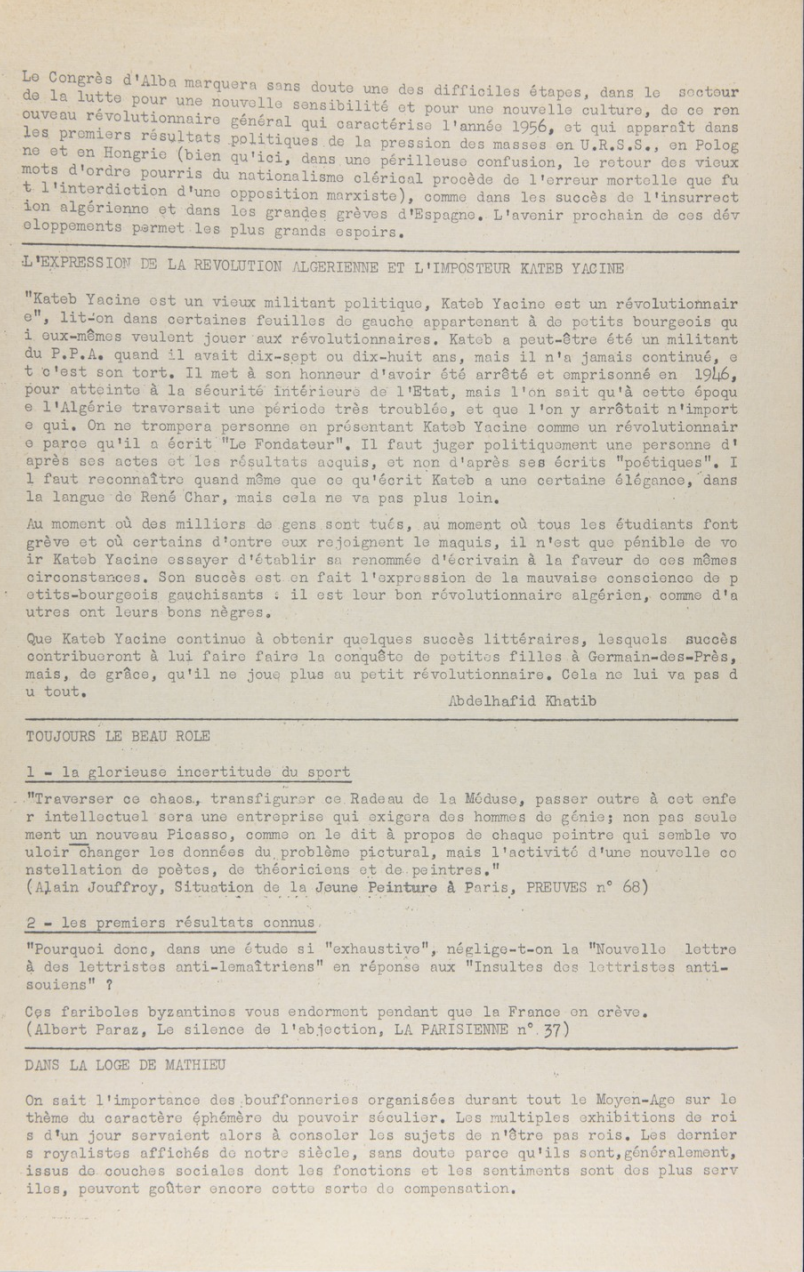
INTERNATIONALE LETTRISTE. La plate-forme d’Alba. n.p. [Paris]: n.p. [Internationale Lettriste], n.d. [1956]. Single-sided leaflet; 21 x 31 cm; black ink on cream stock.
Important leaflet regarding the gathering of Free Artists at Alba, which would ultimately lead to the Cosio di Arroscia conference and the foundation of the Situationist International in 1957. The concept of unitary urbanism plays a prominent role in the announcement (“Whatever prestige the bourgeoisie may today be willing to grant to fragmentary or deliberately retrograde artistic tentatives, creation can now be nothing less than a synthesis aiming at the construction of entire atmospheres and styles of life. … A unitary urbanism—the synthesis we call for, incorporating arts and technologies—must be created in accordance with new values of life, values which we now need to distinguish and disseminate.”) The text was later published (in a slightly revised version) in Potlatch 27 (November 1956). Translated into English here: http://www.bopsecrets.org/SI/alba.htm
We locate a single OCLC copy at Yale.

30 Tuesday May 2023
Posted in Uncategorized
DEBORD, Guy. La Société du Spectacle. n.p. [Paris]: n.p., n.d. [1974]. 1 p.; 33.5 x 43.5 cm.; White ink on black stock.
Poster for the cinematic adaptation of Debord’s seminal theoretical treatise, which was published in 1967. The film opened on May 1, 1974 at the Studio Gît-le-Cœur, located at 12 rue Gît-le-Cœur in Paris (for the story of this important art house theater, see https://salles-cinema.com/paris/studio-git-le-coeur), in an exclusive showing.
La Société du Spectacle was screened daily, 6 times a day, for over 5 weeks, was ultimately pulled due to lackluster ticket sales. Debord was seemingly unhappy about the situation. In a letter to Jacques Le Glou, dated June 25, 1974, he writes: “To interrupt the exclusive showing [in Paris], the old whores of the Git-le-Coeur have taken into account a very bizarre fall [off] of ticket-sales in the fifth week (real or falsified?), which placed them below the minimum customarily anticipated by contract (and imprudently accepted by Lebo[vici]), which had accounted for each period from Wednesday to Sunday (1,800 tickets) but without reporting the “excess” of the previous ticket sales. In any case, it was no doubt better to finish with such a hostile environment, which had, on the first day, produced two threats to withdraw the film: on the part of the house [the Git-le-Coeur studio] and on the part of the production [Simar Films]! I wonder if the absence of the title for two weeks from Le Monde had not been provoked by the house itself (perhaps you can see if was also absent, during the same period — starting 22 May — , from France-Soir and other newspapers? If so, the house signaled the coup).” (See Correspondance, Vol. 5: Janvier-Decembre 1978; translation into English available here: https://www.notbored.org/debord-25June1974.html
A few years later, in February 1976, the film would be screened again at Olympic Cinema in Paris (https://situationnisteblog.wordpress.com/2020/07/05/a-partir-du-mercredi-25-fevrier-1976-a-lolympic-deux-films-de-guy-debord-1976/). That screening was disrupted when a commando unit seized the film reel.
We do not locate a copy on the trade or on OCLC of this rare poster.

01 Monday May 2023
Posted in Uncategorized
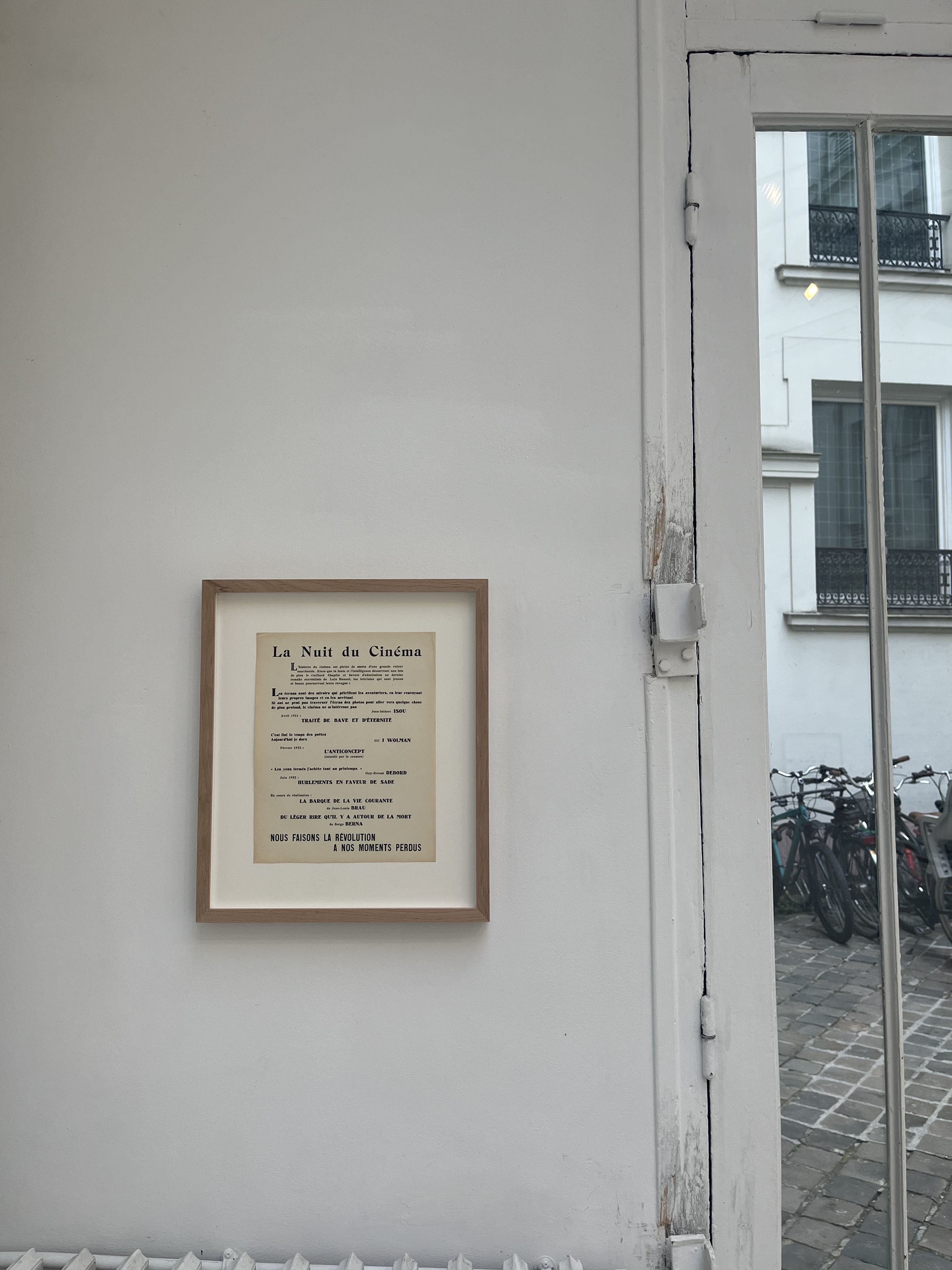
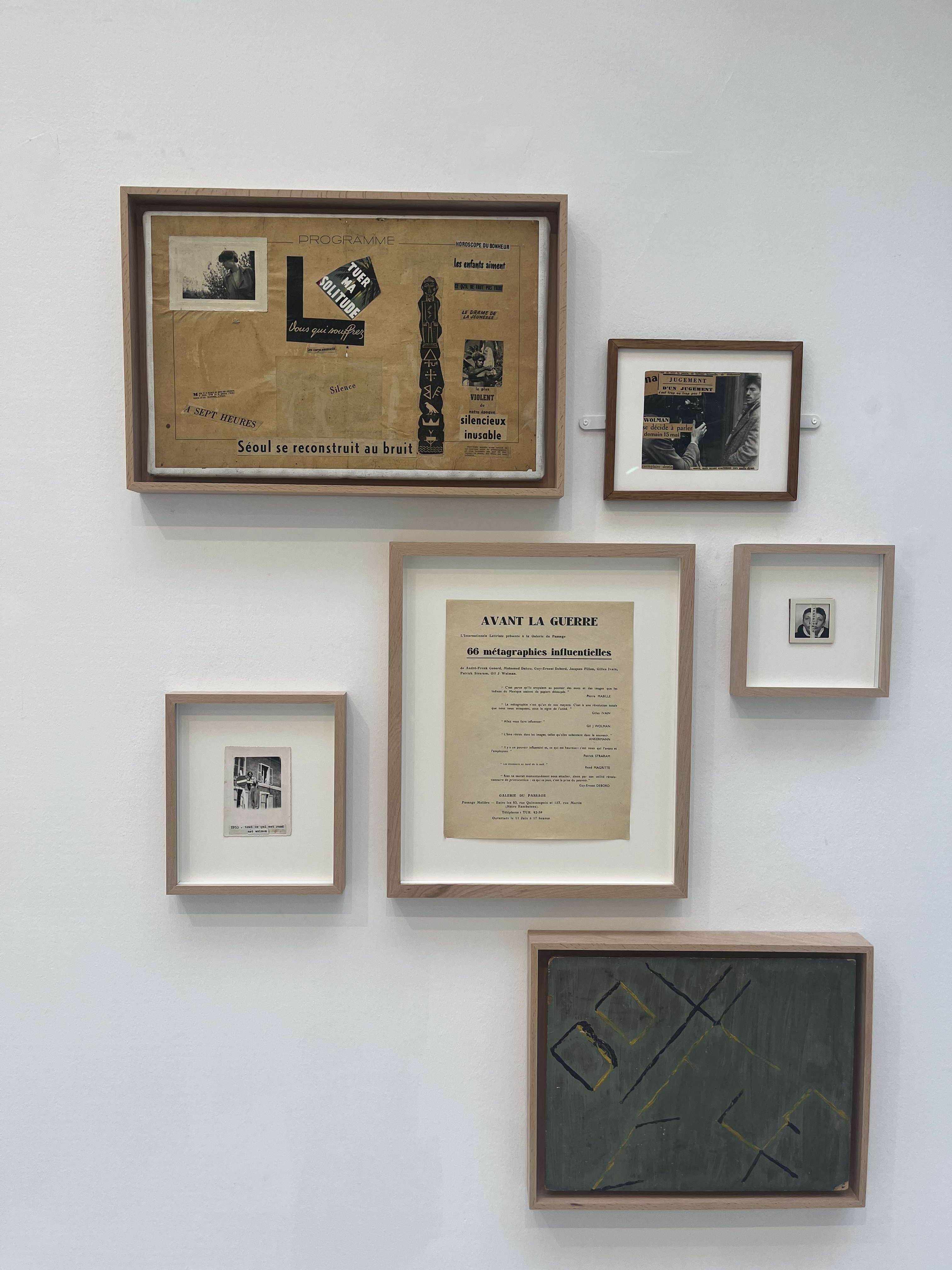
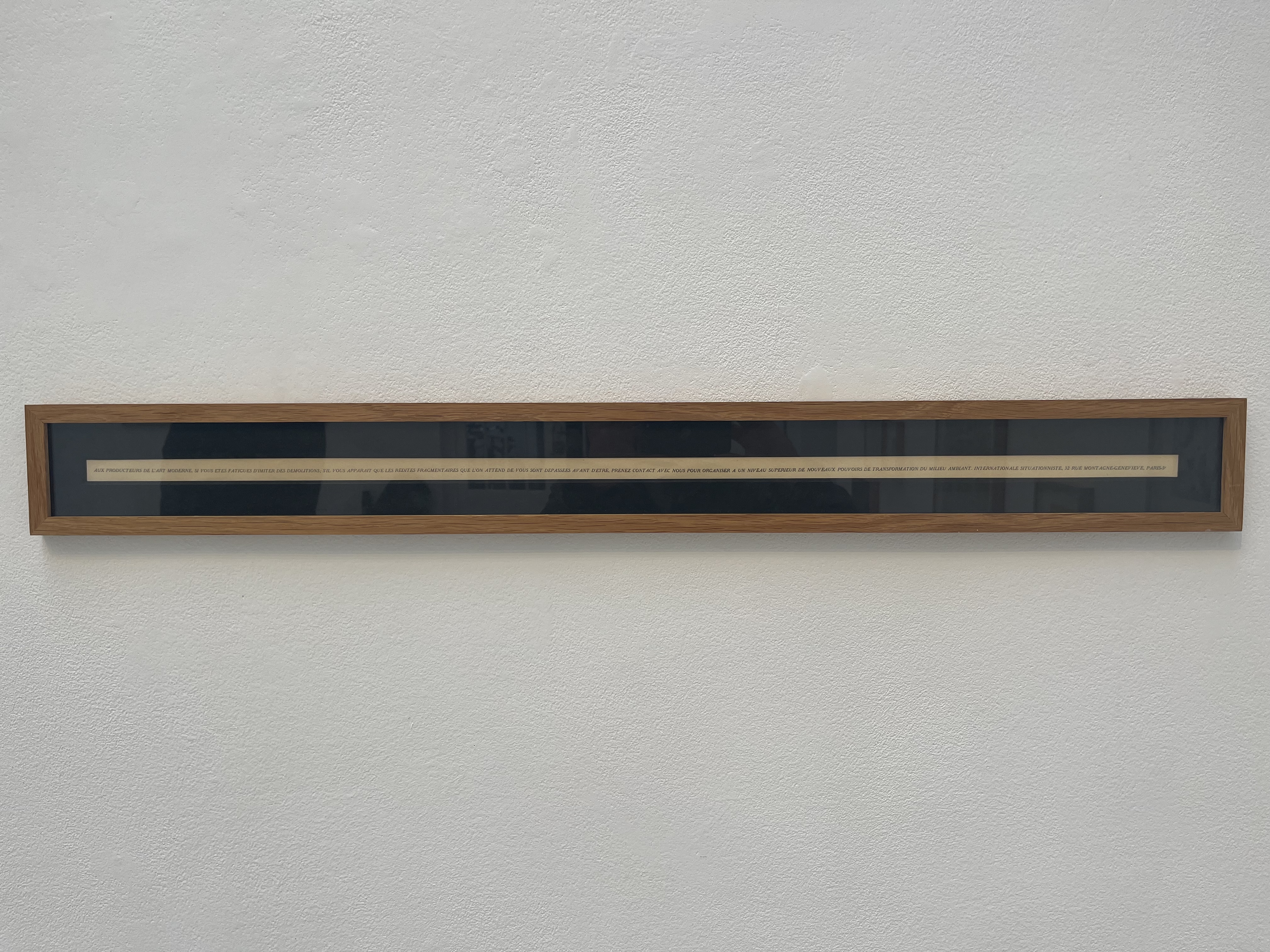
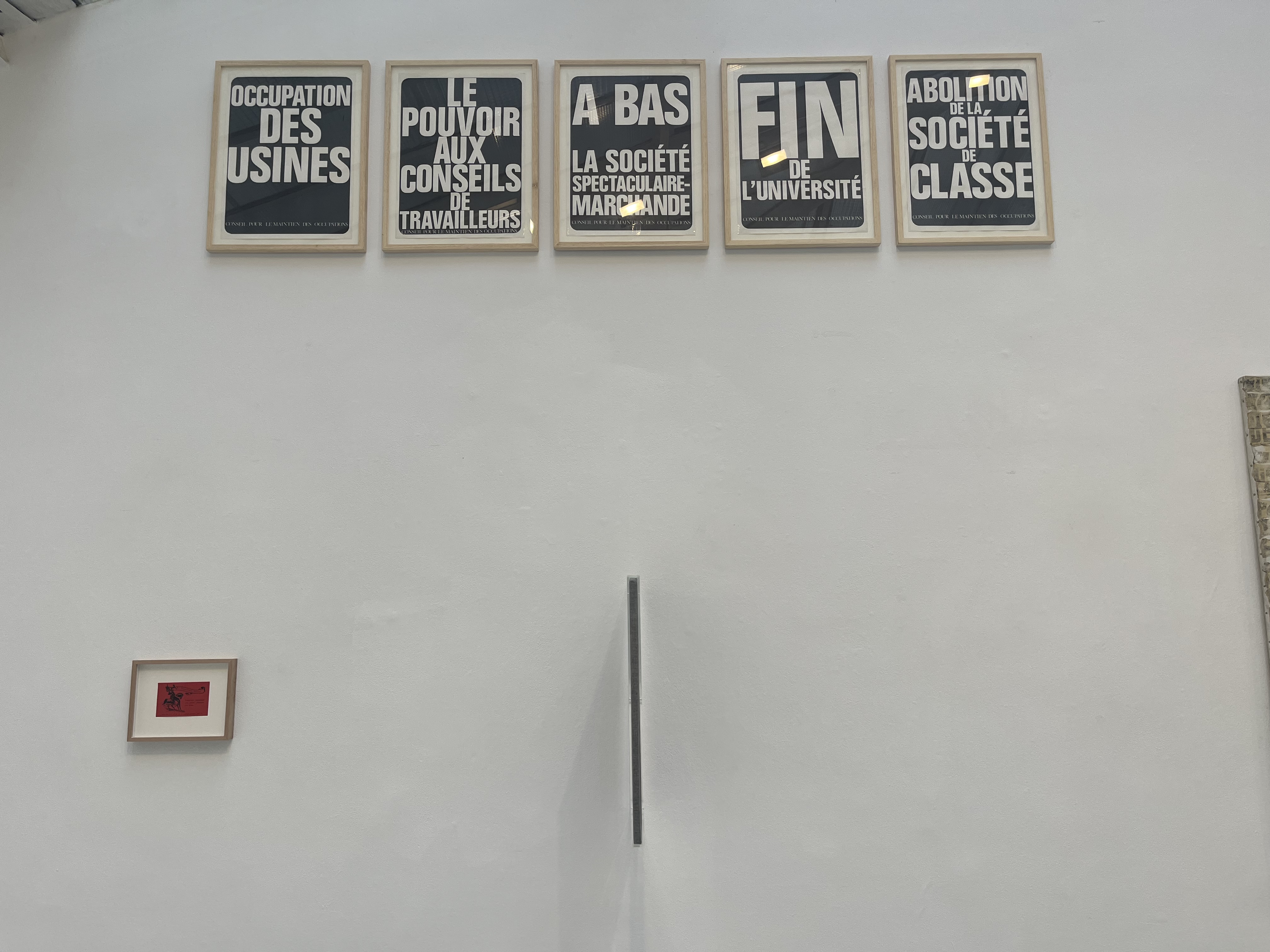
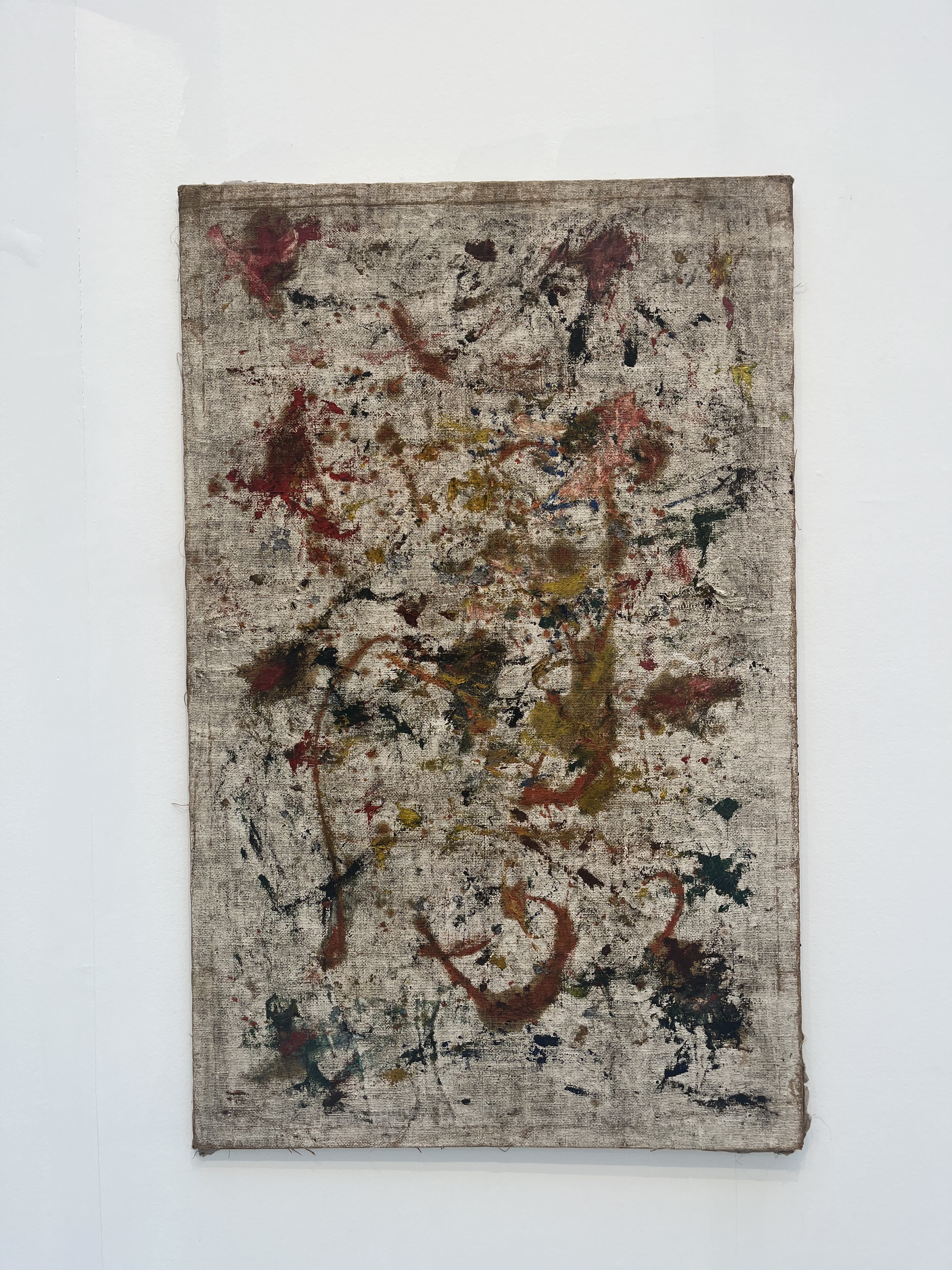
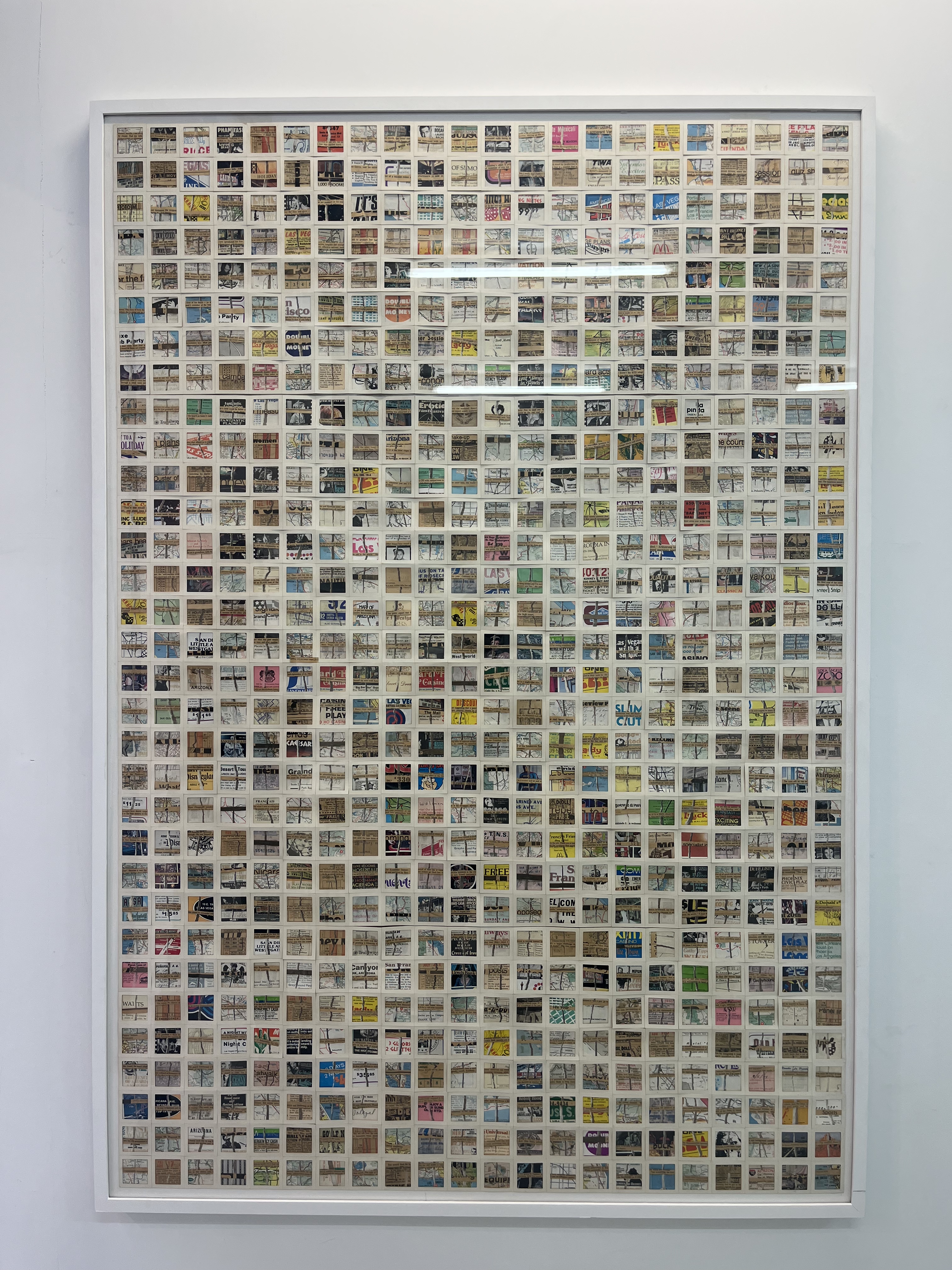
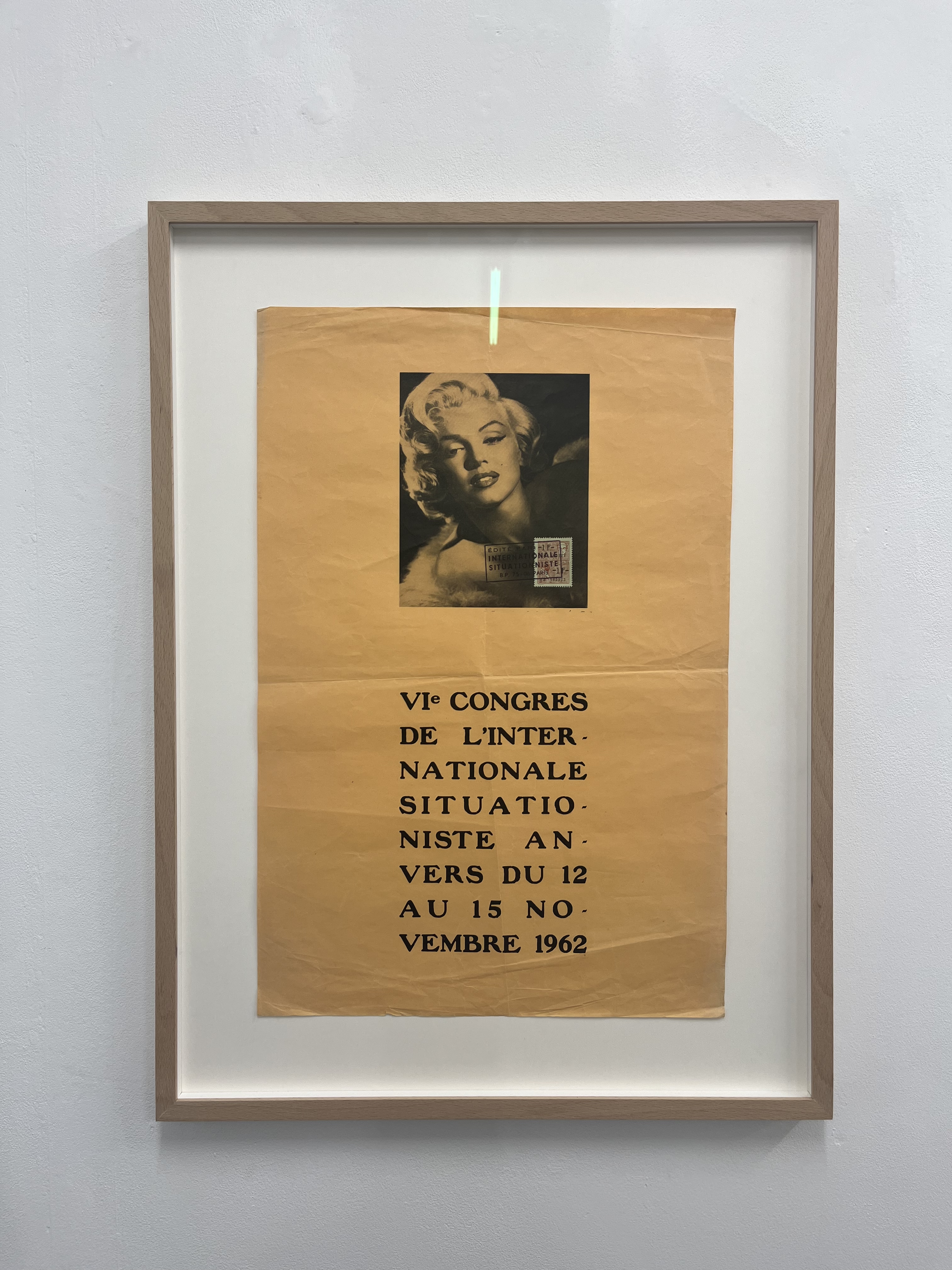
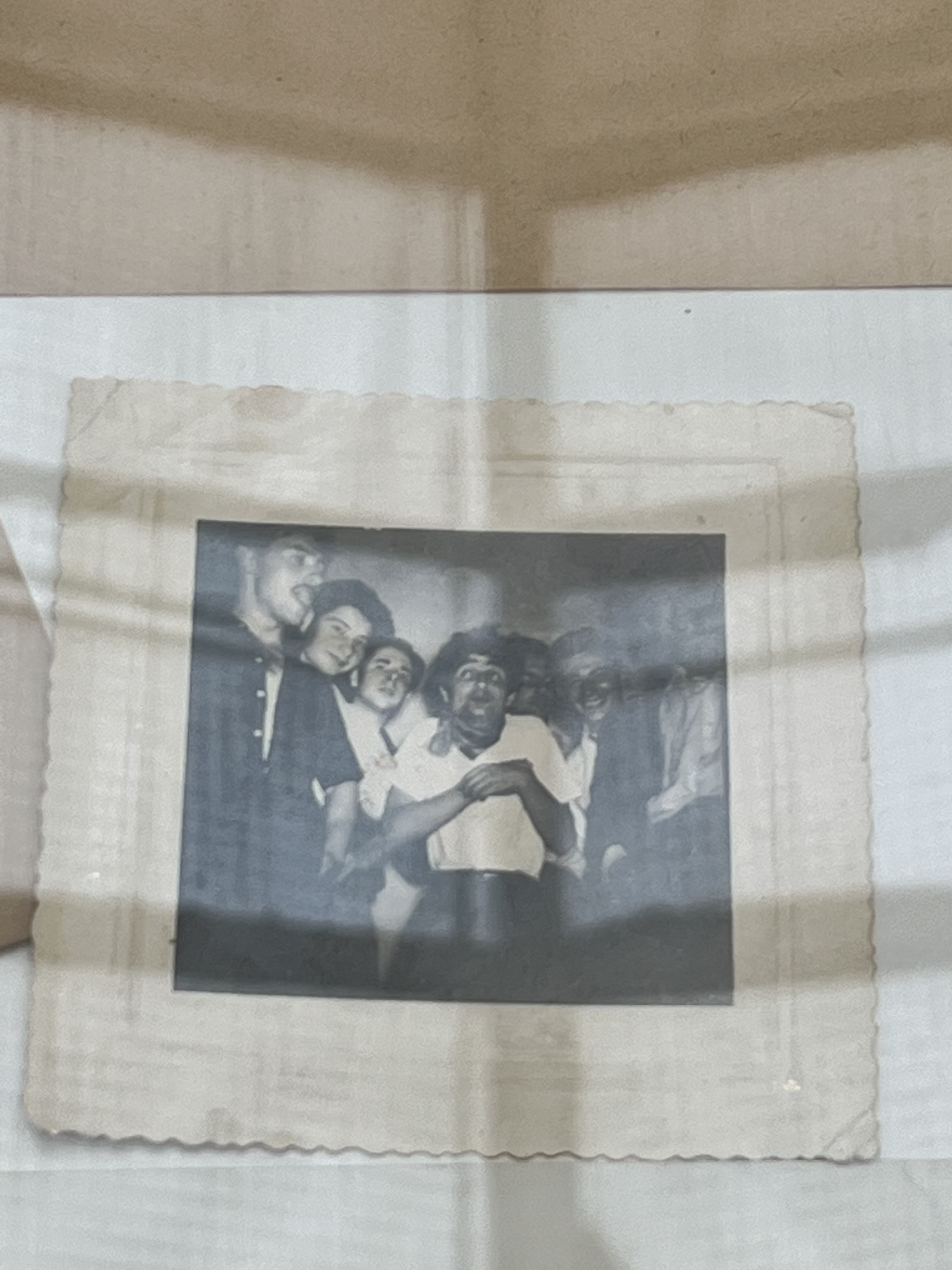
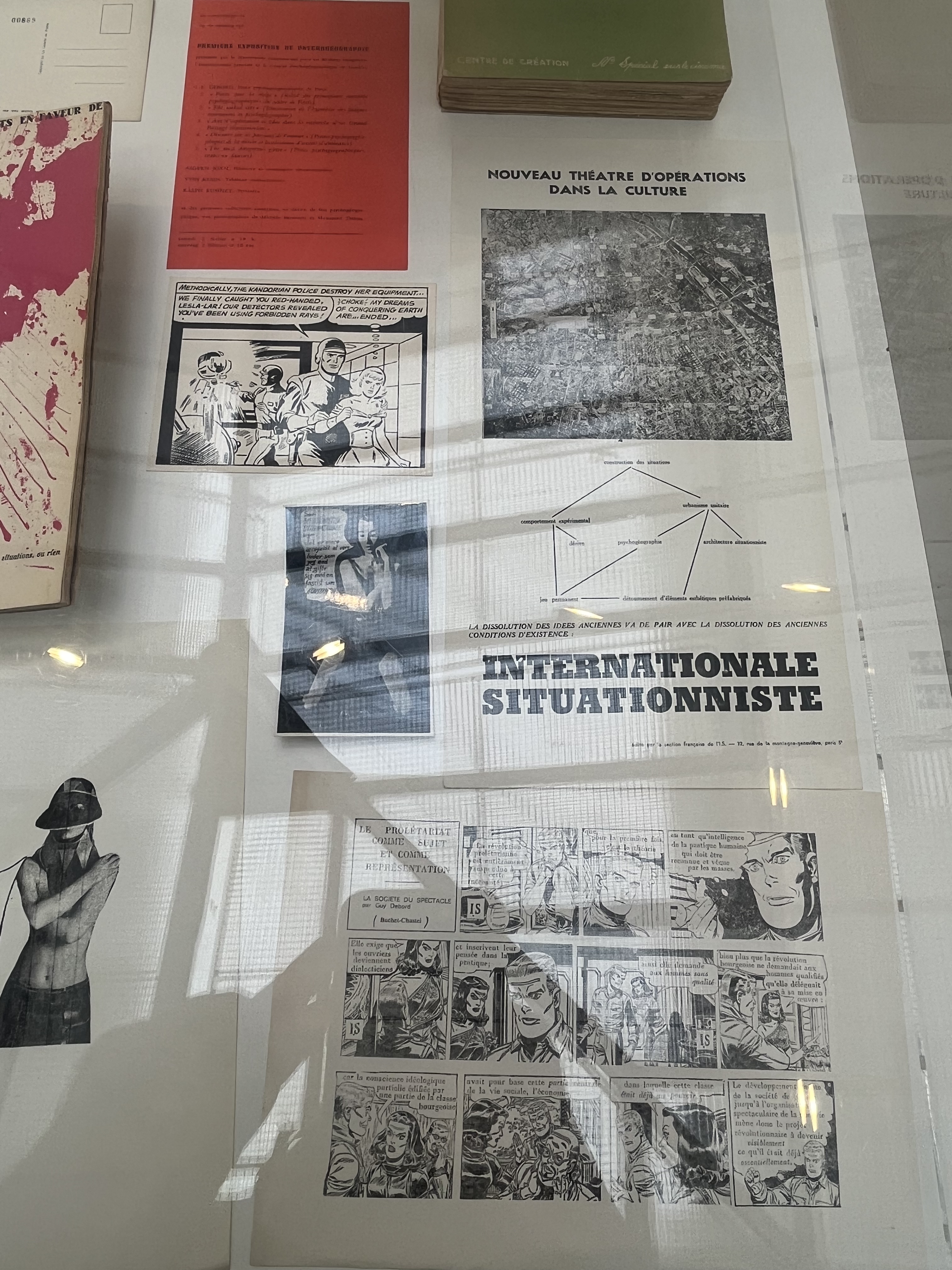
For those fortunate enough to be in Paris, Loeve & Co Gallery is hosting an exhibition that explores the deep, complex relationship between Guy Debord and Gil Wolman. The two men were founding members of the Internationale Lettriste in 1952, co-wrote the seminal Mode d’emploi du detournement, and maintained strong intellectual and personal affinities until their split in 1957. But even after their friendship and formal collaboration ended, Debord and Wolman went on to influence each others’ oeuvre — and this is precisely what this exhibition does a wonderful job showcasing.
More information can be found here: https://www.loeveandco.com/events/le-jeudi-des-beaux-arts












 Situationniste Blog