• About

Situationniste Blog

~ A Situationist Book Collector's Blog

Situationniste Blog

Category Archives: Uncategorized

Asger Jorn – Peintures et Gouaches-Decollages, Calligraphie desorientee [1965]

04 Saturday Jul 2020

Posted by elhajoui in Uncategorized

≈ Leave a comment

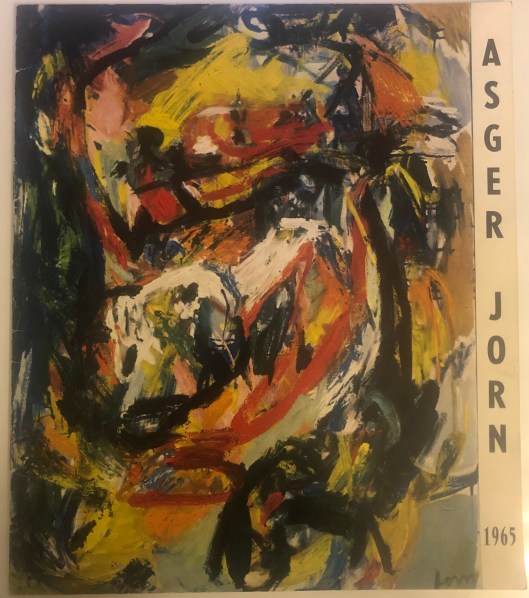
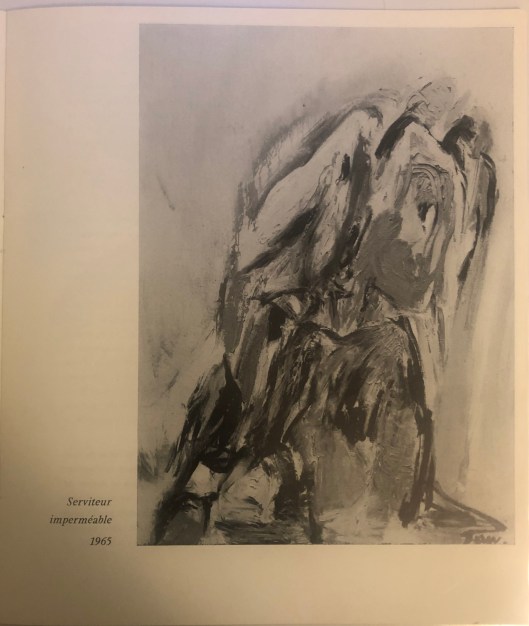
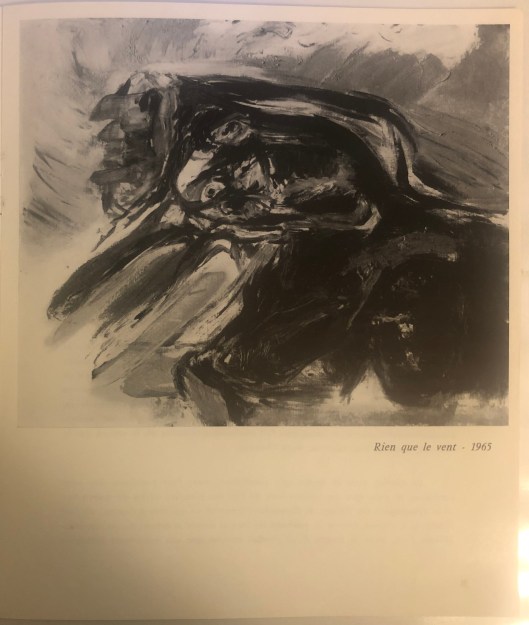
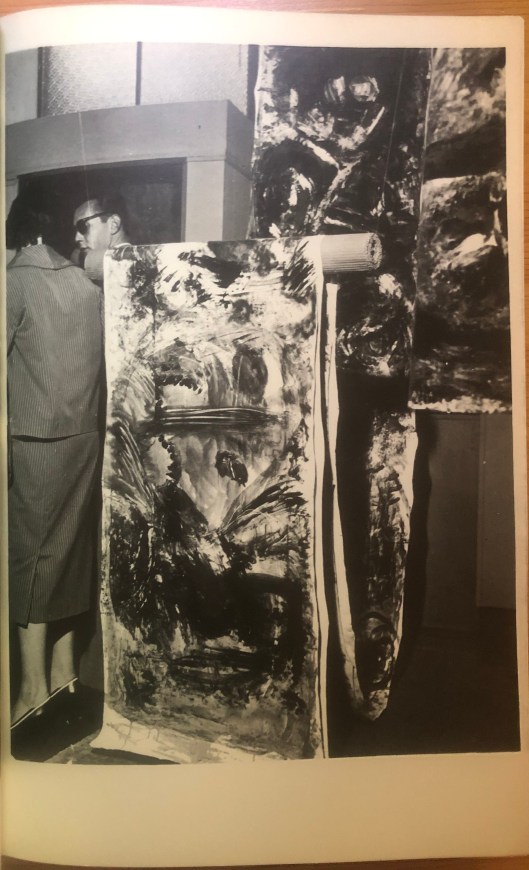
[JORN, Asger]. Asger Jorn – Peintures et “Gouaches-Collages”. “Calligraphie désorientéee. Paris: Galerie Rive Gauche, June 1965. n.p. [16 p.]; ill.; 21 x 18 cm.; ill. Wrappers reproducing one of Jorn’s paintings.

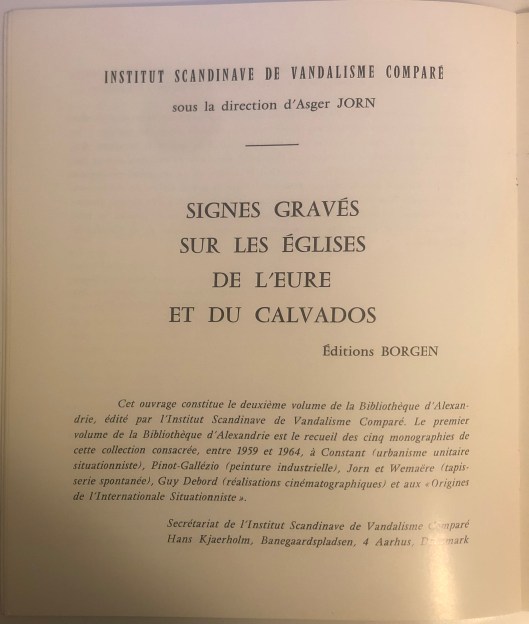
Catalog from the exhibition held at the Galerie Rive Gauche in France in June 1965. Includes excerpts of an article by H.C.L. Jaffe, which was originally published in “De Groene Amsterdammer” on the occasion of Jorn’s exhibition at the Stedelijk Museum, Amsterdam in 1965. 6 B&W illustrations. Presentation of works published by the Institut Scandinave de Vandalisme Compare.

Lacroix 237. We locate 7 copies on OCLC.

2020-07-03 17.49.362020-07-03 17.49.472020-07-03 17.50.022020-07-03 17.50.102020-07-03 17.51.042020-07-03 17.51.132020-07-03 17.51.272020-07-03 17.51.382020-07-03 17.51.492020-07-03 17.51.582020-07-03 17.52.102020-07-03 17.52.192020-07-03 17.52.322020-07-03 17.52.422020-07-03 17.53.04

L’Estetico il Politico da Cobra all’Internazionale Situazionista 1948-1957 [1977]

03 Friday Jul 2020

Posted by elhajoui in Uncategorized

≈ 2 Comments

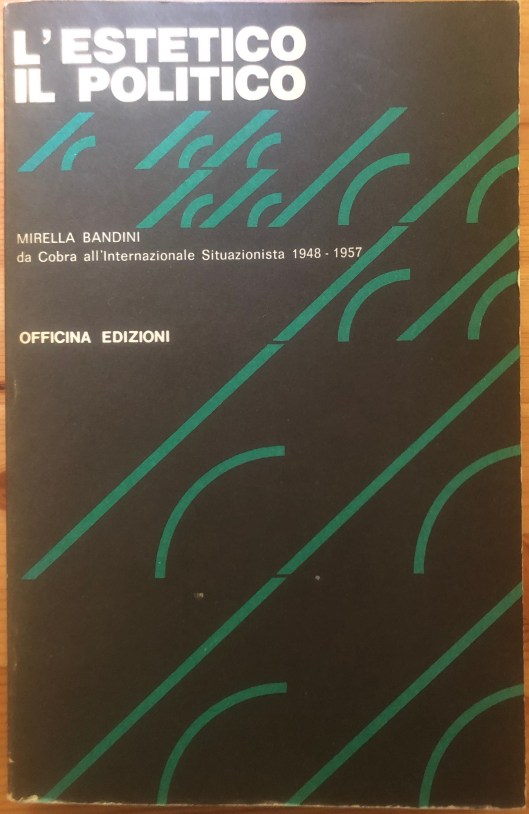
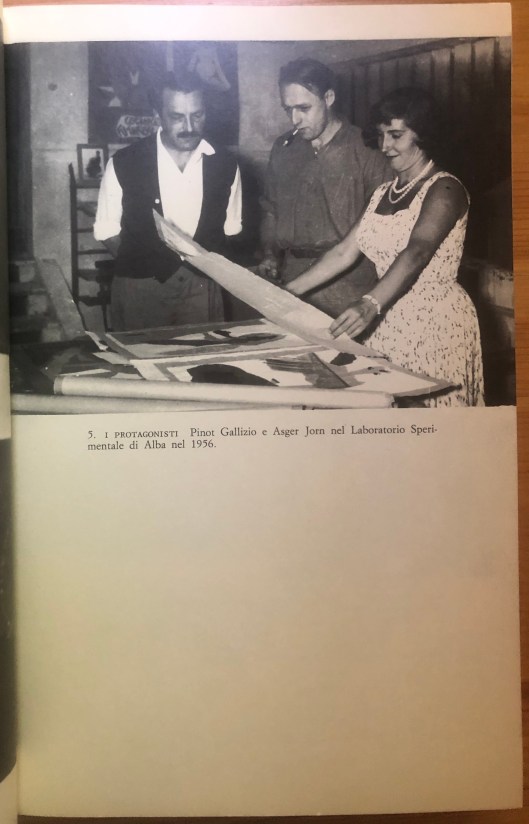
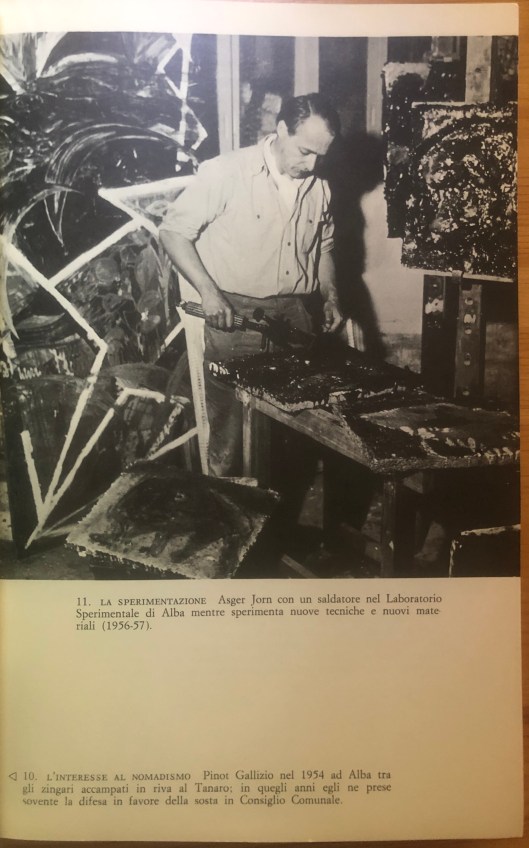
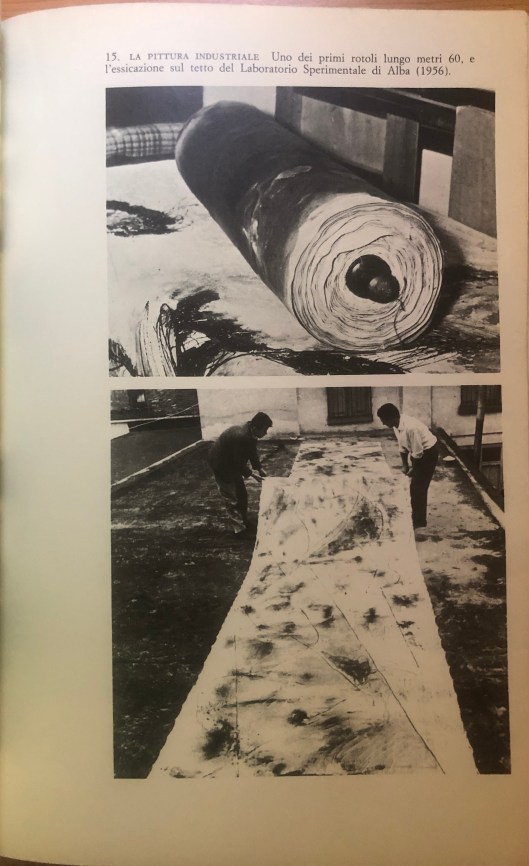
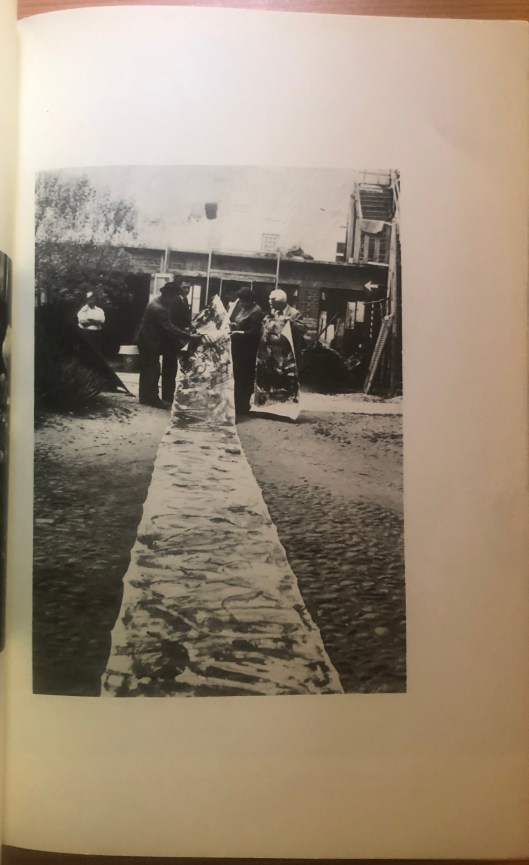
BANDINI, Mirella.L’Estetico il Politico da Cobra all’Internazionale Situazionista 1948-1957.  Rome: Officina Edizioni, October 1977. 391 p.; ill.; 24 x 15.5 cm.; black cover with text in white and green.

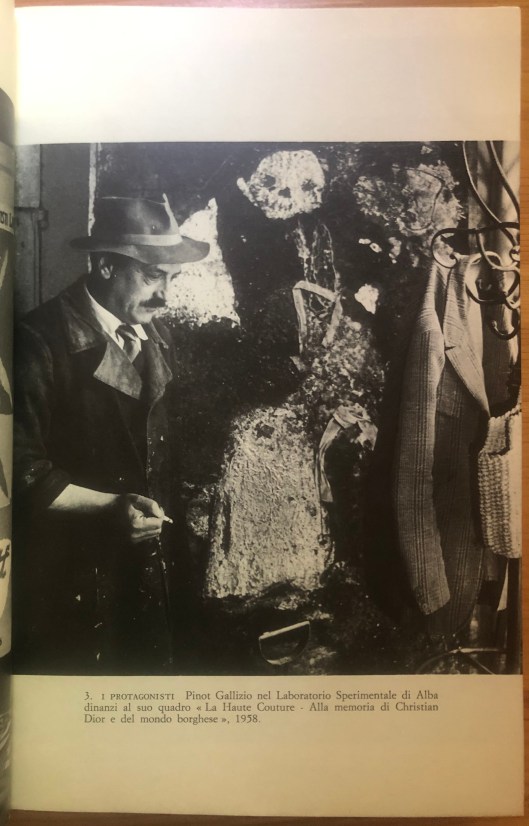
“A comprehensive, well-illustrated work, covering the early years of the S.I. and divided into three majors sections; ‘L’Internazionale Situazionista’, ‘Documenti’, and ‘Cronologia, Schede bio-bibliografiche, Glossario, Bibliografia’. The documents section includes any key texts, some reproduced in facsimile (eg part of Jorns ‘Peinture detournee’ – 1959, and ‘Ein Kultureller Putsch – wahrend Ihr schlaft! – 1959). The ‘bio-bibliographies’ are of Constant, Guy Debord, Pinot-Gallizio, and Asger Jorn. There is also a general bibliography of much continental material (mostly Italian) not included in this bibliography.” (Ford,  p. 2)

Guy Debord was made aware of Bandini’s project in 1975, as she had reached out to him for more information. In a letter to Gianfranco Sanguinetti dated 10 October 1975, he writes “”An Italian woman, who will soon publish a collection about Gallizio, with a very unintelligent but quite honest introduction, and full of charming documents, and who also is preparing a book on the origins of the SI, has written to me and asks for your address. Do you want me to give it to her, and which one (c/o the Doge)?” (Correspondance Vol. 5, p. 298; emphasis is mine) translation courtesy of NOTBORED!). It is unclear whether Debord and Bandini corresponded further on the subject; the Correspondance does not include any letter.

Bandini’s book is an important and lasting contribution to SI scholarship. The book, which had been out of print for many years, was published once more in 1999 (Ed. Costa & Nolan). A French translation was published by Editions Sulliver in 1998, but is out of print.

Chollet 344; Correspondance Vol. 5, p. 298 ; Ford 4; Gonzalvez 180-181; Trespeuch 67

2020-07-03 14.00.332020-07-03 14.00.472020-07-03 14.01.562020-07-03 14.02.042020-07-03 14.02.112020-07-03 14.02.182020-07-03 14.02.312020-07-03 14.02.462020-07-03 14.02.552020-07-03 14.03.042020-07-03 14.03.15


Pourquoi je ne vote pas [2019]

25 Thursday Jun 2020

Posted by elhajoui in Uncategorized

≈ Leave a comment

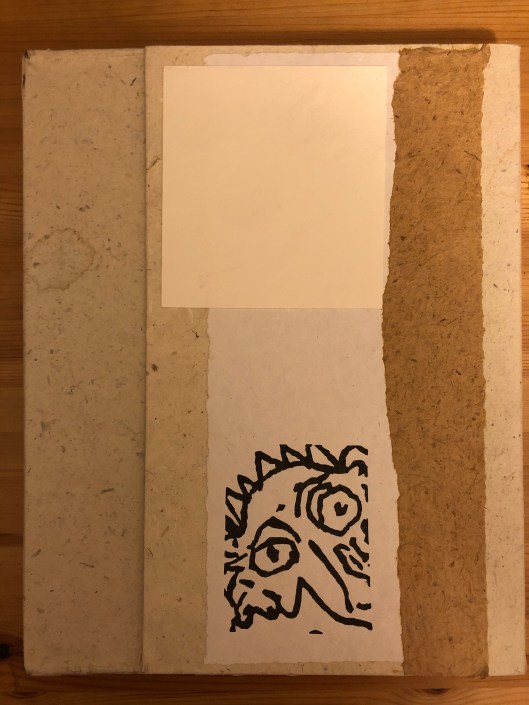
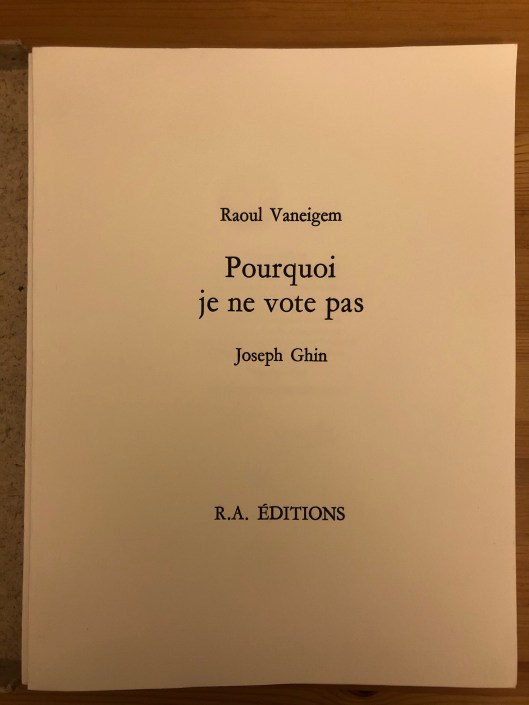
VANEIGEM, Raoul (Ill. GHIN, Joseph). Pourquoi je ne vote pas et autres inedits – Tome 2. In sheets (8 sheets); ill.; 54 x 36 cm. (folded to 27 x 36 cm.); black ink (Garamond 28 font) on 250 gr. Fabriano Rosaspina paper

One of 30 copies (our #1), numbered and signed at the Colophon by author Raoul Vaneigem and illustrator Joseph Ghin. Housed in a tailor-made case by Patricia Demylle.

The is the second of two volumes of the original edition of Raoul Vaneigem’s Pourquoi je ne vote pas et autres inedits. A trade edition book was also published by “Cactus inebranlable” in 2017 Each of the sheets include an aphorism by Raoul Vaneigem and an engraving.

For the first volume, published in 2017 and now out of stock, see here

We do not locate copies in the trade or on OCLC.

2020-06-25 00.56.562020-06-25 00.57.332020-06-25 00.57.422020-06-25 00.58.052020-06-25 00.58.542020-06-25 00.59.092020-06-25 00.59.492020-06-25 01.00.302020-06-25 01.00.482020-06-25 01.01.062020-06-25 01.01.232020-06-25 01.01.46

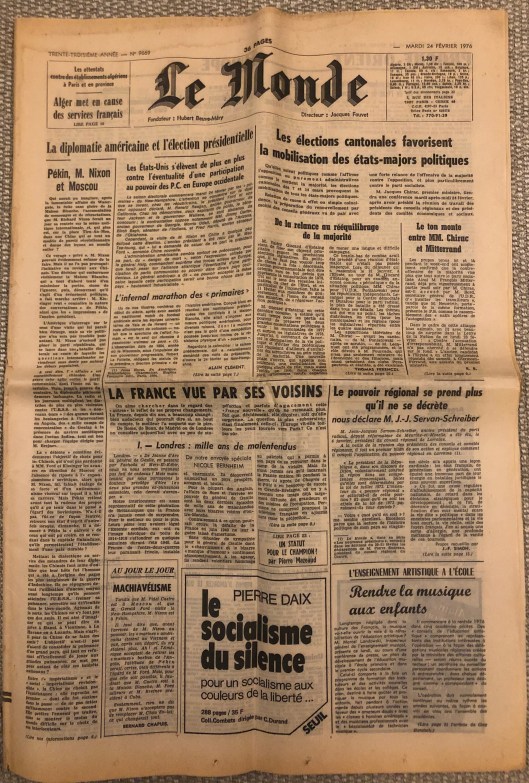
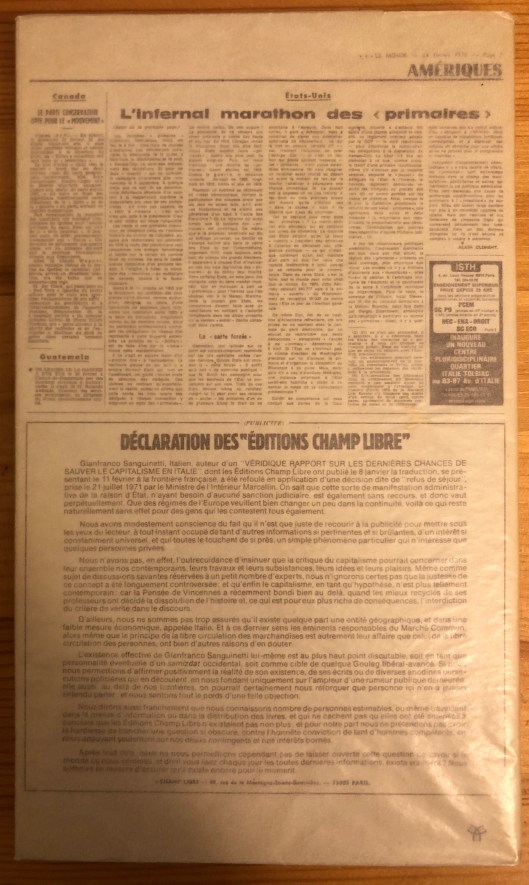
[DEBORD, Guy] Déclaration des « Éditions Champ Libre » (in Le Monde no. 9669, 24 Feb 1976, p.7)

16 Tuesday Jun 2020

Posted by elhajoui in Uncategorized

≈ Leave a comment

[DEBORD, Guy]. Déclaration des « Éditions Champ Libre » (in Le Monde no. 9669, 24 Feb 1976, p.7). Paris, 24 Feb. 1976.  36 p.; 34 x 50 cm.; black ink on newspaper stock

The “Declaration des ‘Editions Champ Libre’ “, which first appeared as a half-page ad in issue 9669 (24 February 1976) of Le Monde, was written in the aftermath of Gianfranco Sanguinetti’s arrest and expulsion at the French border on 11 February 1976. In a letter to Jaime Semprun, Debord states that he is the author of this text: “Tu as très justement reconnu mon style dans le communiqué sur la dernière aventure frontalière de Sanguinetti, et parfois ailleurs” (Letter to Jaime Semprun, 26 Dec. 1976 — reproduced in DEBORD, Guy. Correspondance Vol 5, p. 396).

The Declaration appears on the back cover of Correspondance des Editions Champ Libre. Volume 1 (October 1978). It is also reproduced in Guy Debord’s Oeuvres (p. 1316). Online version available here: http://debordiana.chez.com/francais/preuves.htm and in translation at https://libcom.org/library/declaration-editions-champ-libre

We locate a copy at Yale’s Beinecke Library as part of the Gianfranco Sanguinetti papers (binder 15bis, box 23)

The full text, in translation, is reproduced below

Declaration of Editions Champ Libre

Gianfranco Sanguinetti, Italian, author of a Truthful Report on the Last Chances to Save Capitalism in Italy, the [French] translation of which Editions Champ Libre published on 8 January [1976], having presented himself at the French border on 11 February, was turned back due to the application of a “refusal of stay” decision taken on 21 July 1971 by Marcellin, the Minister of the Interior. We know that this kind of administrative manifestation of national security requires no judicial approval, cannot be appealed and thus is permanent. Even though the political regimes in Europe want to make small changes in their continuity, this naturally does not have any bearing on those who contest all of those regimes equally.

We are modestly aware of the fact that it is only fair to have recourse to advertising to put before the eyes of the reader – at every instant occupied with so much other pertinent and important news that is constantly of universal relevance and that concerns him personally – a simple, particular phenomenon that can only interest a few private individuals.

In fact, we do not have the presumptuousness to insinuate that the critique of capitalism could at all concern our contemporaries, their work, their ways of making a living, their ideas or their pleasures. We do not ignore the facts that, even as a subject for scholarly discussion limited to a small number of experts, the very justness of the concept of that critique has been controversial and that capitalism, as a hypothesis, is no longer of contemporary interest, because the Thought of Vincennes – at which the best-recycled professors have decided upon the dissolution of history and the prohibition of the criteria of truthfulness in discourse, which is something that is very rich in consequences for them – recently leapt beyond it.

Furthermore, we are not assured that, somewhere, there really exists a geographical (and an economically quite weak) entity called Italy. And, where Italy’s economy is concerned, the eminent leaders of the Common Market – even if the principle of the free circulation of commodities is as much their affair as the free circulation of people – have other reasons to doubt its existence.

The actual existence of Gianfranco Sanguinetti himself – either as the author of a Western samizdat or as the target of some liberal-advanced Gulag – is highly questionable. If we, on the unique basis of the magnitude of a public rumor (which also remains outside of our borders), allow ourselves to positively affirm the reality of his existence, his writings and the diverse and harmless police persecutions that have followed from them, one could retort that no one here in France has ever heard of him, and we [as his publisher] feel all the weight of such an objection.

We will also frankly state that we know a number of estimable people who, working for the newspapers or the distributors of books, do not hide the fact that they have been led to conclude that Editions Champ Libre also does not exist, and, for our part, we do not pretend to have the boldness to settle such an obscure question and thus go against the honest convictions of so many competent people by basing ourselves only upon our contingent desires and limited personal interests.

Given all this, we nevertheless will not allow ourselves to leave open the question of knowing if the world in which we live – the world of which you read all the most up-to-date news every day – truly exists. We are in a position to be assured that, for the moment, it still does.

2020-06-15 20.37.212020-06-15 21.13.372020-06-15 21.34.522020-06-15 22.22.25

Le Declin et la Chute de l’Economie Spectaculaire-Marchande [1993]

03 Wednesday Jun 2020

Posted by elhajoui in Uncategorized

≈ Leave a comment

A timely reblog…

elhajoui's avatarSituationniste Blog

Debord, Guy. Le Declin et la Chute de l’Economie Spectaculaire-Marchande.
Paris: Jean-Jacques Pauvert, December 1993. 40 p.; ill.; 18 x 12 cm; white cover with text in red and black

This iconic Situationist text provides an astute commentary on the Watts riots in Los Angeles. First published as an anonymous pamphlet (in English) in December 1965, it is then reprinted in the periodical Internationale Situationniste no.10 in March 1966. As an homage to the 1992 Los Angeles riots, Le Declin et la Chute is re-released in its first stand-alone edition by Jean-Jacques Pauvert in 1993 – this time around, the text is signed by its original author, Debord.

Readily available in the trade and on OCLC. Gonzalzez 123

This entry is a tribute to Jean-Jacques Pauvert, who passed away today.

photo 3

photo 2

photo 1

View original post

La revolution dans les pays de l’Afrique noire [1966]

26 Tuesday May 2020

Posted by elhajoui in Uncategorized

≈ Leave a comment

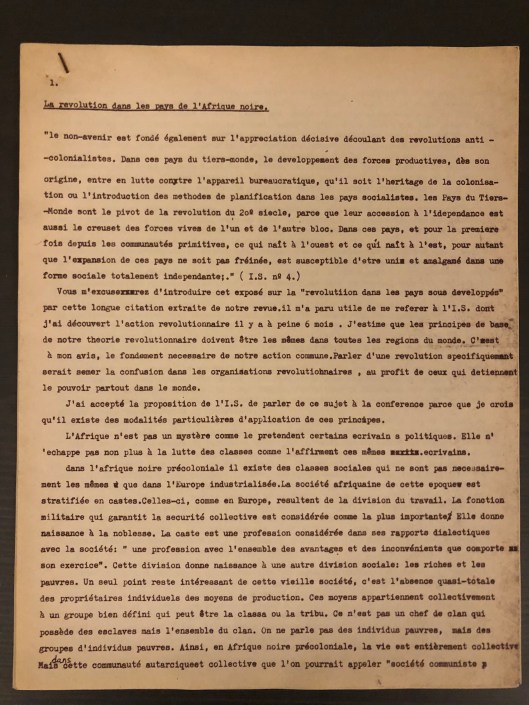
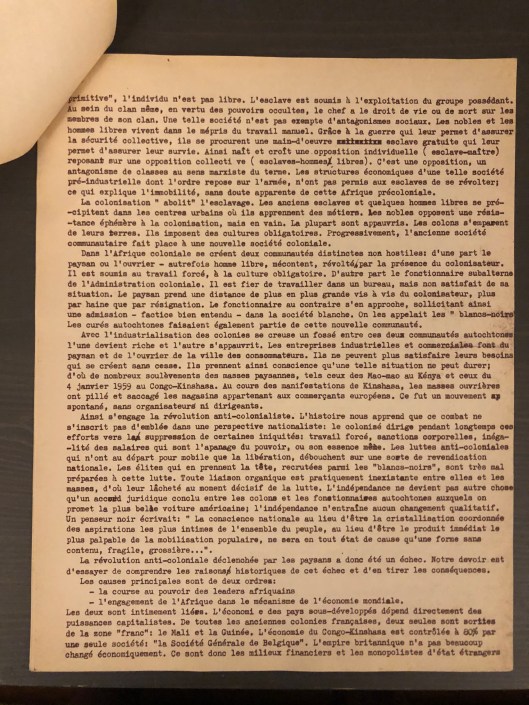
[DIANGANI, Lungela]. La Révolution dans les pays de l’Afrique noire. n.p.: n.p., n.d. [1966]. 4 p.; 21 x 29.5 cm.; black ink on white stock.

This little-known text constitutes Lungela Diangani’s contribution to the 7th congress of the Situationist International, held from 5-13 July 1966. Lungela was a member of the SI from July 1966 to late 1967. While his production was limited, he was respected by Debord (see, for instance, Correspondance vol. 3 p. 127)

The author begins by stating that he only learned about the SI 6 months before. He then argues that, while the underlying principles of revolutionary theory are the same across geographies, the applications of such principles may vary by region.  He then goes on to explain Africa’s unique characteristics (e.g., lack of individual property, colonialism and anti-colonialism, etc.), but reaffirms that “struggles in underdeveloped countries are about class, not race” and lambasts the pan-Africanist movement. He concludes that “Nationalism, Panafricanism, Negritude, and African Socialism are concepts that revolutionaries must bury. They must also reject racial homogeneity of Sub-saharan Africa” (translations are mine)

The full text has been reproduced here.  It was also reproduced and translated into English in The Other Country / L’Autre Pays (Ed. Vincent Meesen) in 2018 (pp. 52-55). This catalogue is structured around installations by Vincent Meessen which examine the influence of the Situationist International in Sub-Saharan Africa, notably through figures such as Lungela Diangani and Omar Blondin Diop. Of particular interest is Pedro Monaville’s text “Sur le passage de quelques congolais a travers l’Internationale Situationniste/ On the Passage of a Few Congolose Through the Situationist International” (pp. 57-65), where the author, a historian of modern Africa, describes how Debord got interested in the Congo and how Lungela became a member of the SI.

We locate one copy as part of the Debord archive at the BNF (see here)

IMG_4538IMG_4539IMG_4540IMG_4541M. Khayati and A. Becker at the 7th SI congress in 1966.

Les Luttes de Classes en Algérie [1965]

25 Monday May 2020

Posted by elhajoui in Uncategorized

≈ Leave a comment

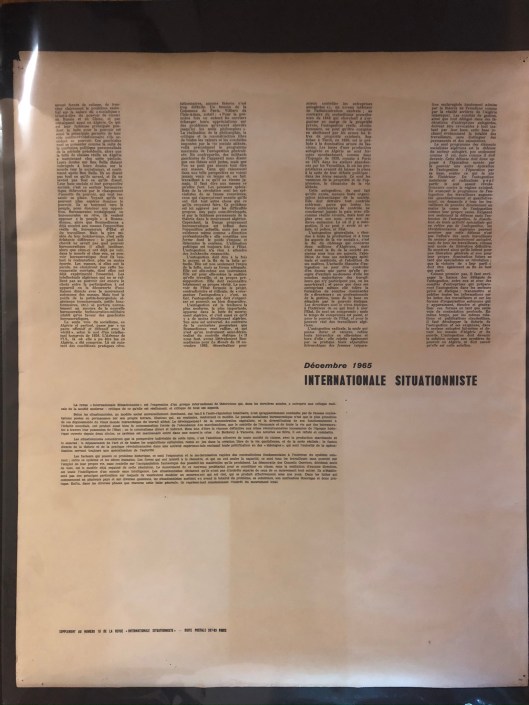
[DEBORD, Guy]. Internationale Situationniste. Les Luttes de Classes en Algerie. Paris: Internationale Situationniste, December 1965. Two-sided broadside. 56 x 45 cm.; black ink on white stock.

Text by Guy Debord, published as an addendum to issue 10 of Internationale Situationniste (March 1966). It discusses Boumedienne’s putsch in Algeria, which marks the end of the self-management experience in Algeria. The text has been transcribed and reproduced here: https://sinedjib.com/index.php/2016/09/03/luttes-classes/

BnF 88-90, Gonzalvez 123, Lacroix 196, Raspaud & Voyer 118 . Not in Scheppe & Ohrt. We locate copies at Michigan, Yale and the BNF.

IMG_0517IMG_0519

Adresse aux prolétaires et aux jeunes révolutionnaires arabes et israéliens contre la guerre et pour la révolution prolétarienne [1976]

25 Monday May 2020

Posted by elhajoui in Uncategorized

≈ Leave a comment

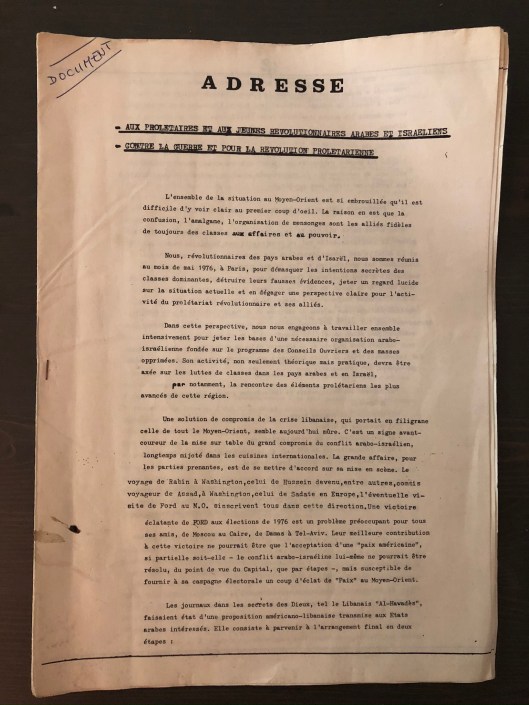
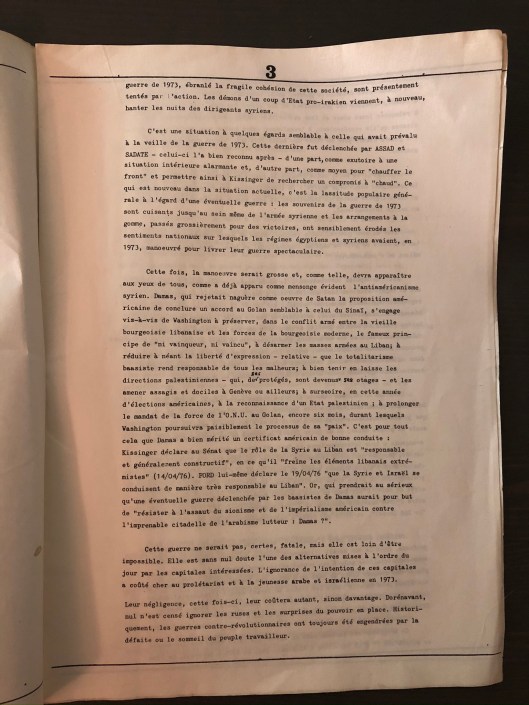
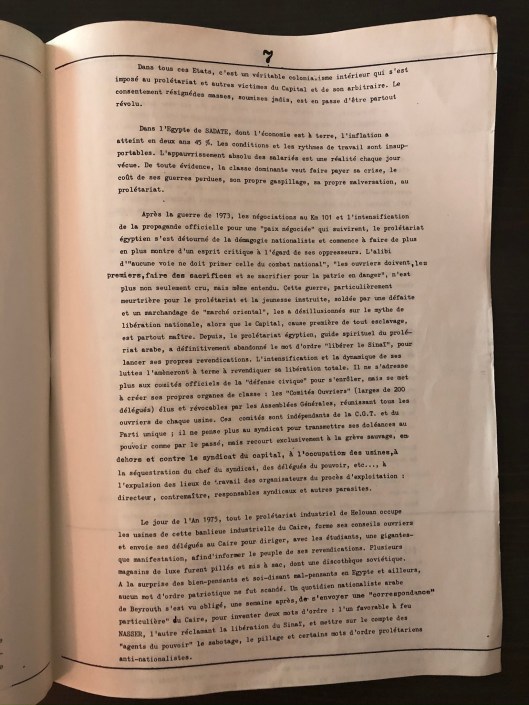
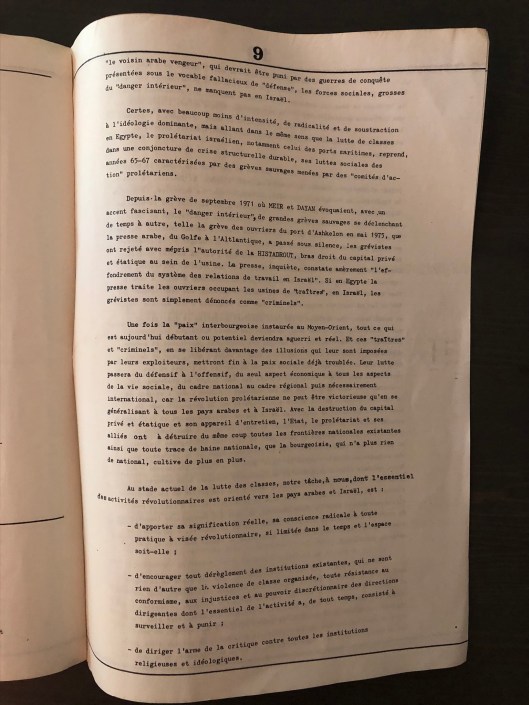
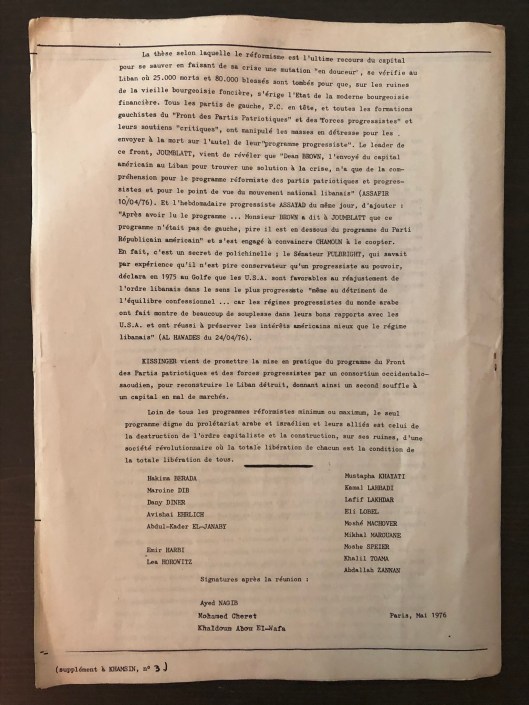
[KHAYATI, Mustapha] KHAYATI, Mustapha; LAKHDAR, Latif; et al. Adresse aux prolétaires et aux jeunes révolutionnaires arabes et israéliens contre la guerre et pour la révolution prolétarienne. Paris, May 1976. 12 p.; 21 x 30 cm.; staple white sheets with text in black

Text published as an addendum to the third issue of Francois Maspero’s periodical Khamsin: Revue des socialistes révolutionnaires du Proche-Orient. Signatories include Hakima Berada, Maroine Dib, Dany Diner, Avishai Ehrlich, Abdul-Kader El-Janaby, Emir Harbi, Lea Horowitz, Mustapha Khayati, Kamal Lahbadi, Latif Lakhdar, Eli Lobel, Moshe Machover, Mikhal Marouane, Moshe Speier, Khalil Toma et Abadhallah Zannan. The manifesto would later be partially reprinted in Jeune Taupe no. 10 (June 1976). 

Adresse aux prolétaires et aux jeunes révolutionnaires arabes et israéliens contre la guerre et pour la révolution prolétarienne is a call for Arab and Israeli proletariat to join forces in the sole struggle that is worth their while:”the destruction of the capitalistic order and, from its ashes, the rise of a revolutionary society where the total liberation of each individual allows for the total liberation of all people” (translation is mine). The manifesto – which came out of a gathering on May 1-2, 1976 in Paris of left-leaning Arab and Isareli intellectuals – is believed to be the first joint revolutionary address by Arabs and Israelis. The tone and style suggest that Khayati played a significant role in drafting the text.

To our knowledge, this manifesto has never been reproduced in full online. Some excerpts are available here.

We locate a single copy on OCLC, part of Mustapha Khayati’s personal archive preserved at Yale’s Beinecke Library

IMG_0505IMG_0506IMG_0507IMG_0508IMG_0509IMG_0510IMG_0511IMG_0512IMG_0513IMG_0514IMG_0515IMG_0516

[Interlude] Raoul Vaneigem on Coronavirus [21 March 2020]

13 Monday Apr 2020

Posted by elhajoui in Uncategorized

≈ 2 Comments

CORONAVIRUS – RAOUL VANEIGEM

RaoulVaneigem7

[ Traduction italienne ] [English Translation]

« Dehors, le cercueil, dedans la télévision, la fenêtre ouverte sur un monde fermé ! »

paru dans lundimatin#234, le 21 mars 2020

Contester le danger du coronavirus relève à coup sûr de l’absurdité. En revanche, n’est-il pas tout aussi absurde qu’une perturbation du cours habituel des maladies fasse l’objet d’une pareille exploitation émotionnelle et rameute cette incompétence arrogante qui bouta jadis hors de France le nuage de Tchernobyl ? Certes, nous savons avec quelle facilité le spectre de l’apocalypse sort de sa boite pour s’emparer du premier cataclysme venu, rafistoler l’imagerie du déluge universel et enfoncer le soc de la culpabilité dans le sol stérile de Sodome et Gomorrhe. [1]

La malédiction divine secondait utilement le pouvoir. Du moins jusqu’au tremblement de terre de Lisbonne en 1755, lorsque le marquis de Pombal, ami de Voltaire, tire parti du séisme pour massacrer les jésuites, reconstruire la ville selon ses conceptions et liquider allègrement ses rivaux politiques à coups de procès « proto-staliniens. » On ne fera pas l’injure à Pombal, si odieux qu’il soit, de comparer son coup d’éclat dictatorial aux misérables mesures que le totalitarisme démocratique applique mondialement à l’épidémie de coronavirus.

Quel cynisme que d’imputer à la propagation du fléau la déplorable insuffisance des moyens médicaux mis en œuvre ! Cela fait des décennies que le bien public est mis à mal, que le secteur hospitalier fait les frais d’une politique qui favorise les intérêts financiers au détriment de la santé des citoyens. Il y a toujours plus d’argent pour les banques et de moins en moins de lits et de soignants pour les hôpitaux. Quelles pitreries dissimulera plus longtemps que cette gestion catastrophique du catastrophisme est inhérente au capitalisme financier mondialement dominant, et aujourd’hui mondialement combattu au nom de la vie, de la planète et des espèces à sauver.

Sans verser dans cette resucée de la punition divine qu’est l’idée d’une Nature se débarrassant de l’Homme comme d’une vermine importune et nuisible, il n’est pas inutile de rappeler que pendant des millénaires, l’exploitation de la nature humaine et de la nature terrestre a imposé le dogme de l’anti-physis, de l’anti-nature. Le livre d’Eric Postaire, Les épidémies du XXIe siècle, paru en 1997, confirme les effets désastreux de la dénaturation persistante, que je dénonce depuis des décennies. Evoquant le drame de la « vache folle » (prévu par Rudolf Steiner dès 1920), l’auteur rappelle qu’en plus d’être désarmés face à certaines maladies nous prenons conscience que le progrès scientifique lui-même peut en provoquer. Dans son plaidoyer en faveur d’une approche responsable des épidémies et de leur traitement, il incrimine ce que le préfacier, Claude Gudin, appelle la ’ philosophie du tiroir caisse ’. Il pose la question : « A subordonner la santé de la population aux lois du profit, jusqu’à transformer des animaux herbivores en carnivores, ne risquons-nous pas de provoquer des catastrophes fatales pour la Nature et l’Humanité ? » Les gouvernants, on le sait, ont déjà répondu par un OUI unanime. Quelle importance puisque le NON des intérêts financiers continue de triompher cyniquement ?

Fallait-il le coronavirus pour démontrer aux plus bornés que la dénaturation pour raison de rentabilité a des conséquences désastreuses sur la santé universelle – celle que gère sans désemparer une Organisation mondiale dont les précieuses statistiques pallient la disparition des hôpitaux publics ? Il existe une corrélation évidente entre le coronavirus et l’effondrement du capitalisme mondial. Dans le même temps, il apparaît non moins évidemment que ce qui recouvre et submerge l’épidémie du coronavirus, c’est une peste émotionnelle, une peur hystérique, une panique qui tout à la fois dissimule les carences de traitement et perpétue le mal en affolant le patient. Lors des grandes épidémies de peste du passé, les populations faisaient pénitence et clamaient leur coulpe en se flagellant. Les managers de la déshumanisation mondiale n’ont-ils pas intérêt à persuader les peuples qu’il n’y a pas d’issue au sort misérable qui leur est fait ? Qu’il ne leur reste que la flagellation de la servitude volontaire ? La formidable machine médiatique ne fait que ressasser le vieux mensonge du décret céleste, impénétrable, inéluctable où l’argent fou a supplanté les Dieux sanguinaires et capricieux du passé.

Le déchaînements de la barbarie policière contre les manifestants pacifiques a amplement montré que la loi militaire est la seule chose qui fonctionnait efficacement. Elle confine aujourd’hui femmes, hommes et enfants en quarantaine. Dehors, le cercueil, dedans la télévision, la fenêtre ouverte sur un monde fermé ! C’est une mise en condition capable d’aggraver le malaise existentiel en misant sur les émotions écorchées par l’angoisse, en exacerbant l’aveuglement de la colère impuissante.

Mais même le mensonge cède à l’effondrement général. La crétinisation étatique et populiste a atteint ses limites. Elle ne peut nier qu’une expérience est en cours. La désobéissance civile se propage et rêve de sociétés radicalement nouvelles parce que radicalement humaines. La solidarité libère de leur peau de mouton individualiste des individus qui ne craignent plus de penser par eux-mêmes.

Le coronavirus est devenu le révélateur de la faillite de l’État. Voilà au moins un sujet de réflexion pour les victimes du confinement forcé. Lors de la parution de mes Modestes propositions aux grévistes, des amis m’ont remontré la difficulté de recourir au refus collectif, que je suggérais, d’acquitter les impôts, taxes, prélèvements fiscaux. Or, voilà que la faillite avérée de l’État-escroc atteste un délabrement économique et social qui rend absolument insolvables les petites et moyennes entreprises, le commerce local, les revenus modestes, les agriculteurs familiaux et jusqu’aux professions dites libérales. L’effondrement du Léviathan a réussi à convaincre plus rapidement que nos résolutions de l’abattre.

Le coronavirus a fait mieux encore. L’arrêt des nuisances productivistes a diminué la pollution mondiale, il épargne une mort programmée à des millions de personnes, la nature respire, les dauphins reviennent batifoler en Sardaigne, les canaux de Venise purifiés du tourisme de masse retrouvent une eau claire, la bourse s’effondre. l’Espagne se résout à nationaliser les hôpitaux privés, comme si elle redécouvrait la sécurité sociale, comme si l’État se souvenait de l’Etat-providence qu’il a détruit.

Rien n’est acquis, tout commence. L’utopie marche encore à quatre pattes. Abandonnons à leur inanité céleste les milliards de bank-notes et d’idées creuses qui tournent en rond au-dessus de nos têtes. L’important, c’est de « faire nos affaires nous-mêmes » en laissant la bulle affairiste se défaire et imploser. Gardons-nous de manquer d’audace et de confiance en nous !

Notre présent n’est pas le confinement que la survie nous impose, il est l’ouverture à tous les possibles. C’est sous l’effet de la panique que l’Etat oligarchique est contraint d’adopter des mesures qu’hier encore il décrétait impossibles. C’est à l’appel de la vie et de la terre à restaurer que nous voulons répondre. La quarantaine est propice à la réflexion. Le confinement n’abolit pas la présence de la rue, il la réinvente. Laissez-moi penser, cum grano salis , que l’insurrection de la vie quotidienne a des vertus thérapeutiques insoupçonnées.

17 mars 2020

Raoul Vaneigem


[1] Cet article est issu d’un recueil de textes et d’entretiens à paraître aux éditions Grevis et qui s’intitulera L’insurrection de la vie quotidienne.

Die Welt Als Labyrinth [CATALOG] [2018]

18 Tuesday Feb 2020

Posted by elhajoui in Uncategorized

≈ 2 Comments

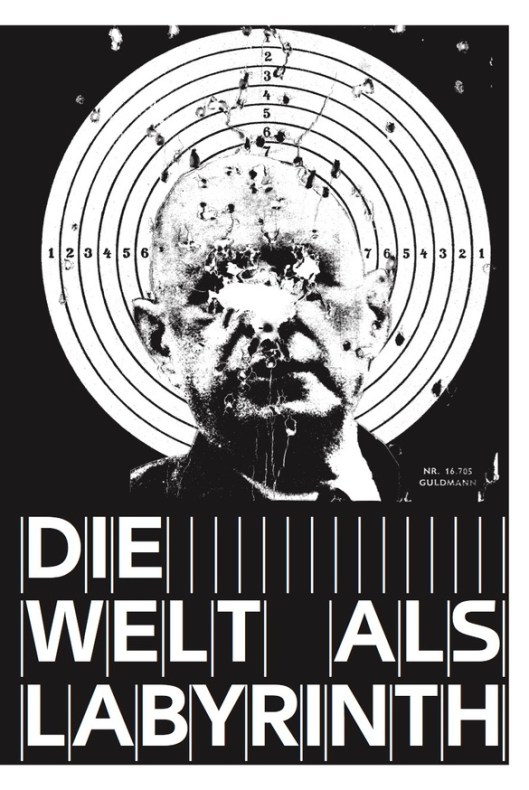
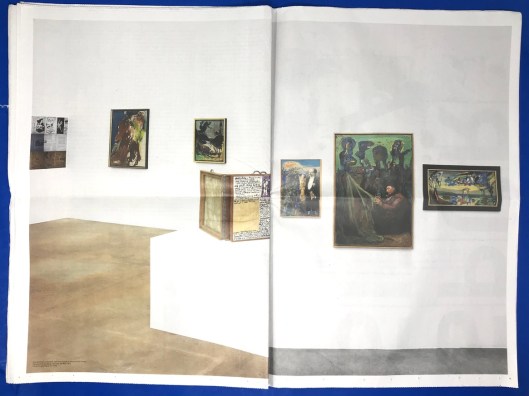
Die Welt Als Labyrinth.  Geneva: MAMCO, 2019. 63 p.; ill.; 48 x 32 cm.; black ink on newspaper stock. Catalog from the exhibition held at the MAMCO Museum in Geneva between February and May 2018.

The publication “Die Welt als Labyrinth” (The world as Labyrinth) relates back to the exhibition dedicated to the Situationist International which took place at MAMCO in the Spring of 2018 and is shaped as a journey through some episodes of this story. This exhibition was the occasion to reflect on the paradox that is raised by any presentation of these last twentieth-century avant-gardes: how to exhibit in a museum people who were systematically opposed to cultural institutions? (Printed Matter)

The illustration on the front cover is an untitled darboard collage from the Situationist exhibition Destruktion af RSG-6 at the gallery Exi, Odense, Denmark in 1963.

The title of the exhibition “refers to an unfulfilled project for a Situationist exhibition at the Stedelijk Museum Amsterdam in 1960, and shows up one of the questions that are raised by any presentation of these avant-garde movements: how to exhibit in a museum people who were systematically opposed to cultural institutions? Going further than a sabotaging of art through an unconventional register of forms and techniques, it was art as distinct social territory, governed by institutions, and determined by the market economy, that was in these movements’ crosshairs.” (MAMCO)

For more information and pictures of the exhibition, see https://www.galleriesnow.net/shows/die-welt-als-labyrinth/. For a video, see https://vimeo.com/288680033

l4djnvljIMG_7064IMG_7065

← Older posts
Newer posts →

Past entries

  • March 2026 (4)
  • October 2025 (1)
  • July 2025 (2)
  • June 2025 (5)
  • July 2024 (2)
  • May 2024 (2)
  • April 2024 (1)
  • February 2024 (1)
  • December 2023 (1)
  • November 2023 (3)
  • August 2023 (1)
  • July 2023 (1)
  • June 2023 (3)
  • May 2023 (3)
  • April 2023 (3)
  • March 2023 (4)
  • February 2023 (1)
  • January 2023 (3)
  • November 2022 (3)
  • October 2022 (3)
  • September 2022 (2)
  • July 2022 (1)
  • June 2022 (1)
  • May 2022 (5)
  • February 2022 (6)
  • January 2022 (3)
  • December 2021 (3)
  • November 2021 (4)
  • October 2021 (12)
  • August 2021 (1)
  • July 2021 (8)
  • February 2021 (4)
  • January 2021 (2)
  • December 2020 (8)
  • November 2020 (2)
  • October 2020 (3)
  • September 2020 (5)
  • July 2020 (15)
  • June 2020 (3)
  • May 2020 (3)
  • April 2020 (1)
  • February 2020 (3)
  • January 2020 (1)
  • December 2019 (1)
  • November 2019 (2)
  • October 2019 (3)
  • September 2019 (3)
  • August 2019 (1)
  • July 2019 (9)
  • June 2019 (14)
  • April 2019 (10)
  • March 2019 (5)
  • December 2018 (5)
  • November 2018 (8)
  • October 2018 (1)
  • September 2018 (7)
  • August 2018 (1)
  • July 2018 (8)
  • June 2018 (9)
  • April 2018 (2)
  • March 2018 (5)
  • February 2018 (6)
  • January 2018 (1)
  • December 2017 (1)
  • November 2017 (1)
  • May 2017 (1)
  • March 2017 (6)
  • January 2017 (2)
  • August 2016 (10)
  • July 2016 (4)
  • May 2016 (1)
  • April 2016 (5)
  • March 2016 (3)
  • February 2016 (7)
  • January 2016 (12)
  • December 2015 (10)
  • November 2015 (2)
  • October 2015 (2)
  • September 2015 (5)
  • August 2015 (6)
  • July 2015 (1)
  • June 2015 (11)
  • May 2015 (4)
  • April 2015 (8)
  • March 2015 (3)
  • February 2015 (2)
  • January 2015 (3)
  • December 2014 (4)
  • November 2014 (1)
  • October 2014 (12)
  • September 2014 (16)
  • August 2014 (8)
  • April 2014 (6)
  • February 2014 (9)
  • January 2014 (3)
  • August 2013 (1)
  • July 2013 (1)
  • June 2013 (13)
  • May 2013 (5)

Recent Posts

  • “L’Année dernière à Marienbad à Montréal” (in Situations Vol. 4, no.2) [1962] – From a Situationist to a New Wave filmmaker March 9, 2026
  • Guy Debord – La Java des bons enfants [2006] March 8, 2026
  • Le vertige du jeu. Révolution, jeu et fête dans l’Internationale situationniste [2026] March 8, 2026
  • Andre Frankin in Arguments – translations now available March 7, 2026
  • Farewell, Gianfranco Sanguinetti (1948-2025) October 10, 2025
  • Alice Becker-Ho, Guy Debord, Gianfranco Sanguinetti: Correspondence with Francoise Zylberberg [February, 14 – April, 6 1973] July 20, 2025
  • Guy Debord & Alice Becker-Ho – original photographs (ca. 1968 and 1973) July 20, 2025
  • The Case of the Ascetic Satyr. Snapshots from Eternity [2015] June 25, 2025
  • Ein kultureller Putsch während Ihr schlaft! [1959] June 23, 2025
  • Deutschland über alles [1954] June 22, 2025
  • Chtcheglov’s original resignation letter & accompanying explanatory leaflet [June 1954] June 16, 2025
  • Announcing the Situationist International Research Network (SIRN) June 1, 2025
  • Une Saison avec Marianne / A Season with Marianne [2022/2024] July 4, 2024
  • Goodbye, Jacqueline de Jong (1939-2024) July 1, 2024
  • Serge Berna: Écrits et Documents [2024] May 25, 2024
  • New Translation: Raoul Vaneigem’s “Resistance to Christianity: A Chronological Encyclopedia of Heresy from the Beginning to the Eighteenth Century” [2023] May 3, 2024
  • [Event] Black Mask and King Mob, with Ben Morea and Donald Nicholson-Smith April 22, 2024
  • [Exhibition & Event on March 4 in San Francisco] Bibliophiles Beware: The Situationist International and the Art & Politics of Cultural Hijacking February 18, 2024
  • Bread and Circus [2023] December 10, 2023
  • Untitled metagraphie by Guy Debord [1981] November 12, 2023
  • Announcement: Illusion and Fetishism in Critical Theory: A study of Nietzsche, Benjamin, Castoriadis and the Situationists [2024] November 11, 2023
  • Untitled collage by Ralph Rumney [1984] November 5, 2023
  • Announcement: Situationist Reading Group [via Zoom] August 7, 2023
  • Cette soif inassouvie d’une vie à changer [2023] July 15, 2023
  • Mémoires – Ghislain de Marbaix’s copy [1958] June 6, 2023
  • Wolman – Vivre loin [1973 / 2023] June 5, 2023
  • Wolman – Plan of Lisbon [1974] June 2, 2023
  • La plate-forme d’Alba [1956] May 31, 2023
  • La Société du Spectacle [FILM POSTER] [1974] May 30, 2023
  • ANNOUNCEMENT: Guy Ernest Debord & Gil Joseph Wolman : L’un n’exclut pas l’autre (27 April – 17 June 2023) May 1, 2023
  • D’une révolution à l’autre. Correspondance Debord-Straram suivi de Cahier pour un paysage à inventer et autres textes [2023] April 9, 2023
  • [DEBORD, Guy] Proletarietet som subjekt och som representation (brochure) [1970] April 2, 2023
  • [DEBORD, Guy] Proletarietet som subjekt och som representation (leaflet) [1970] April 1, 2023
  • Up Against the Real: Black Mask from Art to Action [2023] March 12, 2023
  • Auf der Reise zum Mittepunkt der Geschichte [1973] March 5, 2023
  • Andre Frankin, Personne et les autres (1960) [2023] March 4, 2023
  • Internazionale Situazionista – Corrispondenza con un’editore [1972] March 4, 2023
  • Memoires by Debord & Jorn – Spanish Edition [2022] February 21, 2023
  • The Antinational Situationist No. 1 / Den Antinationale Situationist No.1 [1974] January 9, 2023
  • Erklæring vedrorende processen mod internationale situationister I Den Tyske Forbundsrepublik [1962] January 9, 2023
  • I Partiti Non Hanno Piu Niente Da Dirci [1966] January 8, 2023
  • Présent fait aux lecteurs de Lire Debord, traitant des curiosités et difficultés rencontrées dans l’ouvrage [2022] November 27, 2022
  • Adages / Vaneigem & Stas [2022] November 16, 2022
  • Chansons du proletariat révolutionnaire: Paroles et musiques [1996] November 12, 2022
  • Attila Kotanyi: L’architecture du silence [2022] October 31, 2022
  • Première exposition de psychogéographie [1957] October 30, 2022
  • Piero Simondo: Alle radici del Situazionismo [2004] October 30, 2022
  • Cahier pour un paysage à inventer invitation card [1960] September 6, 2022
  • [Photograph] Debord, Marc’O, Fillon, Cocteau [1951] September 5, 2022
  • In Unserer Spektakulären Gesellschaft…[1970s?] July 28, 2022

Archives

Blog Stats

  • 202,678 hits
Follow Situationniste Blog on WordPress.com

Blog at WordPress.com.

  • Subscribe Subscribed
    • Situationniste Blog
    • Join 154 other subscribers
    • Already have a WordPress.com account? Log in now.
    • Situationniste Blog
    • Subscribe Subscribed
    • Sign up
    • Log in
    • Report this content
    • View site in Reader
    • Manage subscriptions
    • Collapse this bar
 

Loading Comments...