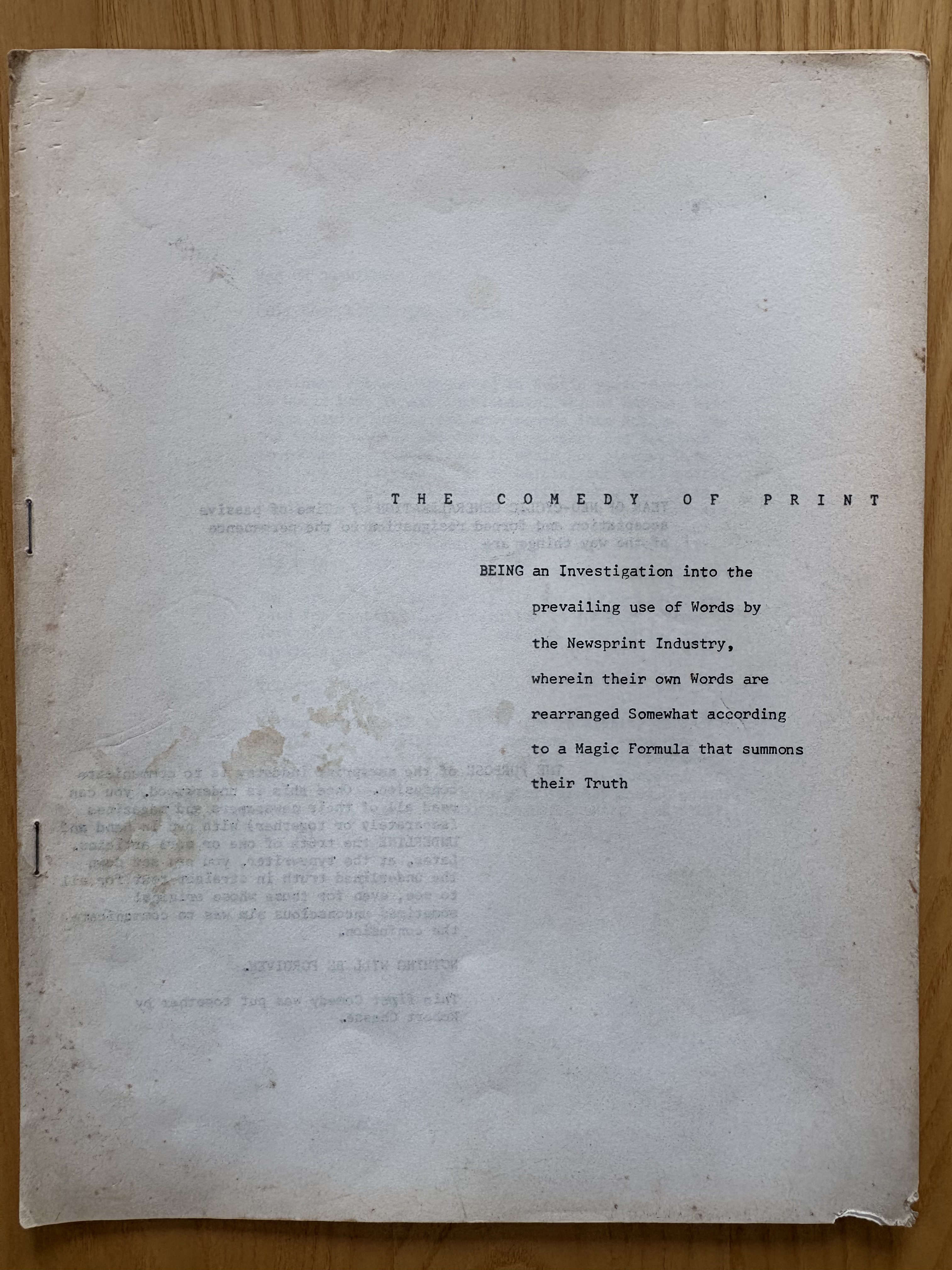
Chasse, Robert. The Comedy of Print: Being an Investigation into the prevailing use of Words by the Newsprint Industry, wherein their own Words are rearranged Somewhat according to a Magic Formula that summons their Truth. n.p. [New York, NY]: n.p., n.d. [c. 1968–1970]. Mimeographed, stapled wrappers.
This first Comedy was, per its title page, “put together by Robert Chasse” — the same Robert Chasse who, with Bruce Elwell and Tony Verlaan, founded the New York-based Council for the Liberation of Daily Life in 1967, and who went on to become a member of the American section of the Situationist International until December 1969. No copy of this piece appears to be recorded anywhere online; the present example may be unique, or at least unlocated in institutional holdings (including Yale and the BNF)
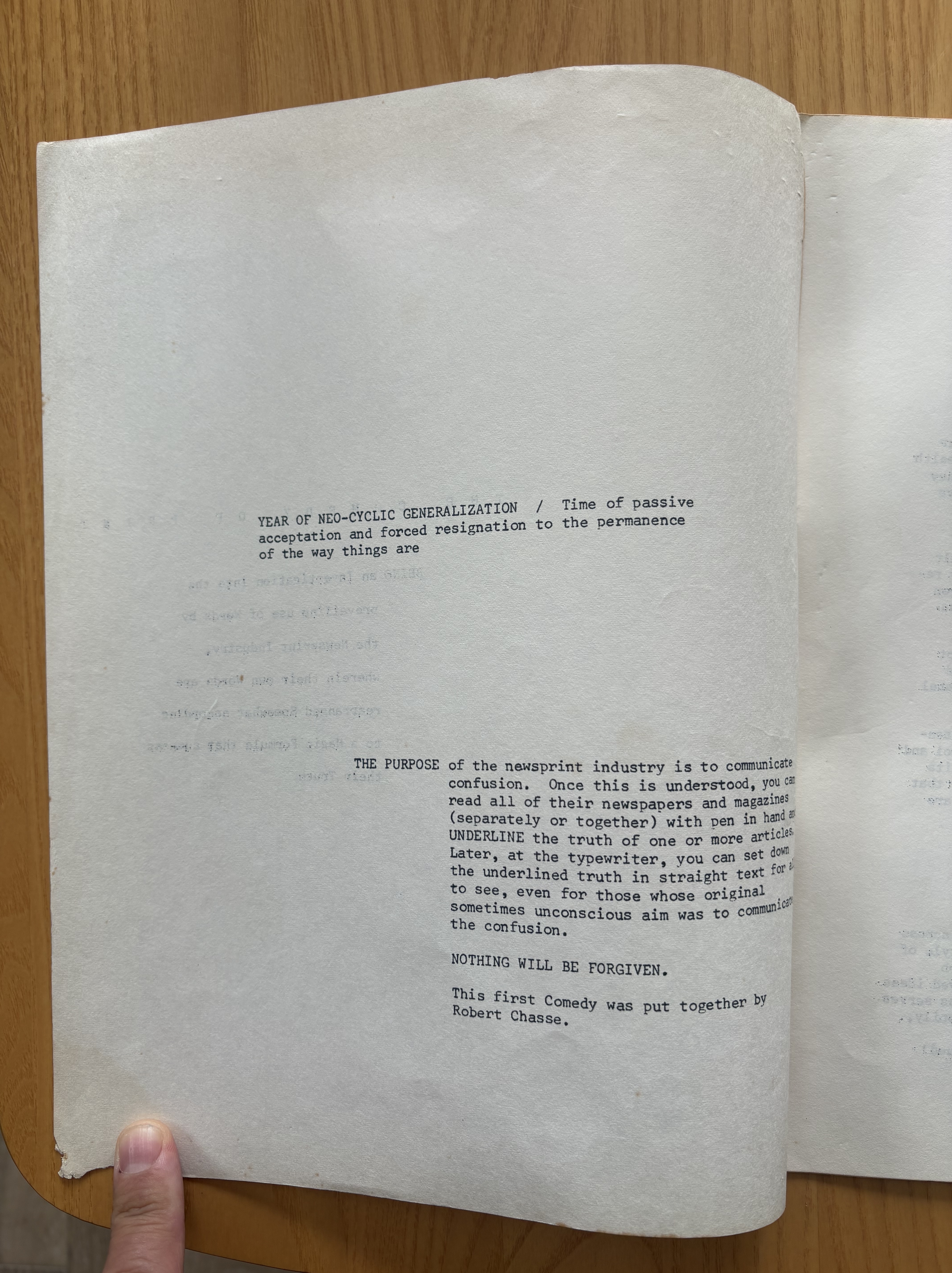
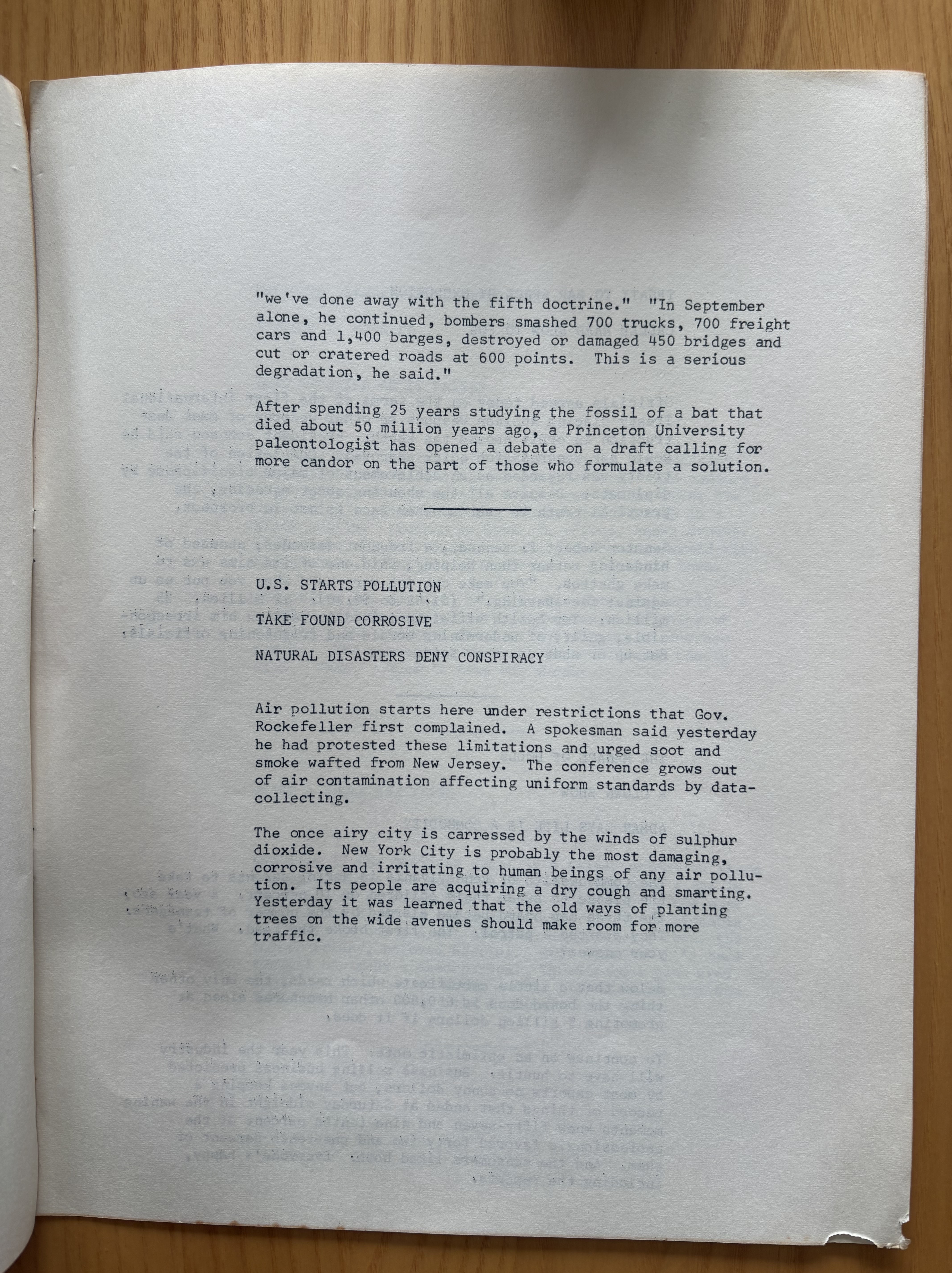
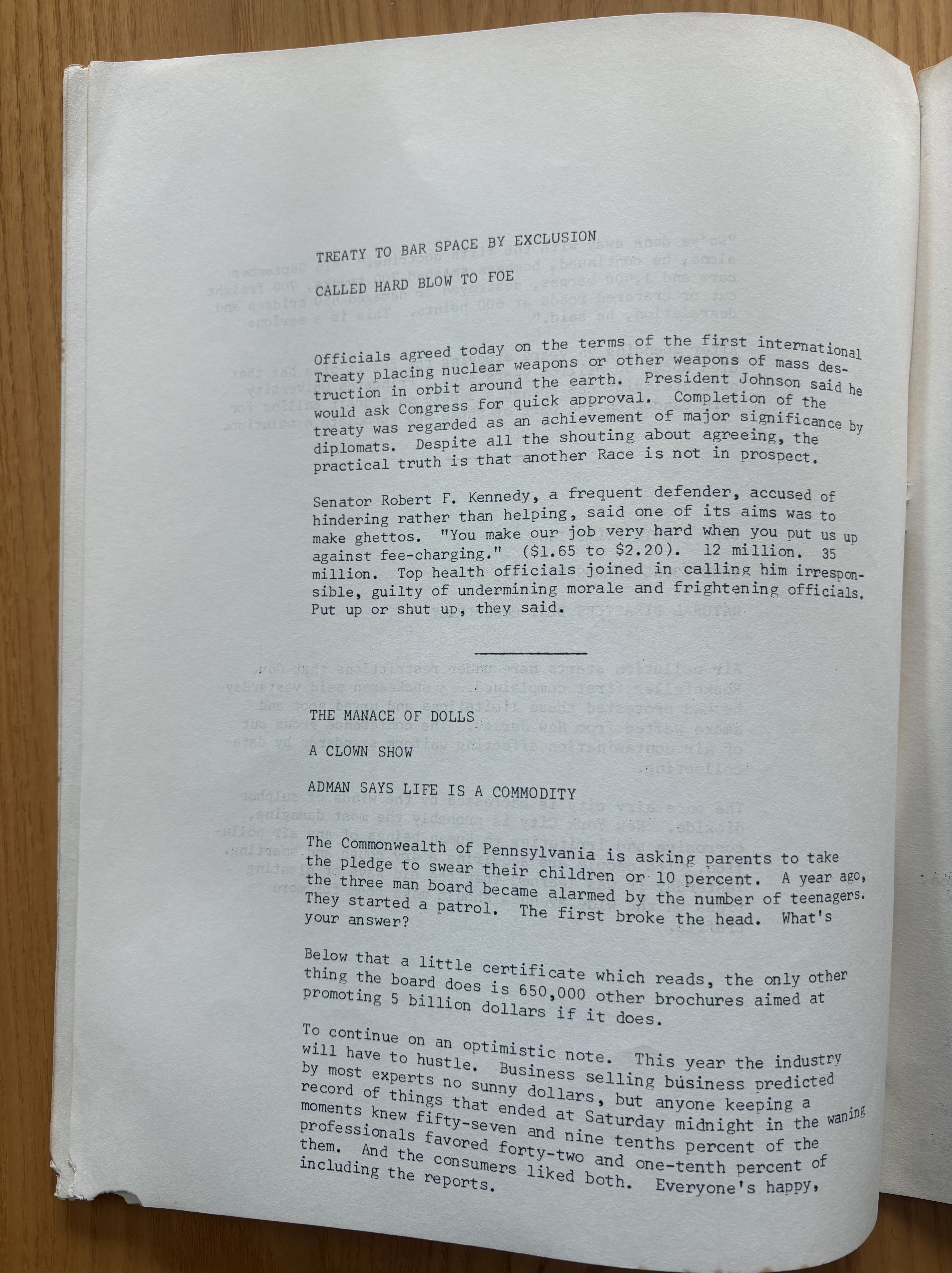
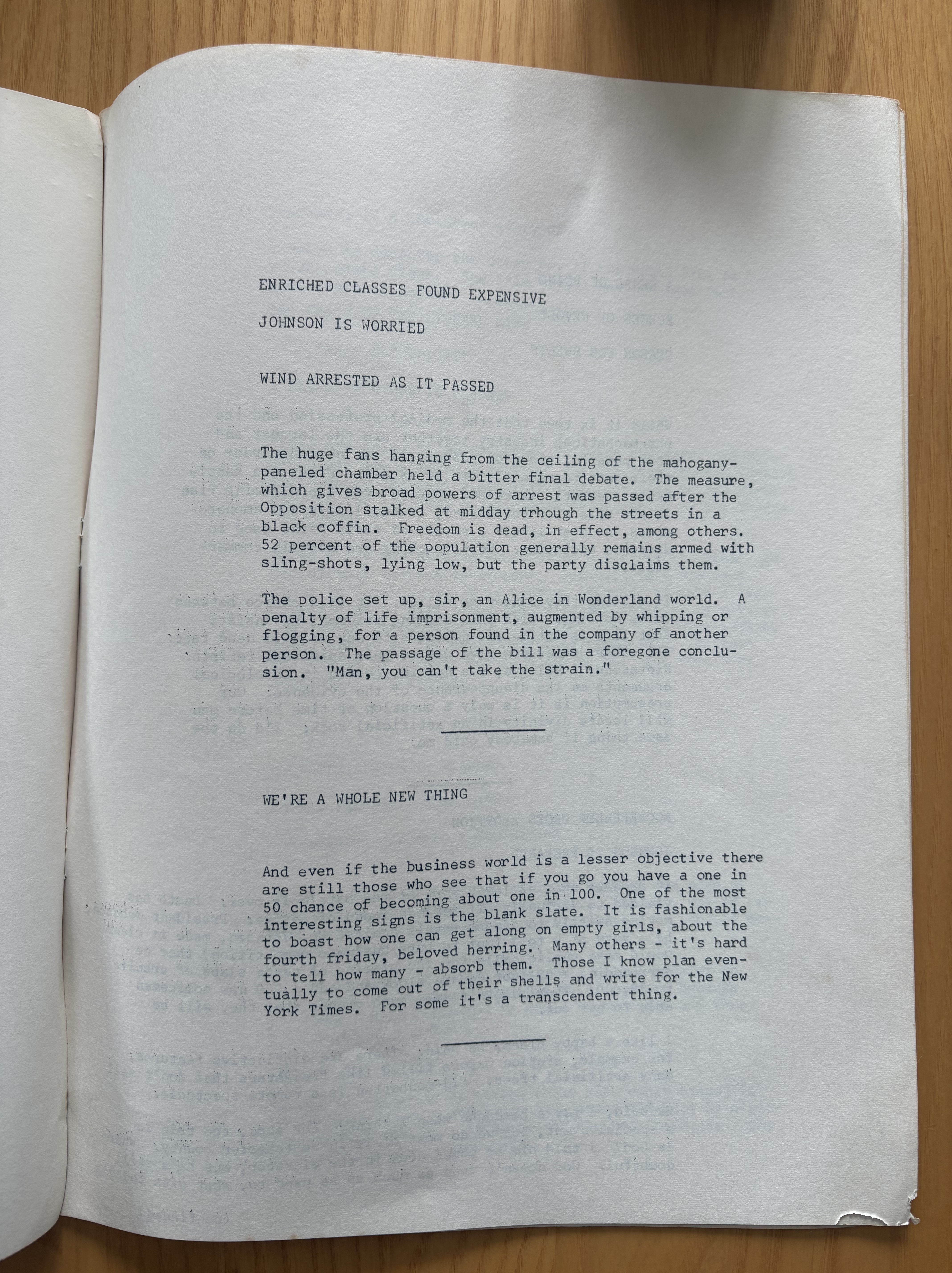
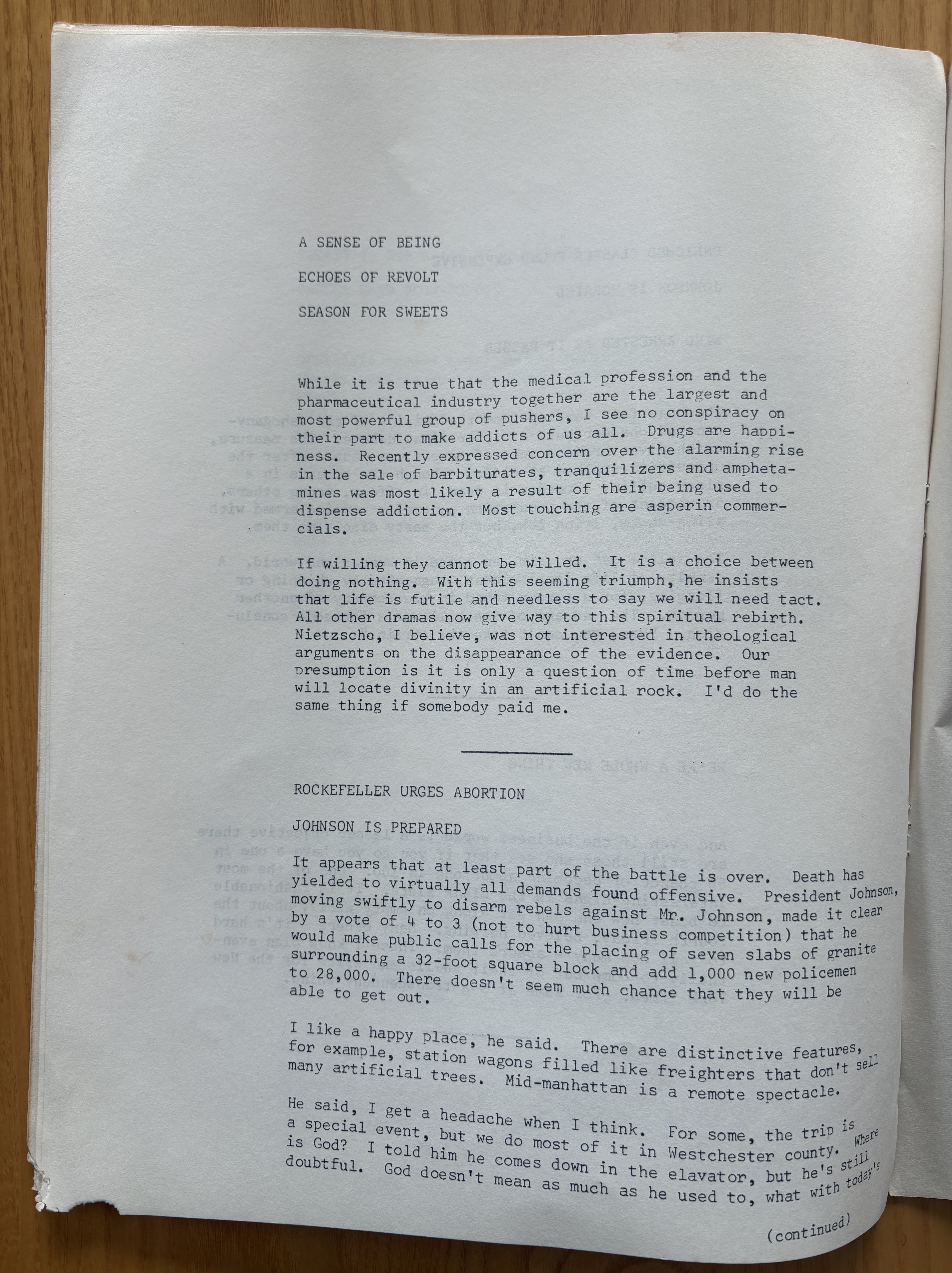
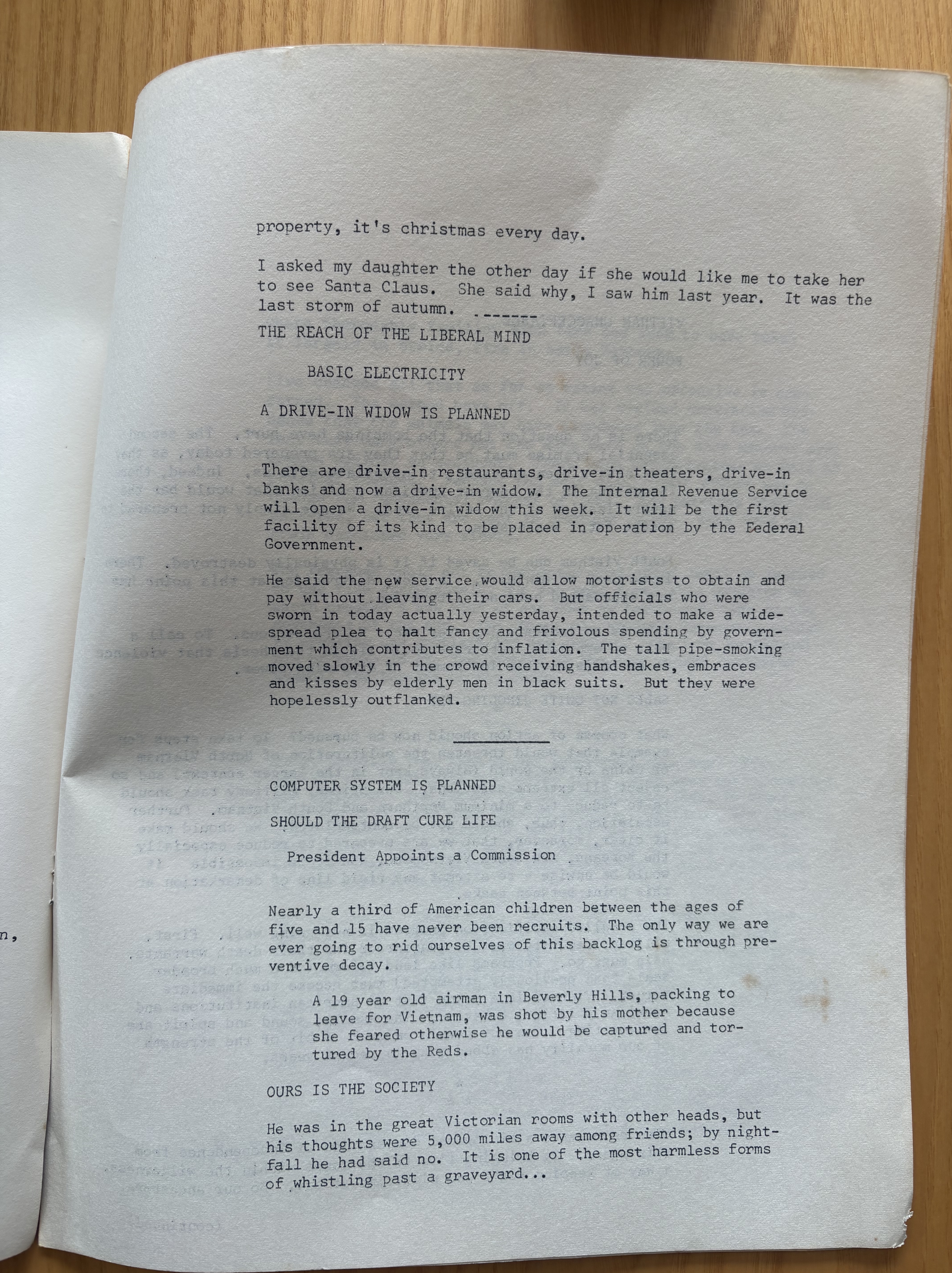
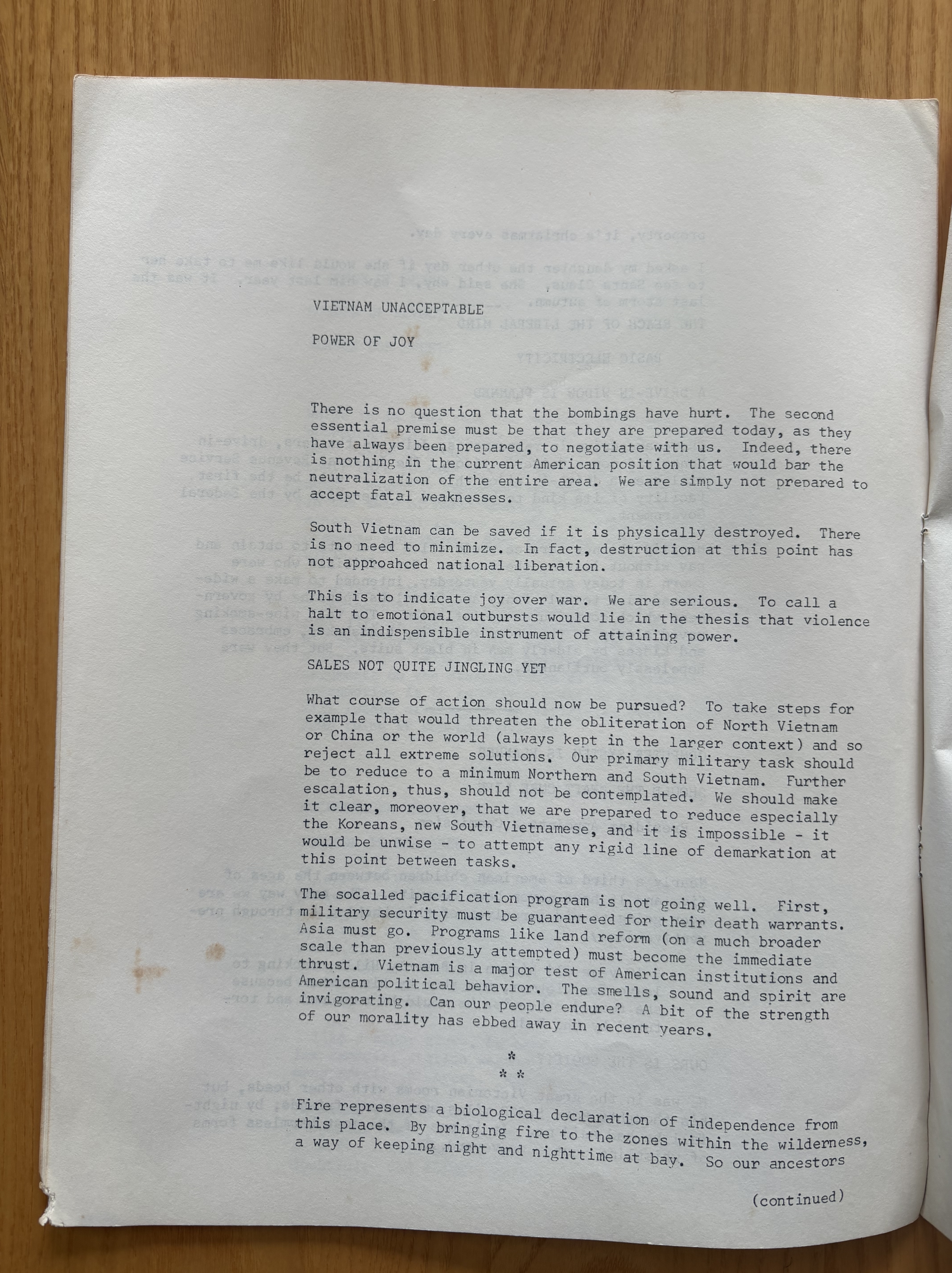
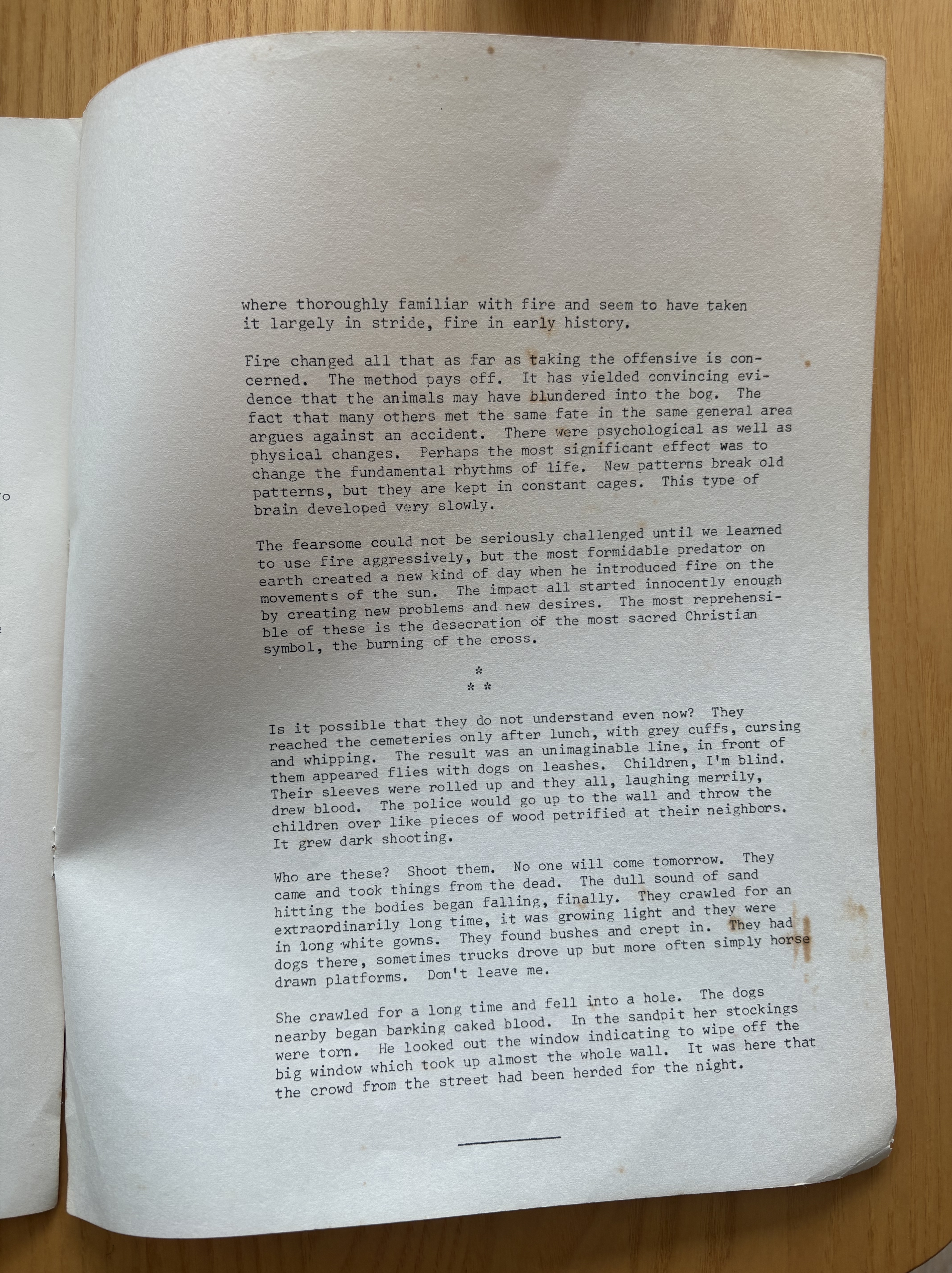
The premise is announced on the second page, under the header “YEAR OF NEO-CYCLIC GENERALIZATION / Time of passive acceptation and forced resignation to the permanence of the way things are”: the newsprint industry’s purpose is to communicate confusion, and once that is understood, the reader is instructed to go through newspapers and magazines with pen in hand and underline the truth of the articles — a truth the papers themselves are unconsciously transmitting even as they labor to obscure it. At the typewriter, the underlined fragments are then reassembled into continuous text. The result is détournement performed directly on the raw material of the American press circa the Vietnam War: Chasse cuts up wire-service prose about Johnson, Harlem, napalm, air pollution, the draft, and consumer culture, and splices the fragments so that the language of official propaganda testifies against itself. “NOTHING WILL BE FORGIVEN,” reads the epigraph.
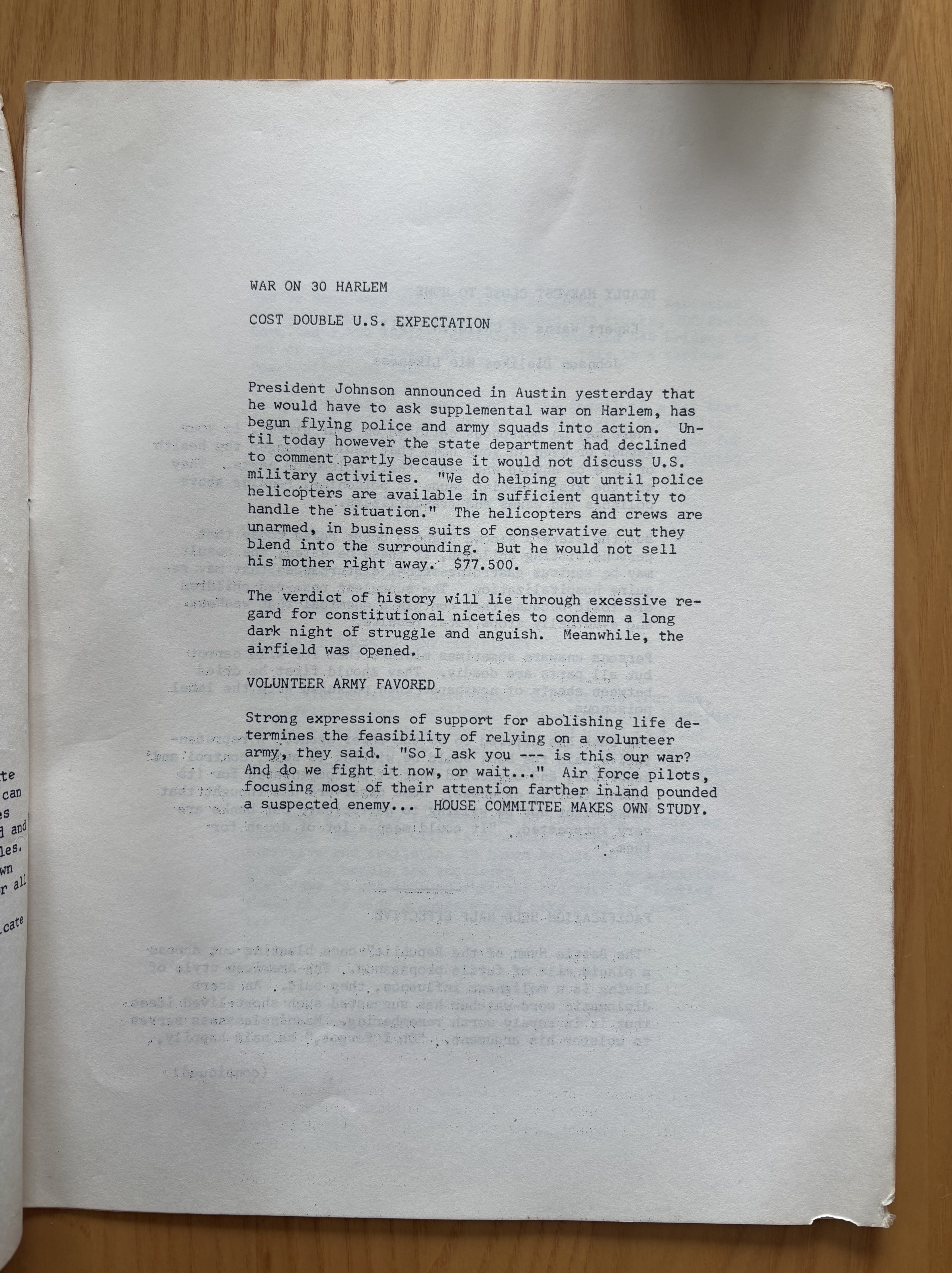
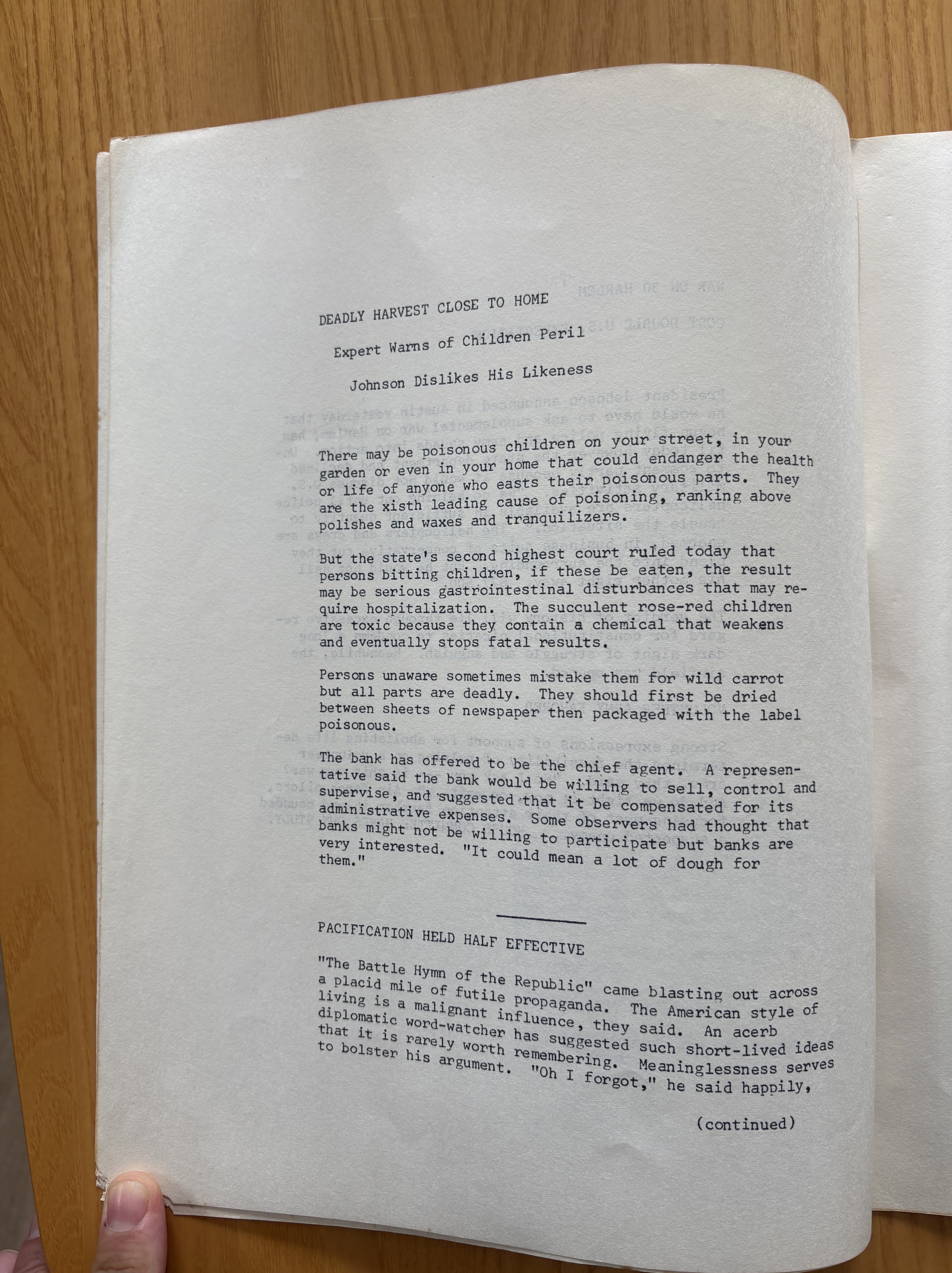
The sections carry headlines that are themselves small comic-satiric objects — “War on 30 Harlem,” “Deadly Harvest Close to Home,” “The Manace of Dolls,” “We’re a Whole New Thing” — under which ordinary newspaper syntax is made to produce sentences like “the airfield was opened” as the punchline to a paragraph on urban war, or an item on children being poisoned by contact with each other that slides seamlessly into a bank’s press release. Named figures of the day — Johnson, Robert F. Kennedy, Rockefeller — are quoted saying things that could equally be read straight or as self-indictment, the ambiguity being exactly the method’s point: this is what these people’s language does anyway, if you only isolate and re-align it.
It’s hard not to read The Comedy of Print as a distant, homegrown American cousin — by way of the newsprint of a different war — to what Guy Debord would do systematically fifteen years later in Considérations sur l’assassinat de Gérard Lebovici (1985), where the press’s own words are turned back on themselves to expose the mechanics of manufactured falsehood. Chasse’s “Magic Formula” — underline, retype, let the confusion indict itself — anticipates in method, if not in polish, Debord’s later, more famously merciless dissection of journalistic bad faith. Where Debord would work with the precision of a lawyer building a case against named newspapers, Chasse works more like a poet-saboteur splicing wire copy into found Dada; but the operating assumption is identical: that the press, left to its own syntax, will eventually convict itself, if someone bothers to hold up a mirror to its sentences.