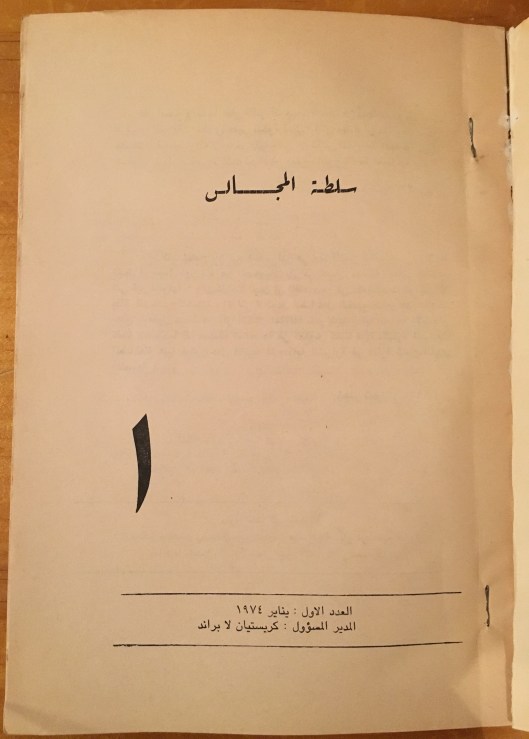
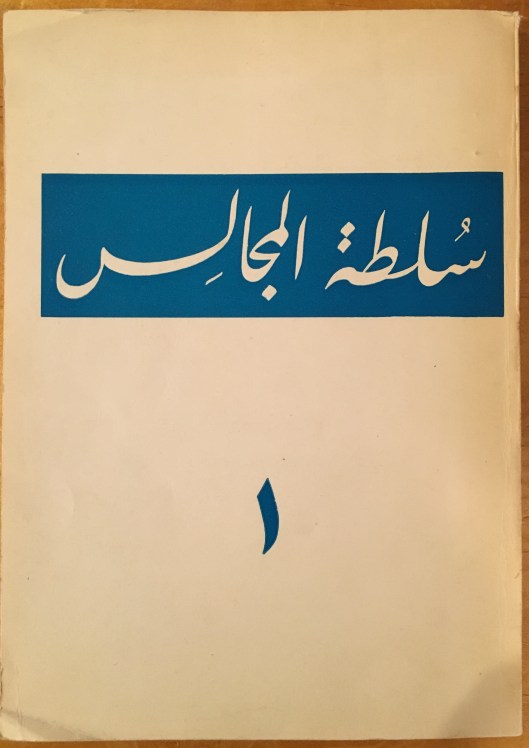
Sulta-Al-Majaliss [Le Pouvoir aux Conseils / The Powers of Councils] no.1. [1974]

Labrande, Christian [Khayati, Mustafa and Lakhdar, Latif] (Eds.). Sulta-Al-Majaliss [Le Pouvoir aux Conseils / The Powers of Councils] no.1. Paris [Beirut], January 1974. 160 p.; 17 x 24 cm. First and only issue.

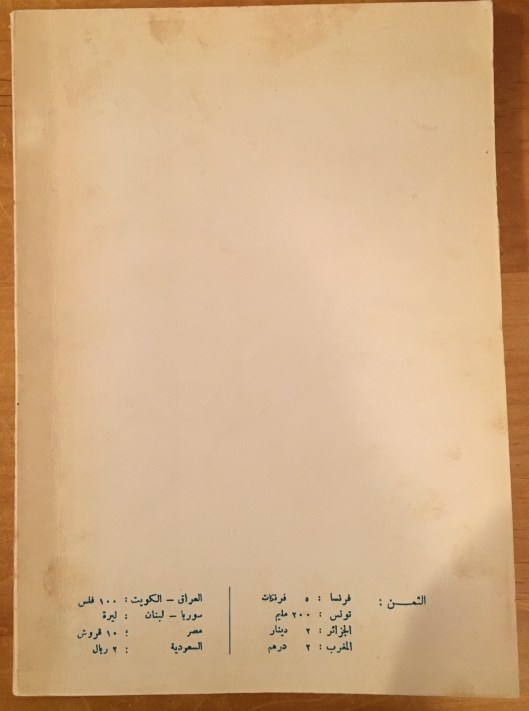
Rare Arabic-language periodical, inspired by Council Communism and Situationist ideas. Christian Labrande, author of La Premiere Internationale (Paris: UGE, 1976), is listed as its (fictitious?) editor-in-Chief. While a French P.O. Box is given as the address of the journal, it was conceived and published in Beirut. Mustapha Khayati and Latif Lakhdar collaborated on this first iteration recruiting other Arab leftist sympathizers along the way. The promising publication was to be short-lived, however, as the civil war broke out in Lebanon and no more issues were released. A price list on the back cover offers clues as to the journal’s ambitious distribution: France (5 Francs), Tunisia (200 millimes), Algeria (2 Dinars), Morocco (2 Dirhams), Iraq and Kuweit (100 Fils), Syria and Lebanon (Lira), Egypt (10 Ersh), Saudi Arabia (2 Rial). It cost 5,000 Francs to produce.

By means of background, Latif Lakhdar (1934-2013) was “a Tunisian thinker [who] fought in the Algerian revolution and later was a leader in the Democratic Front for the Liberation of Palestine in the early seventies… He was the first Arab writer to introduce the anarchist and Marxist critiques of Leninism and Marxism-Leninism….He established network of “Majalis” (councils or societies) in Beirut during the war and popularized leftist/anrachist/Marxist/ critiques of the Arab left.” (http://angryarab.blogspot.com/2013/06/al-afif-al-akhdar-is-dead.html).

Mustapha Khayati was a member of the Internationale Situationniste. He is primarily known as the author of the pamphlet De la Misere en Milieu Etudiant  (translated as the Misery of Student Life or Ten Days That Shook the Universities) and for the key role he played during the Strasbourg scandal (1966) and, later on, the Paris uprisings (May-June 1968). He left the Internationale Situationniste in October 1969 to join the Democratic Front for the Liberation of Palestine in Jordan.

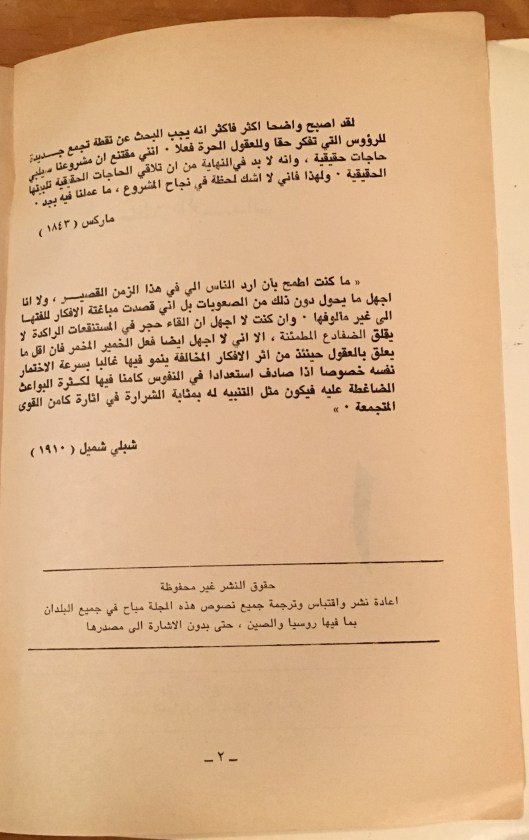
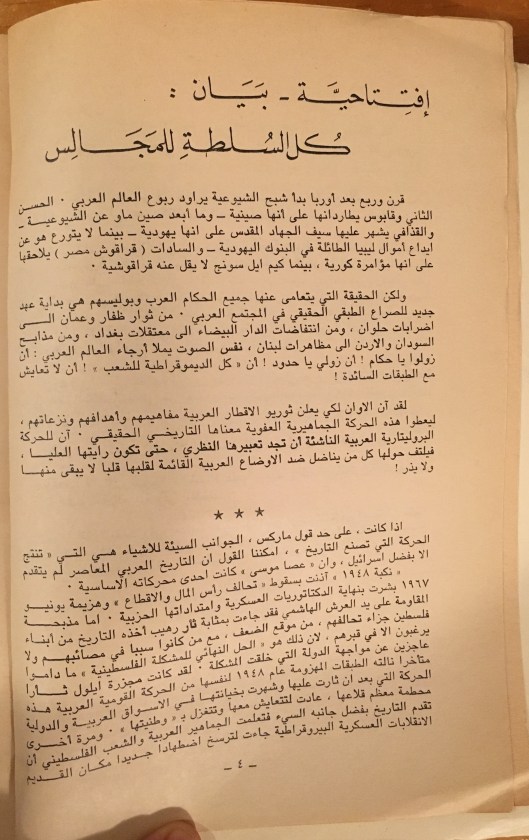
This first issue, then, opens with two long quotes, one by Karl Marx and the other by Schibli Schumayyil (p.2) A physician and intellectual of Greek origin, Schumayyil (1850-1917) was the first to introduce Darwin’s theories to the Arab world. He embraced German materialist philosophy and was an advocate of secularism. The next page provides an introduction to the publication (p.3). Soulta-al-Majaliss seeks to “facilitate the entry of Arab countries into the History of nations, through the door of proletarian revolution” (all translations are mine). “Our journal”, the editors claim, “is the first Arab Marxist journal” that advocates for “the dictatorship of the proletariat and of workers’ councils in the Arab world”

Like the Internationale Situationniste journal, Soulta-al-Majaliss features an Anti-copyright notice: “All texts published in this journal may be freely reproduced, translated and adapted in all countries, including China and Russia, even without indication of origin” (p.2). The tradition of collective authorship is also preserved for the majority of the articles.

Contents include: “Introduction / Manifest: All the Power to the Councils” (p.4-36); “The Origins of Councils: The Revolution of 1905” (p. 37-63); “A Critique of Religion: Life Against Religion” (p.64-72); “An Adress to Egyptian Workers” (p. 73-85); “The Uprising and the Revolution in Morocco” (p.86-92); “After the Fourth Defeat: The True Outcomes of the Spectacular War” (p.93-124); “The Organization of Councils” (p.125-130); “Revolutionary Defeat” (p.131-136); and more.

We locate a single OCLC copy at the University of California – Los Angeles (UCLA).
2015-12-23 17.08.272015-12-23 17.08.502015-12-23 17.09.402015-12-23 17.09.562015-12-23 17.10.172015-12-23 17.10.492015-12-23 17.11.002015-12-23 17.11.17


Les Filles de Kamare [LARGE POSTER] [1974]

Vienet, Rene. Les Filles de Kamare (une Petite Culotte pour l’Ete) Paris: n.p., 1974. 160 x 120 cm; ill. poster with screenshot from the film. Film poster for Vienet’s famous detourned film.

“Unlike Viénet’s previous work, Can dialectics break bricks? (1973), The Girls of Kamare includes original 16 mm hardcore inserts shot by Viénet.  The film is the detournement of the Tōei sukeban film Terrifying Girls’ High School: Lynch Law Classroom (1972) directed by Norifumi Suzuki. The title of the original film is given as Une petite culotte pour l’été, the director credited as “Suzuki Noribumi”. Opening credits are taken from the 1973 film Female Yakuza Tale: Inquisition and Torture of Teruo Ishii. While Can dialectics break bricks? was essentially a dub parody, this film keeps the original Japanese sound track with indelicate French subtitles.
The plot follows a team of female heroes, forced into a disciplinary school, who revolt against the authorities and their assistants. The original Japanese film ends in a successful riot which plays directly into Viénet’s detournement. Unlike Dialectics, The Girls of Kamare is less self-critical and relies more on traditional conceptions of heroism.” (Wikipedia)
Full feature available online at http://www.ubu.com/film/vienet_kamare.html

We locate no OCLC copy

2015-12-22 20.54.42

La Dialectique peut-elle casser des briques [LARGE POSTER] [1973]

Vienet, Rene. La Dialectique Peut-elle Casser des Briques? Paris: n.p., 1973. 160 x 120 cm; ill. poster with screenshot from the film.

Film poster for Vienet’s famous detourned film. “Le premier film entièrement détourné de l’histoire du cinéma, v.o., sous-titres par l’Association pour le développement des luttes de classes et la propagation du matérialisme dialectique” (“The first completely detourned film in the history of cinema, original soundtrack, subtitles by the Association for the promotion of class warfare and dialectical materialism”).

We locate no OCLC copy

$_57

La Societe du Spectacle [1969/1970] – Hannah Ziegellaub’s working copies

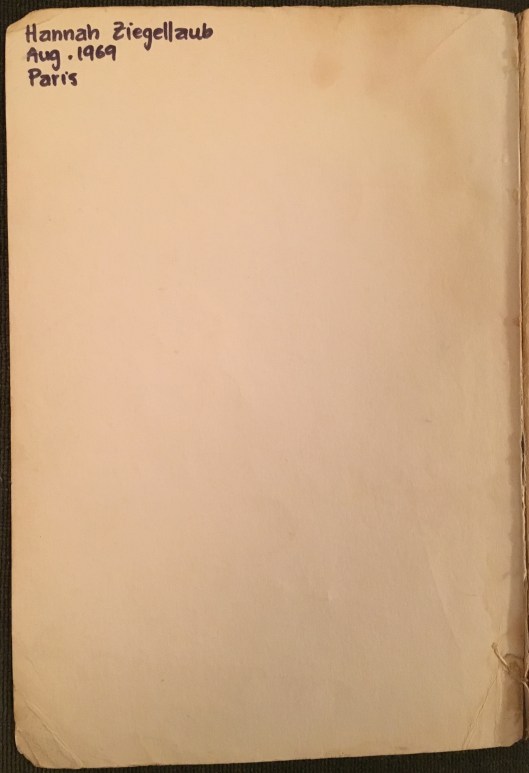
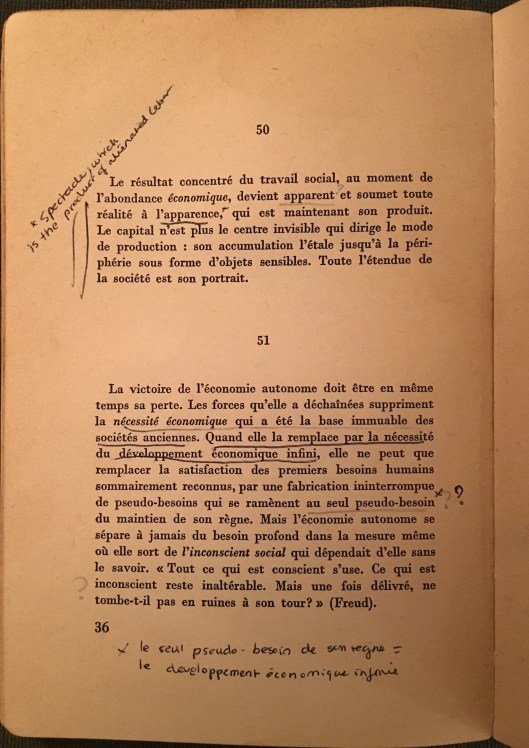
Debord, Guy. La Société du Spectacle. Paris: Buchet-Chastel, 1967. First edition, second printing (3 March 1969). 176 p.; 20.5 x 14 cm; White cover with text in black. Hannah Ziegellaub’s working copy, inscribed as such (“Hannah Ziegellaub / Aug, 1969 / Paris). It contains a wealth of annotations that were used in preparing the text’s first translation by Black & Red and 1970 (see below)

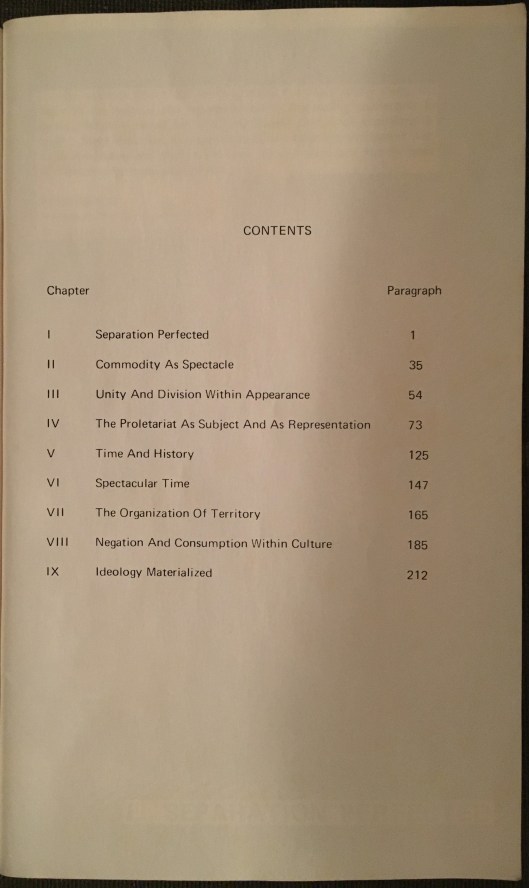
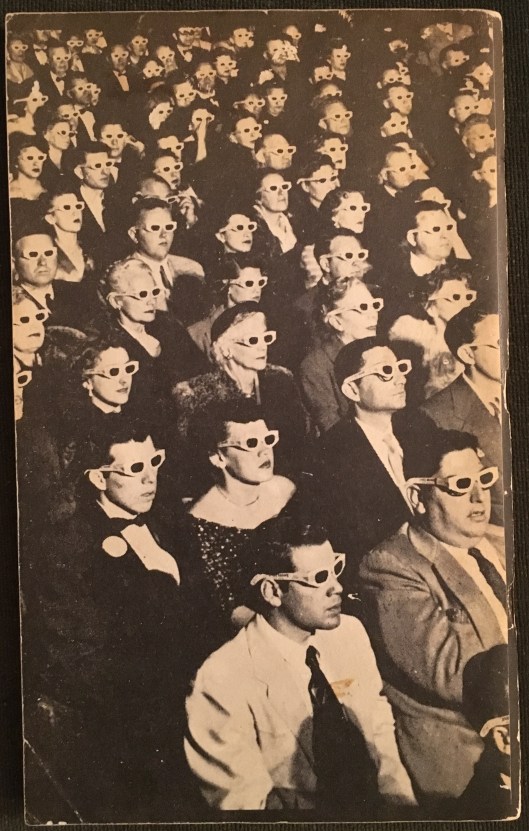
Debord, Guy. The Society of the SpectacleDetroit: Black & Red, 1970. First English edition, first printing (1970). np [120p.].; 21.5 x 13.5 cm.; B&W ill. wrappers with picture of a building. Hannah Ziegellaub’s copy, inscribed with her name and telephone number. The text was a group translation, and Hannah Ziegellaub was one of the key contributors:. This is Lorraine Perlman’s account in Having Little, Being Much: A Chronicle of Fredy Perlman’s Fifty years (Detroit: Black & Red, 1989):

“[…] in Detroit, the group he wanted to “join” had just undertaken a collective project to translate into English the text which was the cornerstone of Situationist theories: Guy Debord’s La Société du Spectacle. The translating sessions, attended by Hannah [Ziegellaub], Jon [Supak], Judy [Campbell], Don [Campbell], Fredy [Perlman] and me [Lorraine Perlman], usually turned into commentary on the author’s observations. We all found examples to illustrate the truth of his theories, frequently citing our experiences in establishing a print shop without recourse to hierarchy or bureaucracy. As a model of collaborative activity, this translating effort had visible flaws. When there were differences on how to formulate a passage, it was usually Fredy’s version that was finally accepted. Fredy’s stubbornness occasionally seemed unkind but when he firmly believed that his choice was better, he refused to give way […]”.

About Hannah Ziegellaub, from her New York Times obituary “ZIEGELLAUB–Hannah, 61 died May 29, 2006 in New York City of complications from Multiple Sclerosis. She is predeceased by her beloved husband Michael Brussell and her parents Dora and Detch Ziegellaub. Hannah was a consummate visual artist, a passionate social justice activist, and an extraordinary friend. Survivors include her devoted sister Mimi Ziegellaub, her brother-in-law Richard Eichler, her loving niece Emmy, close family friend Mimi Arsham, Irene and Veronica Selver and her cousin Ruthie Seglow with whom she grew up like sisters, and by her extended family and her legion of friends whose sorrow travels the globe. From all of us who love you”

Provenance: Hannah Ziegellaub, through the trade. Sincere thanks to Ken Mallory for procuring these exceptional copies.

2015-12-22 17.44.022015-12-22 17.44.112015-12-22 17.46.022015-12-22 17.44.492015-12-22 17.44.382015-12-22 17.46.272015-12-22 17.46.442015-12-22 17.47.112015-12-22 17.47.262015-12-22 17.47.402015-12-22 17.47.532015-12-22 17.48.10

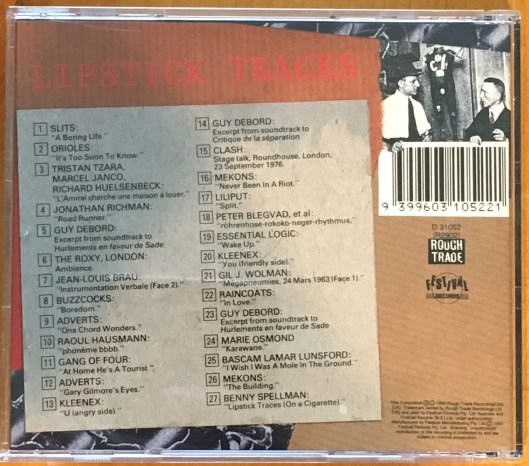
Lipstick Traces [Soundtrack] [1993]

Various Artists. Lipstick Traces.  London: Rough Trade Records, 1993. 1 Compact Disc; 13 x 13 cm; ill. Cover with photographic montage.

“This is a soundtrack to Lipstick Traces : A secret History of the 20th Century (1989), by Greil Marcus, published in the US by Harvard University PRess, in the UK by Penguin Books, in Germany by Rogner & Bernhard, in Italy (as Trace di Rossetto) by Leonardo Editore, and in Spain (as Rastros de Carmin) by Anagrama” (inside leaflet)


“This CD is a sort of accompanying soundtrack to Greil Marcus’ book Lipstick Traces. It features music by The Slits and The Buzzcocks, ambiences of London concert halls (such as the Roxy and Roundhouse), Dada (Tzara, Janco, Huelsenbeck, Haussmann) and Lettrist (Brau, Wolman) sound poetry, and excerpts from the soundtrack to Debord’s Howls for Sade and Critique of Separation” (Gonzalvez 162, traduction is mine)

Full tracklist on Discogs  (http://www.discogs.com/Various-Lipstick-Traces/release/906706)

All audio track available at Ubuweb (http://www.ubu.com/sound/lipstick.html)

2015-12-22 11.11.262015-12-22 11.11.122015-12-22 11.12.122015-12-22 11.13.202015-12-22 11.13.282015-12-22 11.13.492015-12-22 11.14.002015-12-22 11.14.10

WOLMAN = Lettrism + Detournement [2015[

As of late, Lettrisme scholar, sound artist and experimental composer Frederic Acquaviva has been busy bringing Gil J. Wolman back to the forefront of (art) history. Earlier this year, we discussed “Et des Hommes…”, a comics collage  by Wolman made available to the general public for the first time courtesy of Editions Acquaviva. We now wish to mention a Wolman exhibit put together by Acquaviva at “La Plaque Tournante” (a likely reference to the psychogeographic concept of “rotating plates”) gallery in Berlin:  http://www.laplaquetournante.org/03-5.html

WOLMAN = Lettrism + Detournement [INVITATION CARD]. n.p. [Berlin, Germany]: n.p. [La Plaque Tournante / Frederic Acquaviva], n.d. [2015]. 15 x 10 cm. double-sided postcard. Invitation card to the opening of the “WOLMAN = Lettrism +  Detournement” exhibition at “La Plaque Tournante” in Berlin from September 20 to November 13, 2015. FRONT: Photograph of Wolman. BACK: Logistical details and short blurb about the exhibition (“For the first time in Berlin, an exhibition of key artist Gil J. Wolman (1929-1995), historical member of Isidore Isou’s Lettrism since 1950 and co-founder of the Letterist Internationale and ‘Mode d’Emploi du Detournement’ with Guy Debord. More than 200 artworks, books, documents, photos, ephemeras, prints and soundworks from 1950 to 1995.”

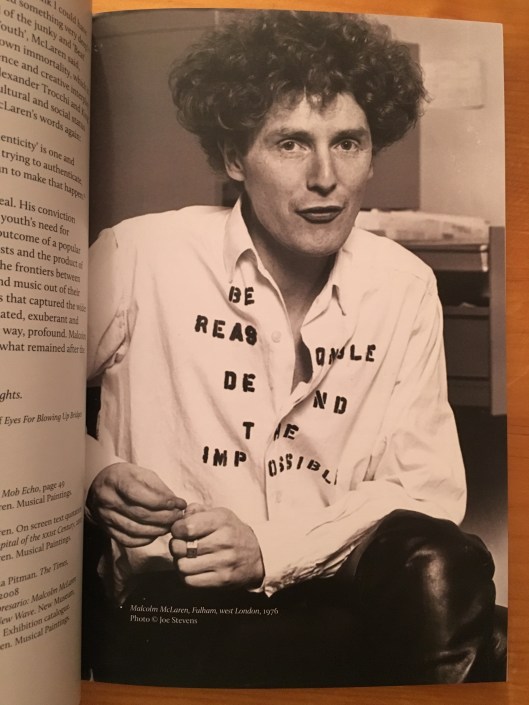
Eyes For Blowing Up Bridges: Joining the Dots from the Situationist International to Malcolm McLaren [2015]


Today, a series of items that relate to the recent exhibition “Eyes for Blowing Up Bridges: Joining the Dots from the Situationist International to Malcolm McLaren” held at the John Hansard Gallery in Southampton, UK from 26 September to 14 November 2015.

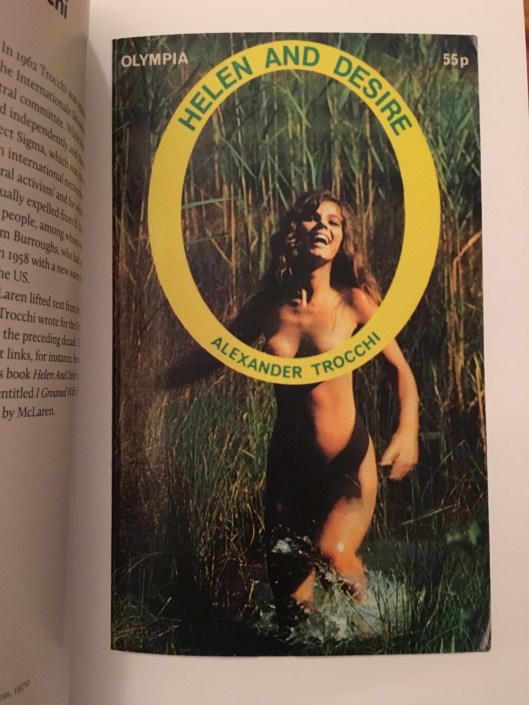
Gorman, Paul et al. Eyes for Blowing Up Bridges: Joining the Dots from the Situationist International to Malcolm McLaren [CATALOG]Southampton, UK: John Hansard Gallery, 2015. 96 p.; ill.; 16 x 24 cm. Catalog of the exhibition held at the John Hansard Gallery, University of Southampton, from September to November 2015. The exhibition brings together the likes of King Mob, Guy Debord, the Internationale Situationniste, Alexander Trocchi, Asger Jorn, William Burroughs and attempts to create a link all the way through Malcolm McLaren. Includes a foreword by Stephen Foster & Ros Carter, an Introduction by Paul Gorman, and essays by David Thorp  (“Joining the Dots”) and Fred Vermorel (“Blowing up the bridges so there is no way back”). The title of the exhibition is inspired by Debord’s phrase, “de beaux yeux pour faire sauter des ponts”, taken from correspondence between Guy Debord and his friend Hervé Falcou.

2015-12-22 01.20.012015-12-22 01.20.322015-12-22 01.21.102015-12-22 01.21.302015-12-22 01.22.50

Eyes for Blowing Up Bridges: Joining the Dots from the Situationist International to Malcolm McLaren [LEAFLET]n.p. [Southampton, United Kingdom]: n.p. [John Hansard Gallery], n.d. [September 2015]. Ill. two-sided leaflet, 52 x 42 cm (folded into 13 x 21 cm sheet). The leaflet unfolds into a map that recalls Debord and Jorn’s Naked City (1957), with the following instructions “Drift…You are invited to enjoy this exhibition in the manner of the deriveur. Drift, so that you may become repelled or enchanted by what you find, and return home having noted the ways in which the areas traversed resonate with particular moods and ambiences. Paul Gorman + David Thorp, Curators”. On the flip side, an extract from the catalogue essay by Fred Vermorel as well as mini-bios of Malcolm McLaren, William Burroughs, Alexander Trocchi, Guy Debord, and Asger Jorn.

Eyes for Blowing Up Bridges: Joining the Dots from the Situationist International to Malcolm McLaren [PRIVATE VIEW CARD]. n.p. [Southampton, United Kingdom]: n.p. [John Hansard Gallery], n.d. [September 2015]. Ill. two-sided card; 21 x 15 cm. Private view invitation card for the “Eyes for Blowing Up Bridges” exhibition at the John Hansard Gallery, University of Southampton. Front: Naked City inspired detourned map with the names of the key artists and political movements featured in the exhibition (King Mob, Malcolm McLaren, William Burroughs, Guy Debord, Alexander Trocchi, Asger Jorn, Situationist International). Back: Relevant logistical details for the private view (Saturday 26 September, 1pm-3pm).

2015-12-22 01.14.472015-12-22 01.15.18

 John Hansard Gallery – What’s On – September-November 2015. N.p. [Southampton, United Kingdom]: n.p. [John Hansard Gallery], n.d. [September 2015]. Ill. leaflet; 42 x 21 cm. Leaflet for the October/November 2015 program at the John Hansard Gallery, University of Southampton. This includes the “Eyes for Blowing Up Bridges” exhibition (26 September – 14 November), as well as events and workshops and future exhibitions.

For more information and catalog purchases, see http://www.hansardgallery.org.uk/event-detail/188-eyes-for-blowing-up-bridges-joining-the-dots-from-the-situationist-international-to-malcolm-mclaren/

Philobiblon talk on collecting the Internationale Situationniste (Dec. 8)

Dear readers,

Please excuse the shameless self-promotion, but for those of you living in (or traveling through) the Philadelphia area, please come and listen to me talk about my collection around the Internationale Situationniste and its aftermath. Please leave me a note if you’d like to attend.

————————————————————-

THE PHILOBIBLON CLUB OF PHILADELPHIA

Collecting the “Spectacular-commodity:” the Internationale Situationniste and its Aftermath

Tuesday, December 8, 2015

Founded in 1957, the Internationale Situationniste was one of the foremost Post-war European avant-gardes. Its leader, Guy Debord, posited that “in modern societies… everything that was directly lived has moved away into a representation.” In a sense, the opening sentence of the Society of the Spectacle (1967) – Debord’s magnum opus and the movement’s key theoretical foundation – encapsulates the Situationsists’ unique take on traditional Marxo-Hegelianism. According to Debord, alienation does not lie in workers’ lack of agency (as Marx believed) but – and this is a simplification – in the fact that, in modern societies, social interactions are mediated by (distorted) images.

Collecting the Internationale Situationniste is, in many ways, a duplicitous, even counter-revolutionary, act. The Situationist movement rejected the accumulation of material goods and attacked the concept of copyrights, viewing the former as a noxious byproduct of the “spectacular-commodity” economy and the latter as a means to constrain ideas within controlled, commercialized distribution channels. Unsurprisingly, then, the group’s eponymous journal opens with a statement that “all texts published in Internationale Situationniste may be reproduced, translated, or adapted without indication of origin”.  Many took the Situs to their word – their writings can be purchased for a small price at most anarchist bookstores or downloaded free of charge from the internet.

This talk will provide an introduction to the Internationale Situationniste through the prism of book collecting. It will also address some of the joys and challenges of acquiring material whose materiality actively rejects its collectible status (e.g., endless pirate reprints, no imprint information, unknown run, poor quality paper, etc.).

More about the collection can be found on Public Collectors, a project to make public “cultural artifacts that public libraries, museums and other institutions and archives either do not collect or do not make freely accessible” (http://publiccollectors.org/SituationnisteCollection.html). Unique or otherwise unusual items from the collection are shared on a regular basis through a dedicated blog (https://situationnisteblog.wordpress.com/).

Fin de Copenhague [1957]

Jorn, Asger and Debord, Guy. Fin de Copenhague. Copenhagen: Bauhaus Imaginiste , May 1957. n.p. [36 pp.]; ill.; 24.5 x 17 cm.; ill. blue-gray publisher bindings impressed with a page “liberated” from the Danish newspaper Politiken (each copy was made with a different page, and is thus unique). Color reproduction of text and picture collages.

Our copy is among a handful of unnumbered copies reserved for the artists beyond the commercial run of two-hundred numbered and signed copies. This presentation copy was personally gifted to Ole Jorn by his father,Asger Jorn,  who warmly inscribed it as such (“To Ole, from Papa”).  An extraordinary provenance indeed.

fin de copenhague010

fin de copenhague008

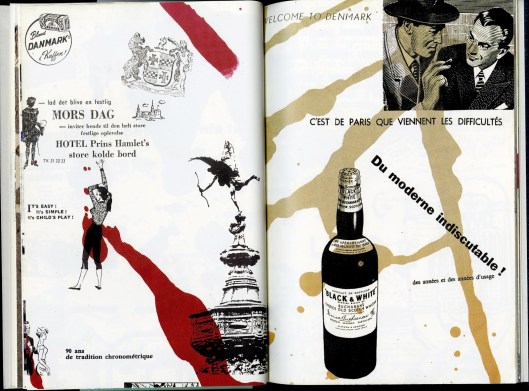
Fin de Copenhague is the product of a collaboration between Guy Debord and Asger Jorn immediately preceding the foundation of the Situationist International. “The book was printed within 24 hours as an artistic experiment. Having just arrived in Copenhagen, Jorn and Debord rushed into a newsagents, stole a huge amount of magazines and newspapers, and spent a drunken afternoon collaging elements together. The next day they arrived at the printer with 32 collages, which were transferred to lithographic plates. Jorn then sat at the top of a ladder over the zinc plates, dropping cup after cup of Indian ink onto them. The plates were then etched and printed over the black texts and images.” (Bruun Rasmussen). The book was produced by legendary printer of avant-garde movements Permild & Rosengreen, whom Jorn and other COBRA artists had trusted with several of their works.

Since its original publication in 200 copies, Fin de Copenhague was reprinted a few times. It was first included in Documents Relatifs a la Fondation de l’Internationale Situationniste, pp. 553-592 (Paris: Allia, 1985), which is now out of print. A standalone facsimile was released by Allia in 1986, and reissued in September 2001 (under the collection “Contributions a l’Histoire de l’Internationale Situationniste et son Temps”) with a preface by Gerard Berreby. Finally, It is now available over the internet; a full PDF facsimile of the first edition can be found online at  http://monoskop.org/images/7/75/Jorn_Asger_Fin_de_Copenhague.pdf

We locate 13 OCLC copies: 6 in Europe (Danish Union Catalogue and National Library, State and University Library in Aarhus, Bibliotheque Nationale de France, Universite Libre de Bruxelles, Bibliotheque Nordique, Bibliotheque Litteraire Jacques Doucet) and 7 in the United States (Berkeley, Getty, MIT, Northwestern, Stony Brook, Yale, Columbia).

Gonzalvez 84. Hansen 166.

Sincere thanks to Tommy K. for his help in securing this exceptional copy

Further reading:

Nolle, Christian. Books of Warfare: The Collaboration between Guy Debord & Asger Jorn from 1957-1959.http://virose.pt/vector/b_13/nolle.html

Poynor, Rick. On my Shelf: Fin de Copenhague.  http://designobserver.com/article.php?id=37720


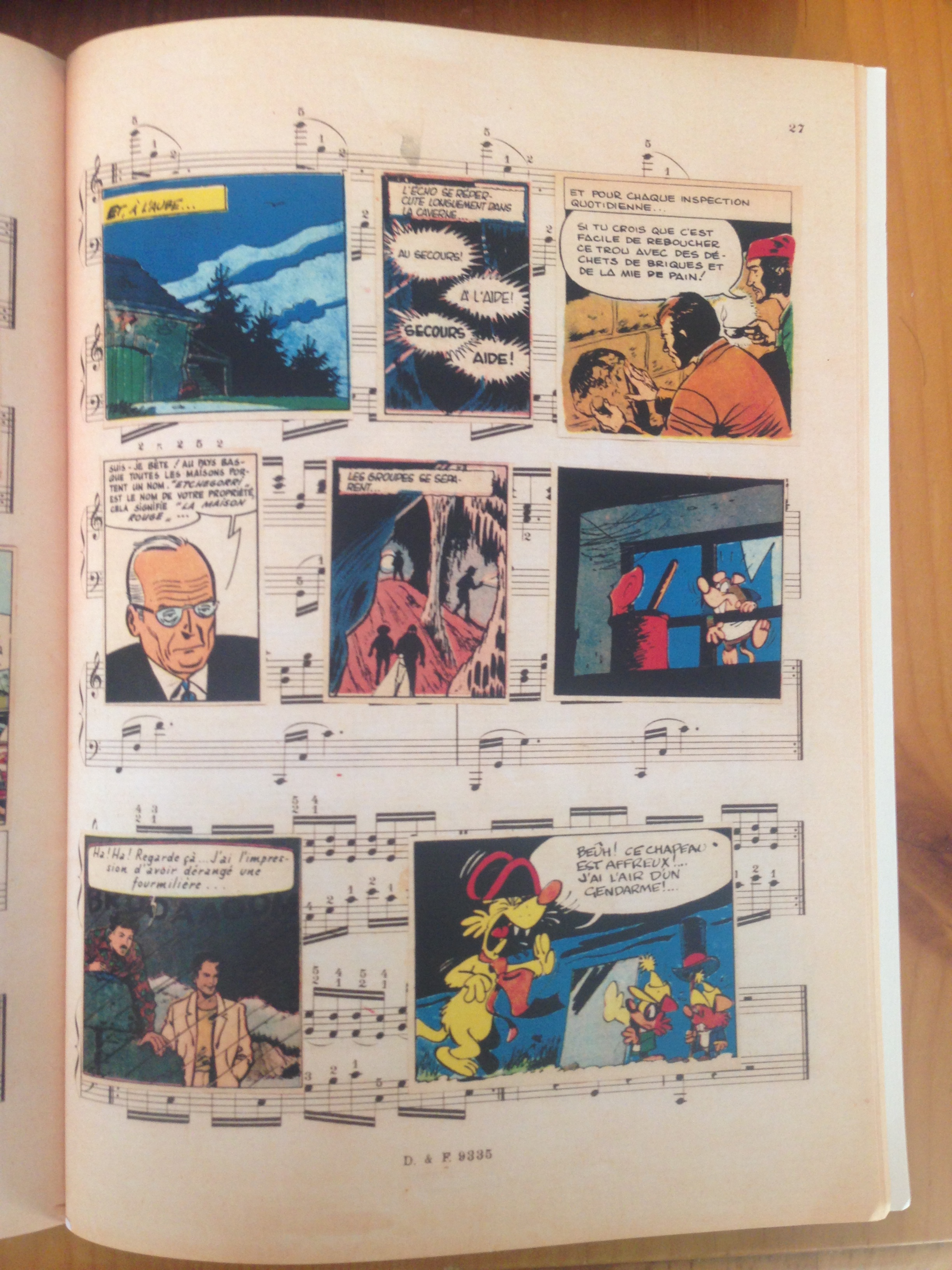
Et des Hommes…by Gil Wolman [1973 / 2015]

Wolman, Gil. Et des Hommes. Berlin: Editions AcquAviva, 29 September 2015. n.p. [32 p.]; ill.; 20 x 28 cm.; ill. Wrappers with comic strips.

First edition of Wolman’s work of comics collages on a piano, released on the occasion of the exhibition “Woman = Lettrism+Detournement” at “La Plaque Tournante” in Berlin While the original work dates from ca. 1973, it is made available to the general public for the first time, courtesy of Lettrisme scholar, sound artist, and experimental composer Frederic Acquaviva (who also edits this volume) as well as the Gil J. Wolman estate.

This limited edition of 100 is priced competitively (20 Euro) and available directly from the publisher (info@laplaquetournante.org) or avant-garde book dealer LecointreDrouet (www.lecointredrouet.com) in Paris.

For those able to attend, the exhibit features “more than 200 artworks, books, documents, photos, ephemera, prints and soundworks from 1950 to 1995”. La Plaque Tournante is at Sonnenallee 99, 12045 Berlin, Deutschland. Through November 13, 2015.http://www.laplaquetournante.org/03-5.html

2015-10-18 16.25.48 2015-10-18 16.25.57 2015-10-18 16.26.23 2015-10-18 16.26.41 2015-10-18 16.27.04 2015-10-18 16.27.28 2015-10-18 16.25.27