GUEST POST: Berkeley Barb Vol.6, No.16 Issue 140 (April 19-25, 1968)

Berkeley Barb Vol. 6 No. 16 Issue 140 (April 19-25 1968). [San Francisco, US]: Liberation News Service, 1968. 24 p.; ill.; 45 x 29cm; white self-wraps with image printed in red (continued in black on inside page).

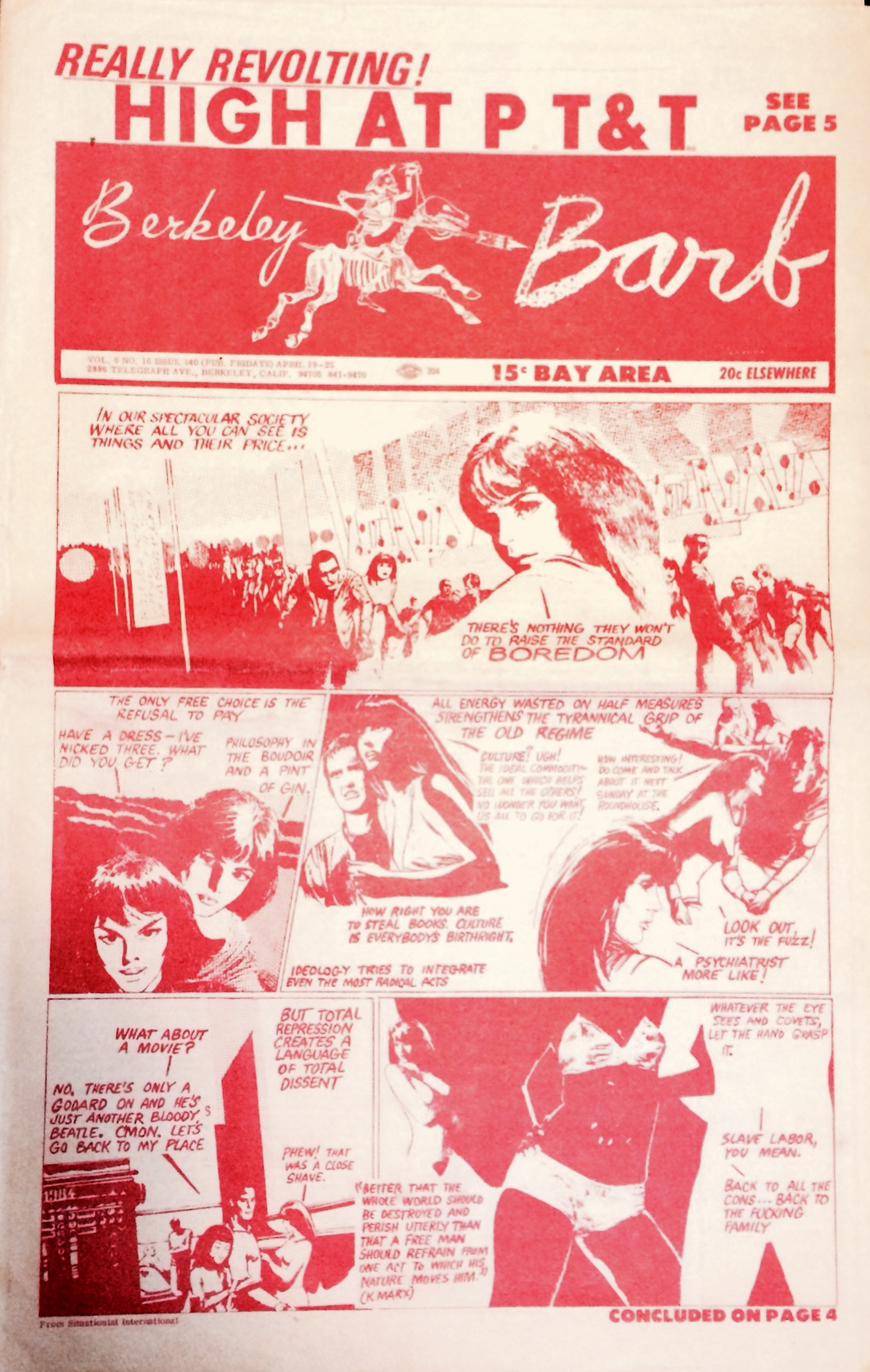
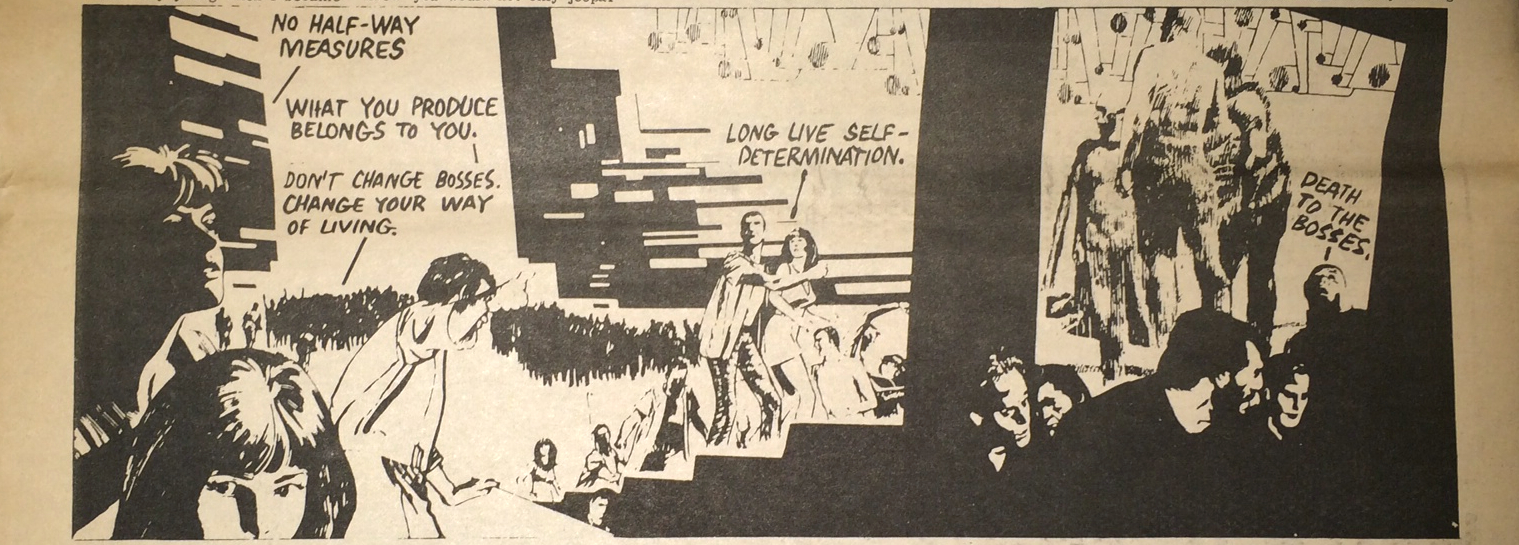
A previous post featured the cover of International Times #28 which had a Situationist poster (announcing the publication of Internationale Situationniste #11) as it’s front cover. This edition of the Berkeley Barb features the second poster produced to promote IS #11 – again in (quite loose) English translation. This poster was designed by André Bertrand with text by Raoul Vaneigem, and was originally issued in French in October 1967.

Interestingly, even though it was printed in an American paper, the reference to the “Roundhouse” (an underground music venue in London) strongly suggests that this translation was produced by the English section of the SI (possibly before it was excluded in December 1967).

The translation omits the last part of the original poster, which references the publication of IS#11:

“Camarades, ceci n’est qu’un commencement. Pour en savoir plus long sur vous-mêmes, pour reconnaître rapidement vos possibilitiés, lisez la revue ‘Internationale Situationniste’. Le numéro 11 vient de paraitre. Boite postale 307 03 Paris”

(”Comrades, this is only the beginning. To find out a lot more about yourselves, and to quickly identify your options, read ‘Internationale Situationiste’. Issue no. 11 is just out. PO Box 30703 Paris”)

image(5)

image(4)

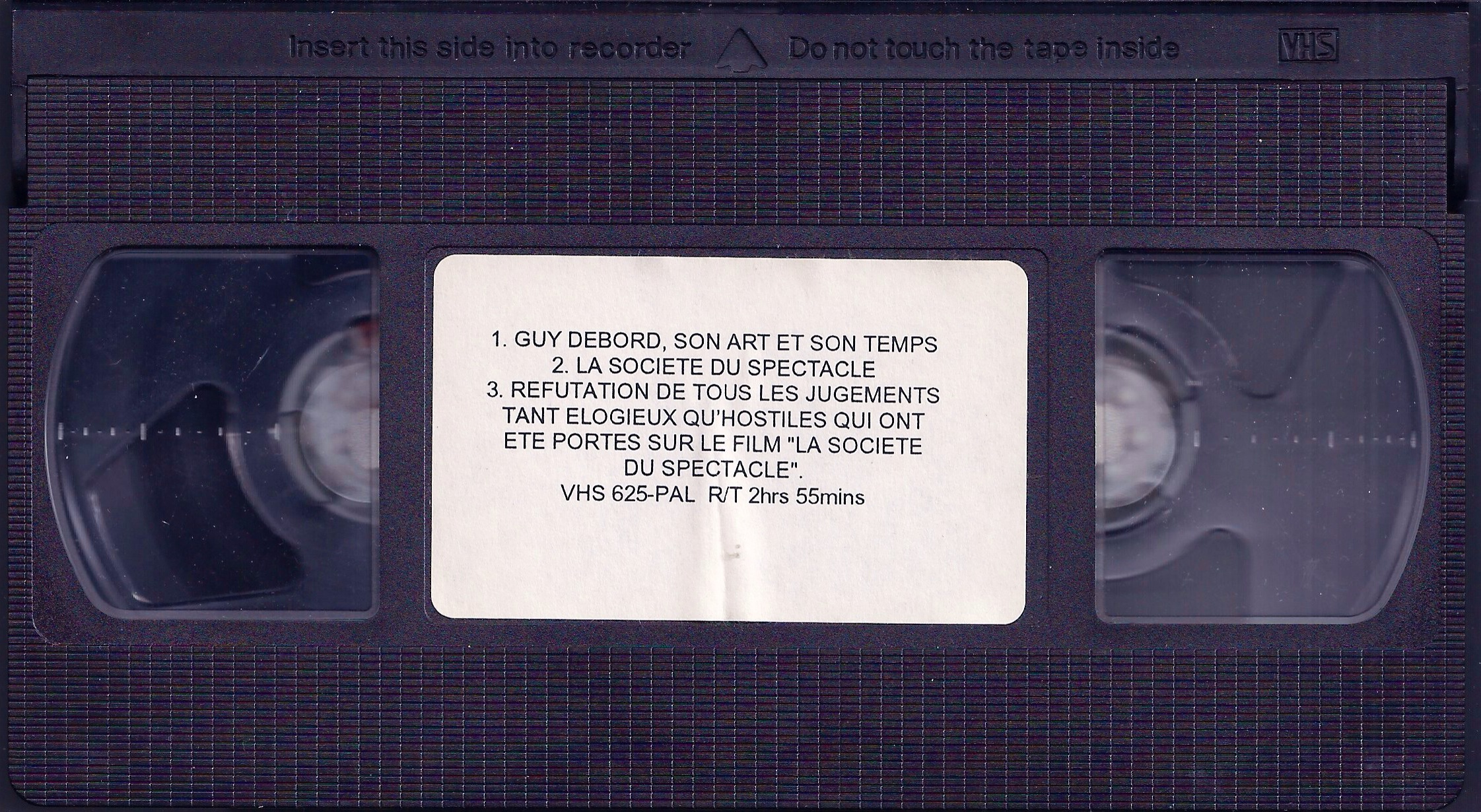
La Societe du Spectacle [FILM – VHS Tape]

Debord, Guy. La Société du Spectacle et Refutation de tous les jugements…plus ‘Guy Debord, son Art et son Temps’ avec Brigitte Cornand [FILM].

The film version of the Society of the Spectacle was released in 1973, six years after the eponymous book and a year after the dissolution of the SI. Following Gerard Lebovici’s assassination in 1984, and in response to the press’ accusations that he may have killed his friend and publisher, Debord took his films out of circulation until after his death. While his films were shown on French television immediately following Debord’s suicide in 1994, it wasn’t until 2005 that they were officially re-released to the public in a DVD box set titled Guy Debord: Oeuvres cinématographiques complètes.

Between 1984 and 2005 – when Debord’s films were difficult to get a hold off – bootleg VHS tapes and DVDs flourished, some astronomically priced. The item below offers a glimpse of such items, and was likely released sometime in the mid to late 1990s.

Not found in the trade, with a single OCLC copy (Nanterre BDIC)

image

image2


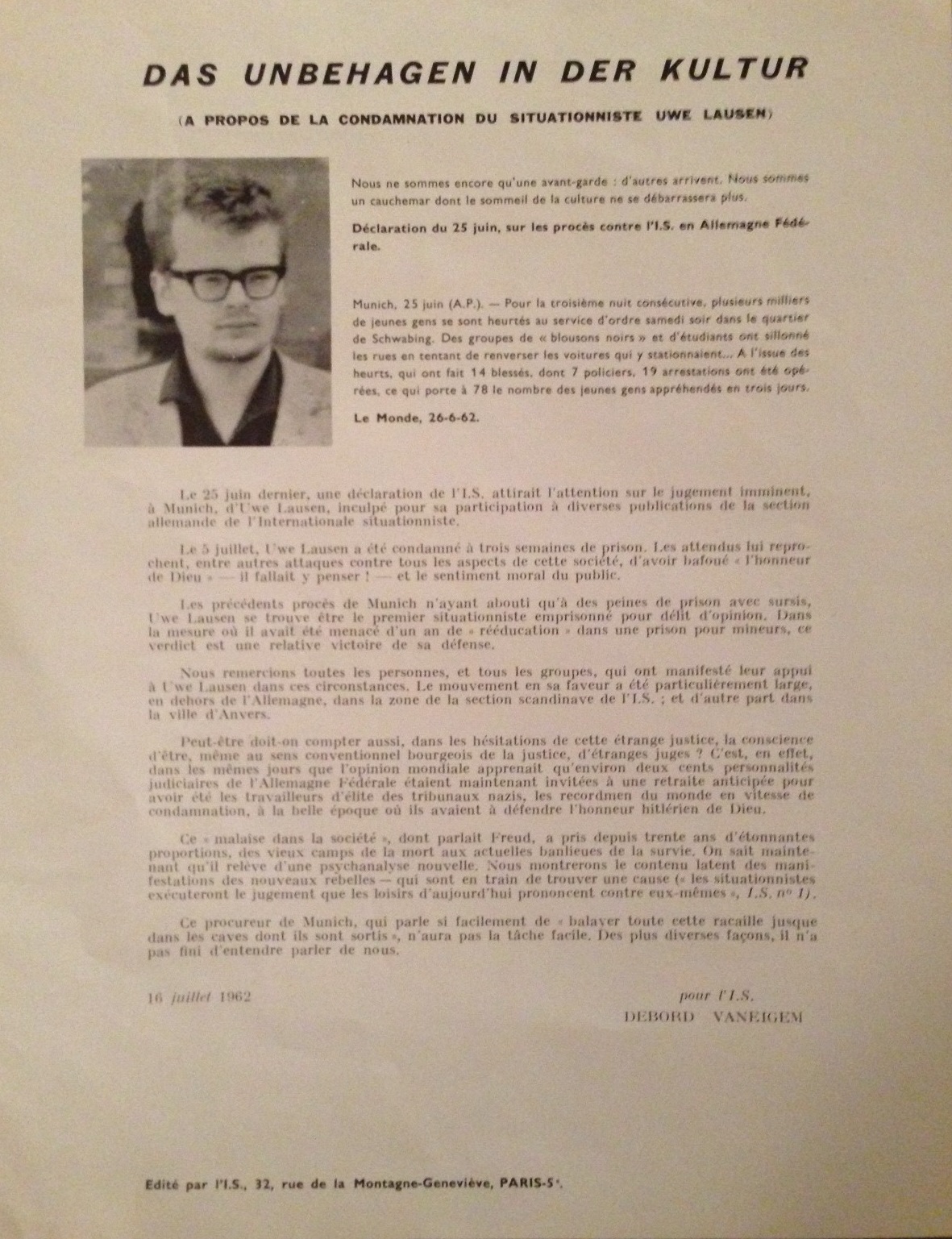
Das Unbehagen in Der Kultur [1962]

Internationale Situationniste. Das Unbehagen in Der Kultur (A Propos de la Condamnation du Situationniste Uwe Lausen). Paris: Internationale Situationniste, 16 July 1962. 1 p. leaflet (single-sided); black type on white paper.

Leaflet in French, signed by Debord and Vaneigem and illustrated by a photography of the young Uwe Lausen, a member of the German section of the Internationale Situationniste. This leaflet denounces the sentencing of Uwe to a year-long prison term for his involvement with the periodical SPUR. It comes as a follow-up to Declaration sur les Proces contre l’Internationale Situationniste en Allemagne Federale, issued on June 25, 1962, and which protested the trial of Uwe Lausen in Munich. Das Unbehagen in Der Kultur is reproduced in Situationist Times 2 (September 1962) and Situationistisk Revolution 1 (October 1962).

Found in Raspaud 114 and Gonzalvez 118. Rare in the trade, with no copies currently available. OCLC lists a single copy at the Getty, but we know that the BNF, the Centre Pompidou and Yale also have copies of their own.photo(1)

Espana en el corazon [1960]

Internationale Situationniste. Espana en el corazon. n.p.: Internationale Situationniste, July 1964. 1 p. leaflet (single-sided); black type on white paper.

Leaflet issued by the Situationist International (but written by Raoul Vaneigem) and illustrated with two detourned erotic photographs. The leaflet announces the clandestine circulation in Spain of the two abovementionned photographs, and states that “the love of freedom and freedom in love (el amor de la libertad y la libertad del amor) continue to define the revolutionary spirit everywhere. It further denounces the sacred union (union sagrada) between the Catholic Church and Franco and calls for the abolition of the current regime in Spain.

The text for this leaflet was written by Vaneigem in July 1964, then translated by Eduardo Rothe around the same time. A bilingual (French/Spanish) version of the leaflet was circulated alongside the Spanish-only version, which we showcase here.

Found in Raspaud 116 and Gonzalvez 121 Rare in the trade, with no copies currently available. OCLC lists a single copy at the Getty, but we know that the BNF, the Centre Pompidou and Yale also have copies of their own.

dld-87_1


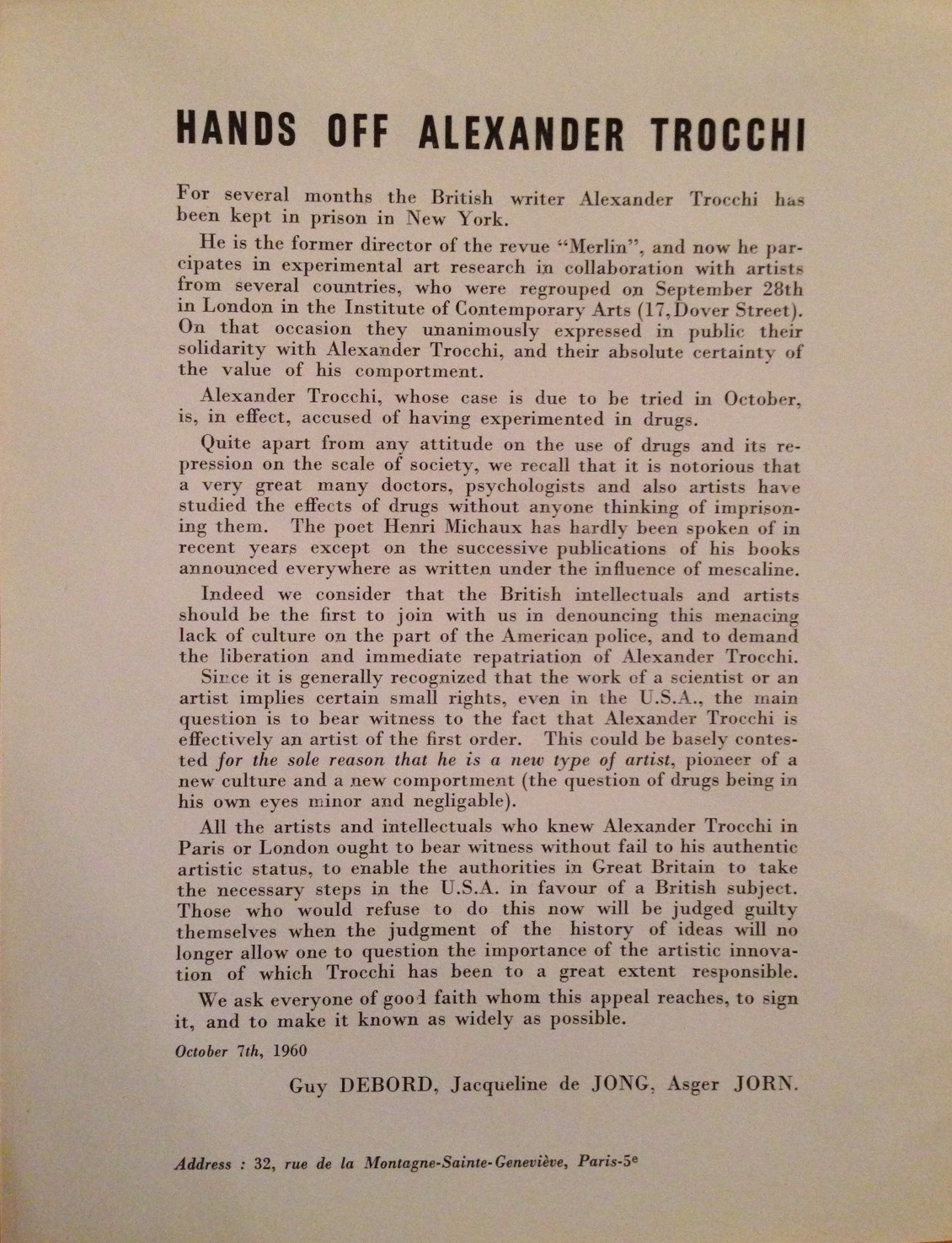
Hands Off Alexander Trocchi [1960]

Internationale Situationniste. Hands Off Alexander Trocchi. Paris: Internationale Situationniste, 7 October 1960. 1 p. leaflet (single-sided); black type on white paper.

Leaflet written in English which calls for the liberation of Alexander Trocchi, who had been arrested by the New York police and charged of drug possession. The SI calls for his liberation on the grounds that the British writer was simply using drugs as parts of the creative process. The call ends with a plea to “all the artists and intellectuals who knew Alexander Trocchi in Paris or London…to bear witness without fail to his authentic artistic status, to enable the authorities in Great Britain to take the necessary steps in the USA in favour of a British subject” The SI had issued a similar statement on 27 September 1960 (“Resolution of the Fourth Conference of the Situationist International Concerning the Imprisonment of Alexander Trocchi”, published in Internationale Situationniste 5)

Alexander Trocchi was a member of the SI until October 1964. His contributions include “Technique du coupe du monde” in Internationale Situationniste 8 (January 1963) and “Sigma: A Tactical Blueprint” in City Lights Journal 2 (1964). Trocchi was a key member of the British Avant-Garde; a good starting point on his life and works is the Wikipedia article (http://en.wikipedia.org/wiki/Alexander_Trocchi)

Found in Raspaud 111 and Gonzalvez 115. Rare in the trade, with no copies currently available. OCLC lists a single copy at the Getty, but we know that the BNF, the Centre Pompidou and Yale also have copies of their own.

The full text is available at http://www.notbored.org/hands-off.html

photo

Pour le Pouvoir des Conseils Ouvriers [1968]

Internationale Situationniste / Conseil pour le Maintien des Occupations (CMDO). Pour le Pouvoir des Conseils Ouvriers. Paris: CMDO, 22 May 1968. 1 p. leaflet (single-sided); black type on cream paper.

This leaflet, which was distributed at the Sorbonne during May 1968, calls for the transition of key economic activities to workers councils. Most likely authored by Debord, though signed by the Conseil pour le Maintien des Occupations (CMDO).

Founded on May 17, 1968 and dissolved on June 15 – less than a month later – the short-lived CMDO published a number of critical documents (many penned by Debord and other Situationists) during the May uprisings. Members included the Situationists and the Enrages, but also workers, students and other councilists. “Throughout its existence [the CMDO] was a successful experiment in direct democracy, guaraanteed by an equal participation of everyone in debates, decisions, and their execution. It was essentially an uninterrupted general assembly deliberating day and night. No faction or private meetings ever existed outside the common debate” (Cobra Antiquariat)

Found in Vienet 280-281, Raspaud 124 and Gonzalvez 134. While 150,000 copies were allegedly printed (according to Raspaud), only a few survive today in the trade and on OCLC.

photo

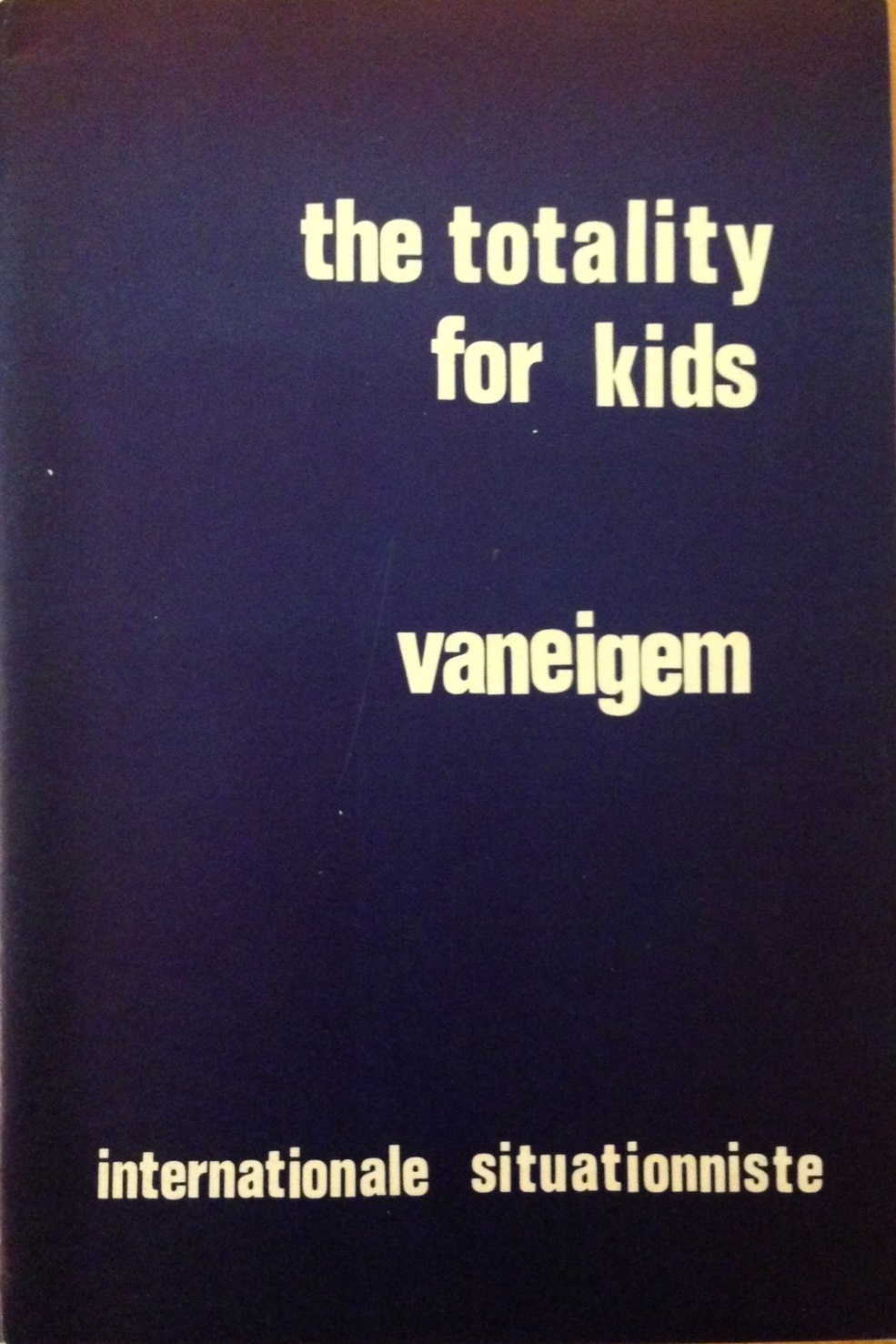
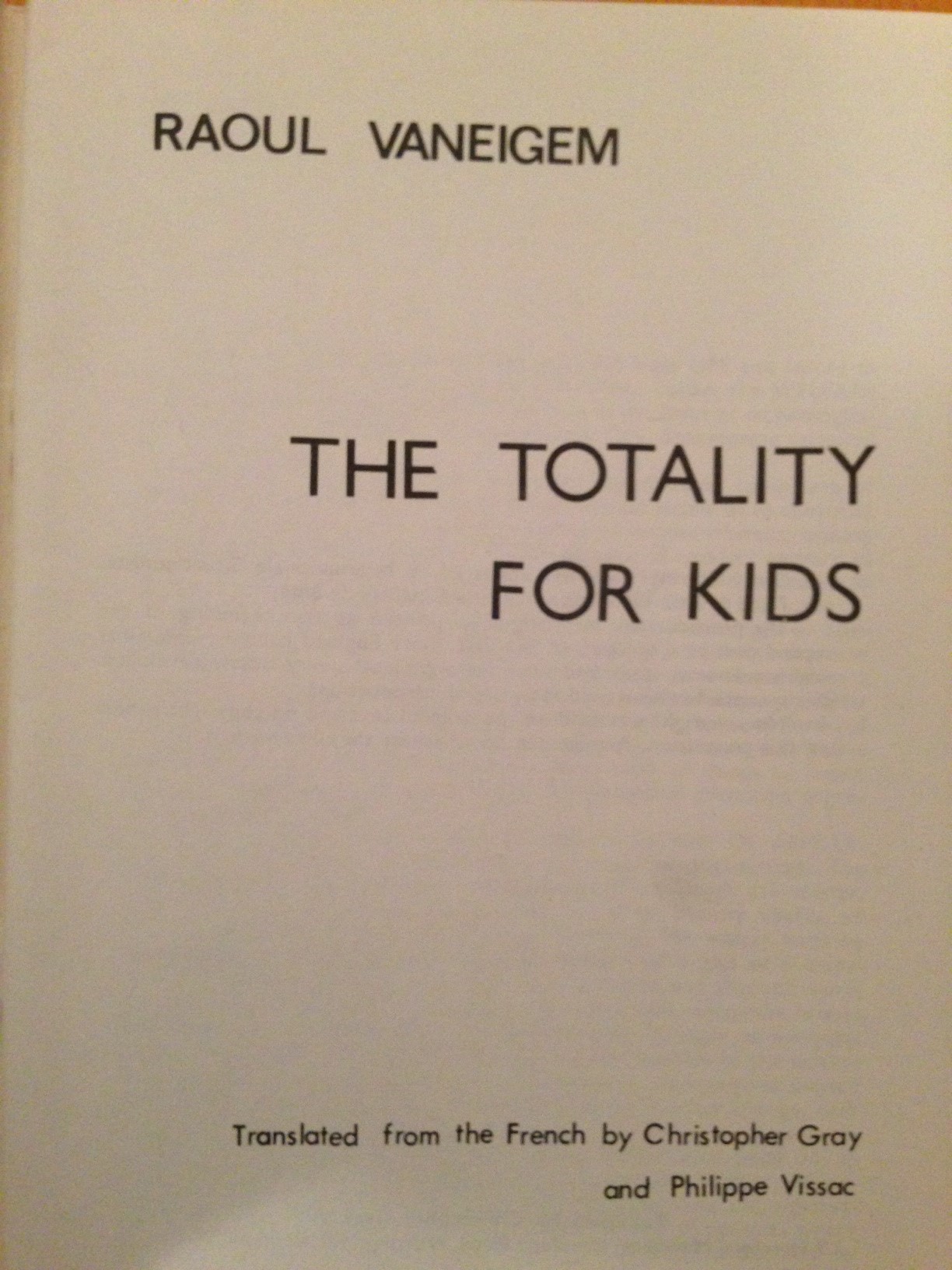
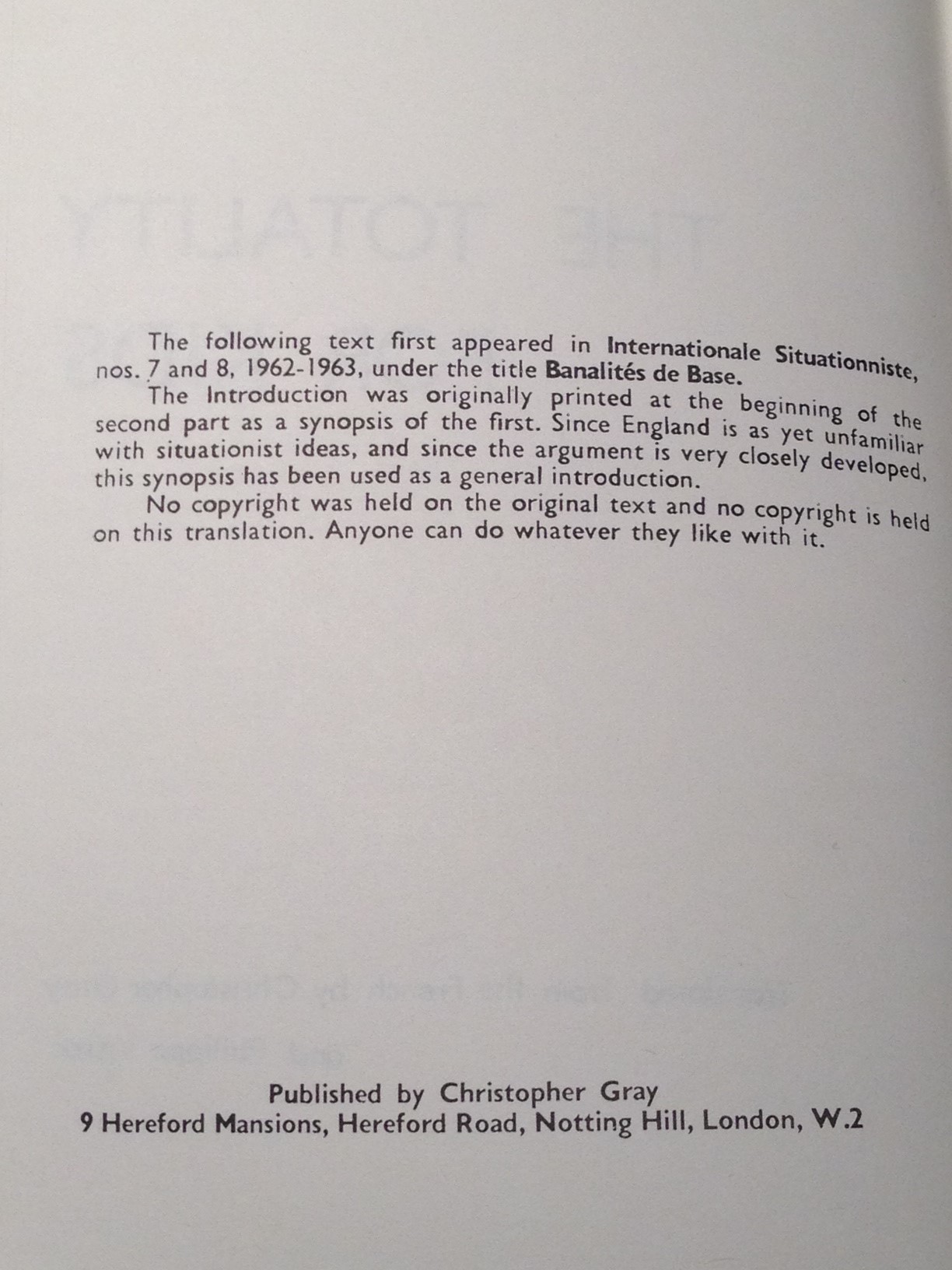
The Totality for Kids [1966]

Vaneigem, Raoul. The Totality for Kids. n.p. [London, United Kingdom]: n.p. [Christopher Gray], n.d. [1966]. n.p [32 p.].; 21  x 14.5 cm; plain blue wrappers with text in white

First English translation of Banalites de Base in English by Christopher Gray, briefly a member of the British section of the Internationale Situationniste (he was excluded in Dec. 1967) and the editor, with Charles Radcliffe, of the iconic review Heatwave.

The original French text was published in issues 7 (April 1962) and 8 (January 1963) of Internationale Situationniste.

Scarce in the trade, with a few copies in OCLC. However, this is one of the most reprinted text of the SI in the English language and is readily available at your local distro/anarchist bookstore

photo 3

photo 2

photo 1

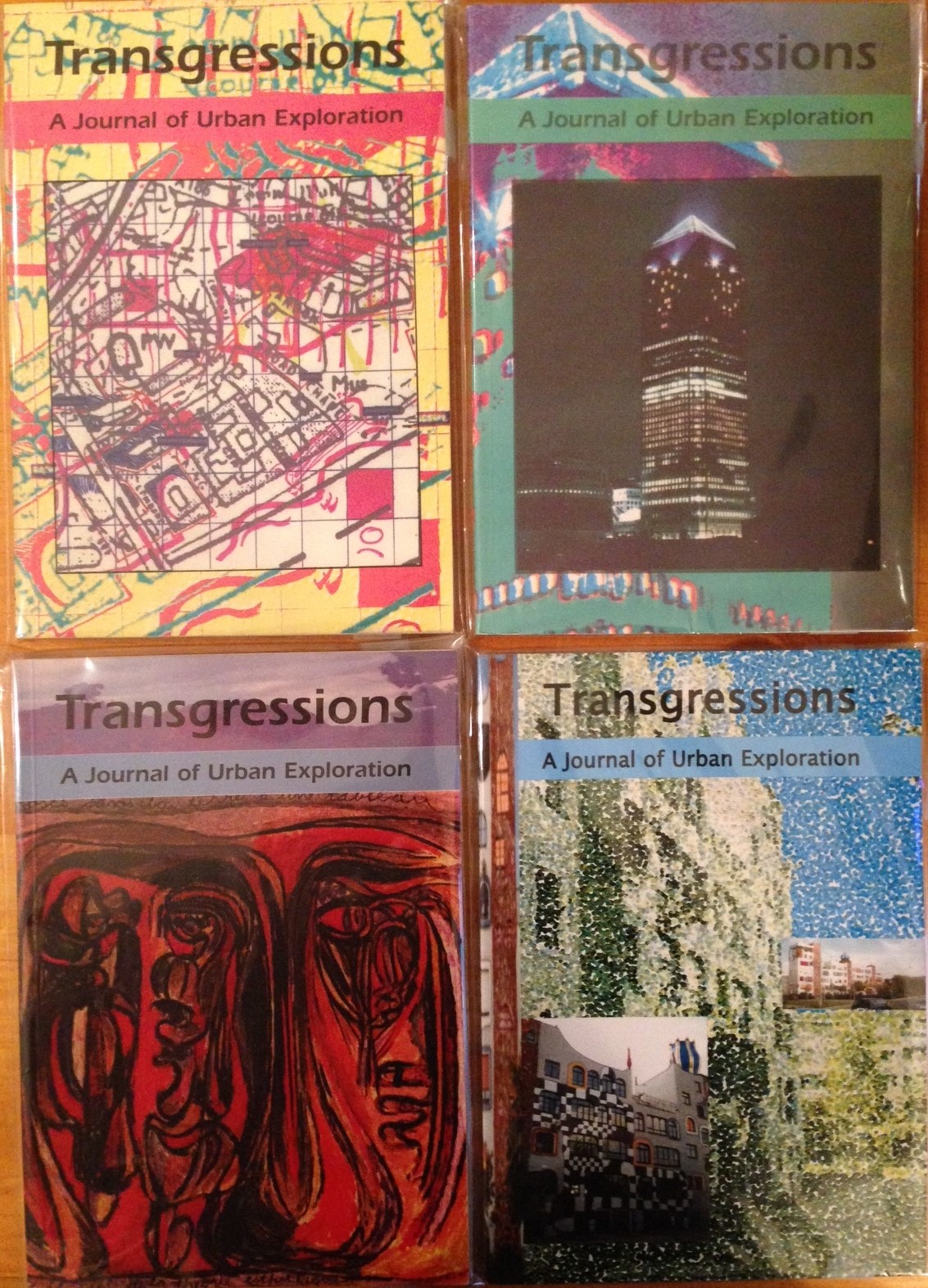
Transgressions: A Journal of Urban Exploration [1995-2001]

Bonnett, Alastair (Ed.) Transgressions: A Journal of Urban Exploration 1-5. London, UK: Salamander Press, 1995-2001. 96-132p..; ill.; 25 x 17.5 cm; ill. covers.

Transgressions: A Journal of Urban Exploration ran five issues (published in four volumes, 2/3 was a double issue) from 1995-2001. Founded by Alastair Bonnett, the publication saw itself as providing “an essential forum for the critical debate of the contemporary city”. In effect, Transgressions reflected an increased interest in – and re-discovery of – psychogeography in the United Kingdom and beyond; by means of illustration, the London Psychogeographical Association (LPA) and the Manchester Area Psychogeographic (MAP) were active around the same time. The review also diverged from Orthodox Situationist theory by introducing concepts like “Magico-Marxism” and discussing the work of the Italian “Situationauts”. The editorial board included, among others, Stewart Home, David Pindar, and Luther Blissett

Transgressions was also unique in bringing together a wide range of content, from academic articles by esteemed scholars to accounts of derives in various cities, interviews of pro-Situ figures (e.g., Tom Vague), translations of Situationist content (e.g., Jorn’s “Critique of Economic Policy”), debates, book/zine reviews, and more.

Rare in the trade, with no full set available (the editor himself, who was kind enough to send these to me, only has a single copy of Issue 1 left)

photo-8

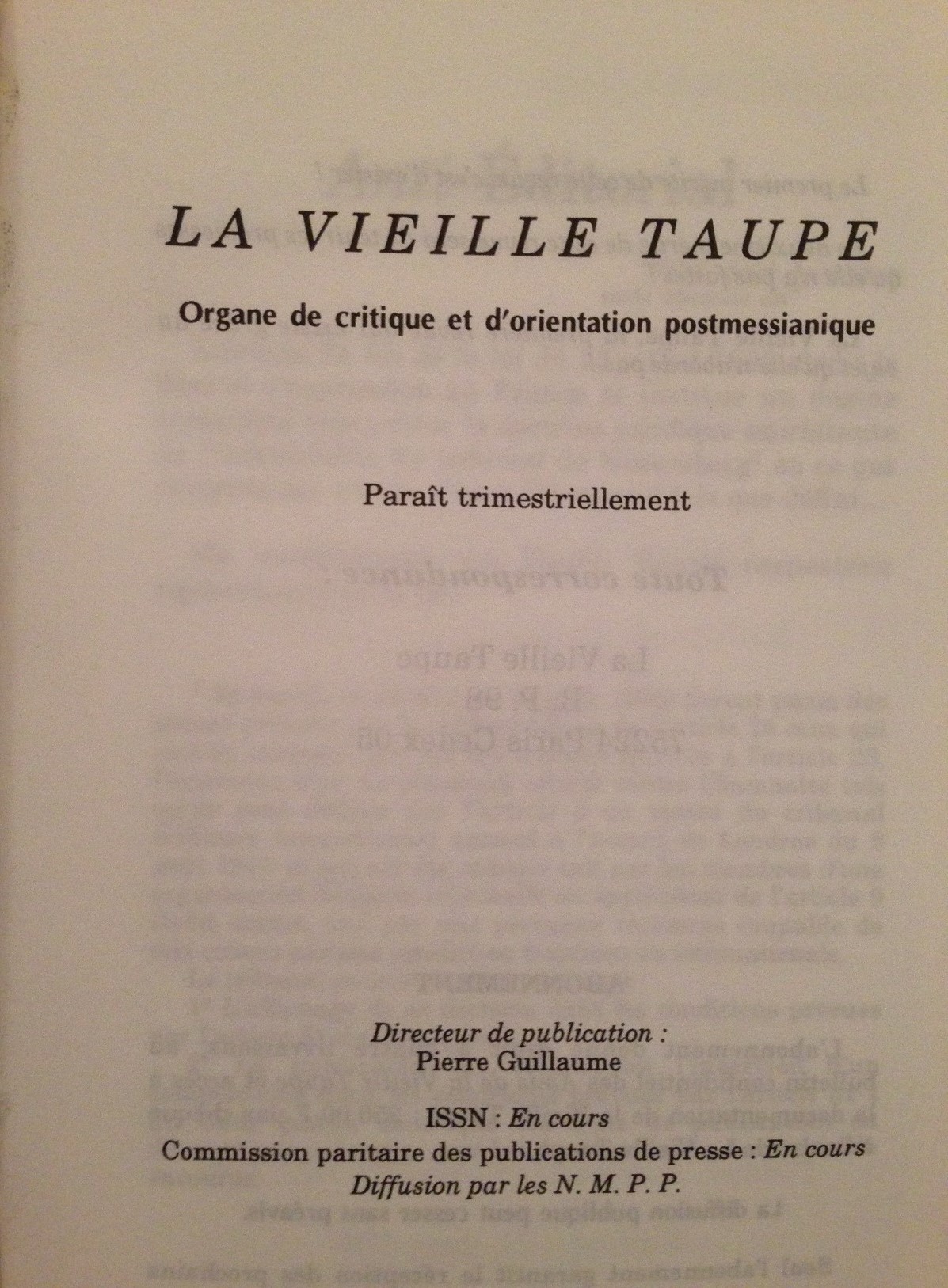
La Vieille Taupe no.1 [1995]

Guillaume, Pierre (Ed.). La Vieille Taupe: Organe de Critique et d’Orientation Postmessianique no.1. Paris: La Vieille Taupe, Spring 1985. 134p.; 22 x 14 cm; ill.; white and red cover with text in black.

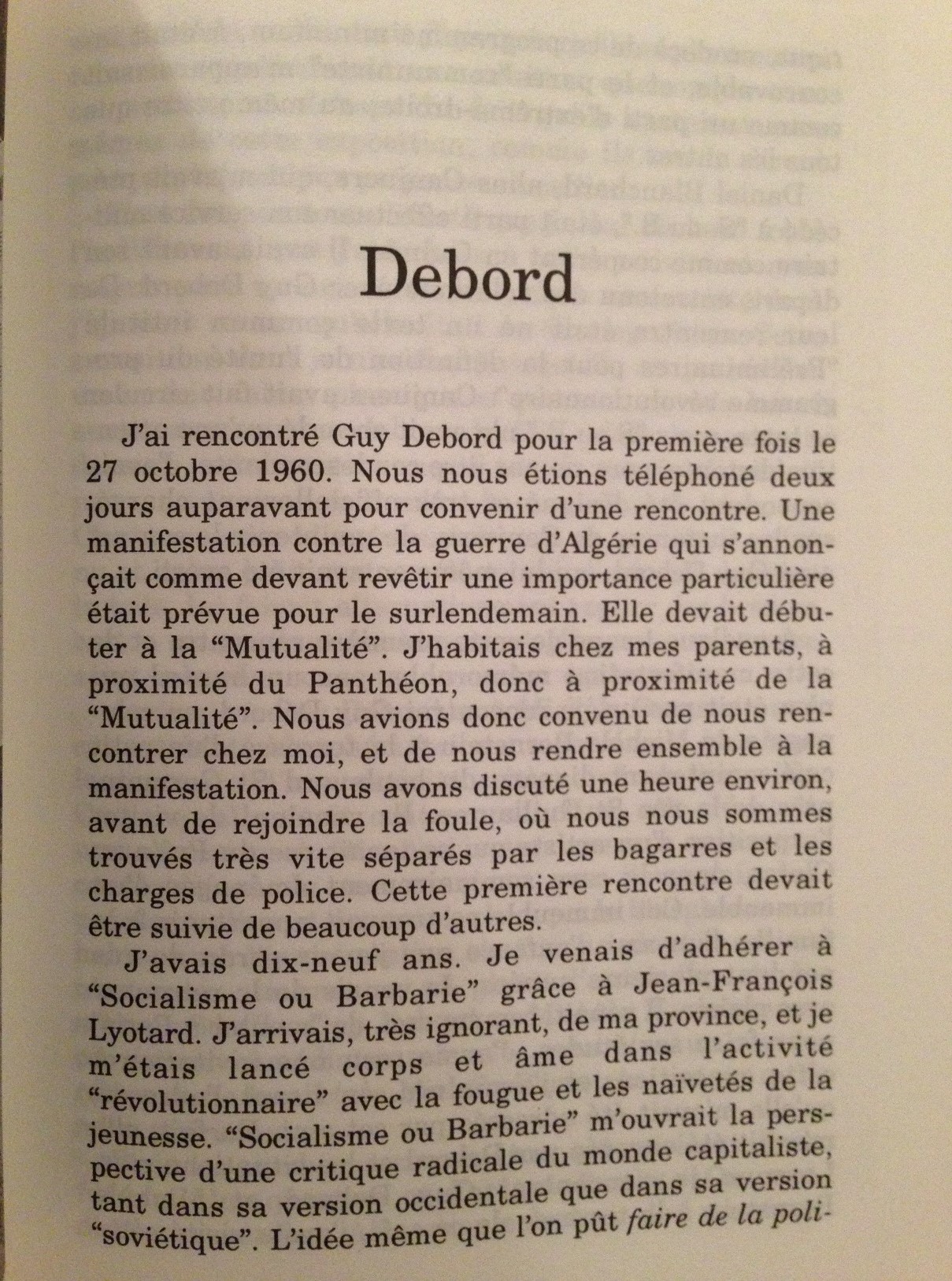
Debord’s recuperation by the extreme right wing is a fascinating topic, but has generated limited scholarship. We are only aware of a single piece, “Recuperation a tous les etages: Guy Debord et l’extrême-droite” in Archives et Documents Situationnistes 1, Paris, Denoël, n°1, automne 2001

Here we deal with an article published in La Vieille Taupe, a negationist (i.e., historical revisionist) publication which was born from a split from La Banquise, a pro-situ periodical whose editorial board did not share Pierre Guillaume’s views on the Holocaust. This first issue is of great interest because it features a 50-page, highly unusual article on Debord’s alleged support of – or, at the very least, lack of criticism towards –  historical revisionism (pp. 63-113).

Not Bored! offers a great summary of this piece: “[Pierre Guillaume] provides information on Debord’s resignation from SB [Socialisme & Barbarie, an ultra-left group] not available from other sources. However, his gloss on the information is highly particular, conditioned by his analysis of his own experience. It should be noted that any use Guillaume’s text is complicated by his revisionism (denial of the Holocaust). He turns his relationship to Debord to its service: he appropriates the “public enemy number one” persona and uses it to legitimate his politics, and spends much of the latter part of the article intimating that at least some of the old Situationists approve of this appropriation, as if to say that such approval makes Guillaume a legitimate heir to Debord”. A partial translation can be found at http://www.notbored.org/guillaume-comments.html

Laid in is a 4-page “Bulletin des Amis de la Vieille Taupe”, signed by Pierre Guillaume

Uncommon in the trade, with only 3 OCLC copies (BNF, Nanterre, Stanford)

[Should it not be sufficiently clear from previous blog entries, please note that my posts are of strict bibliographical / informative nature. In this particular case, it goes without saying that I do not in any way condone Pierre Guillaume’s historical views] photo 5

photo 4

photo 3photo 2

photo 1

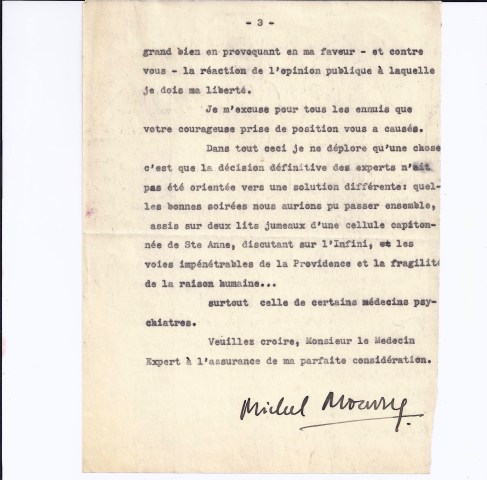
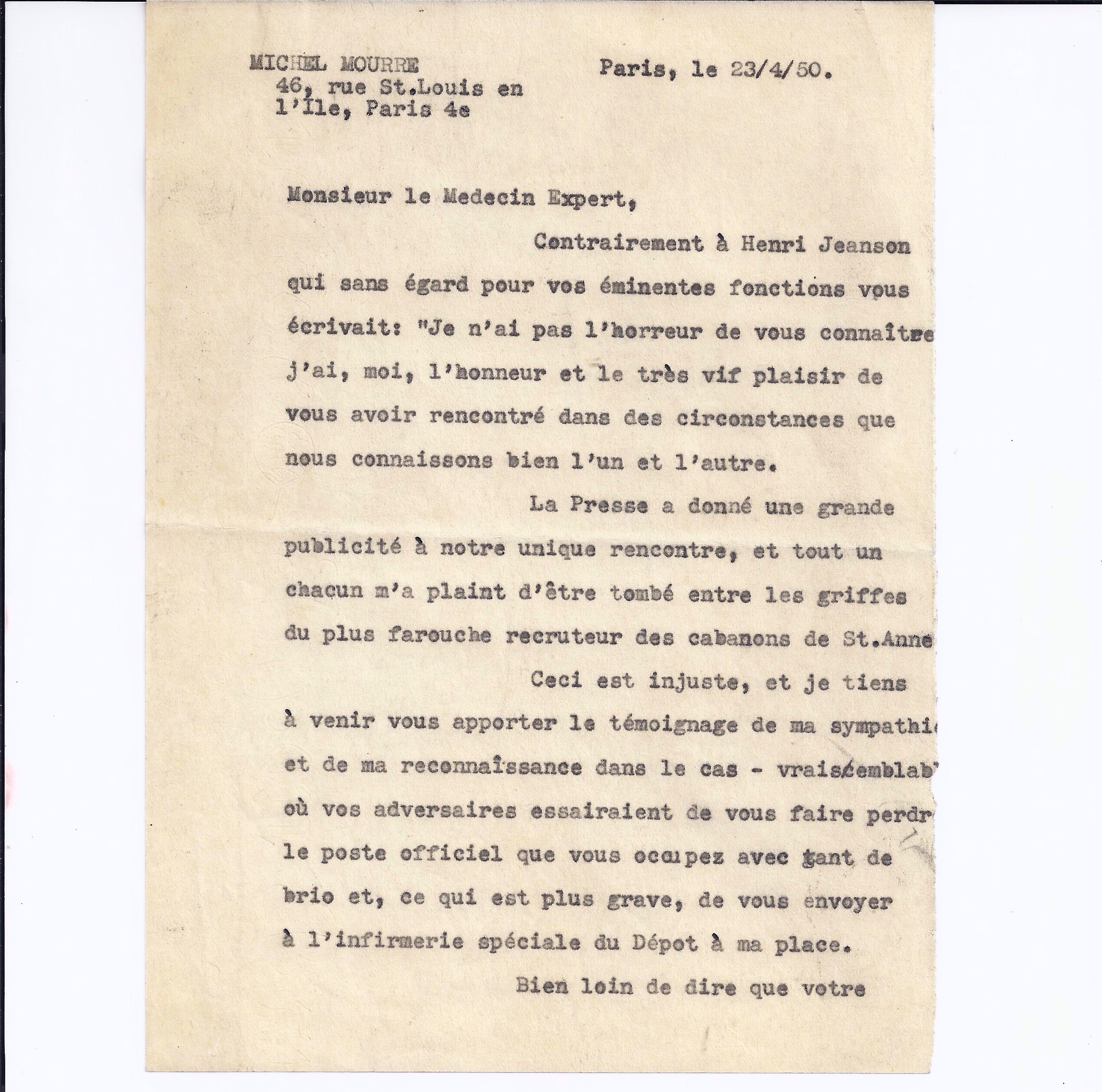
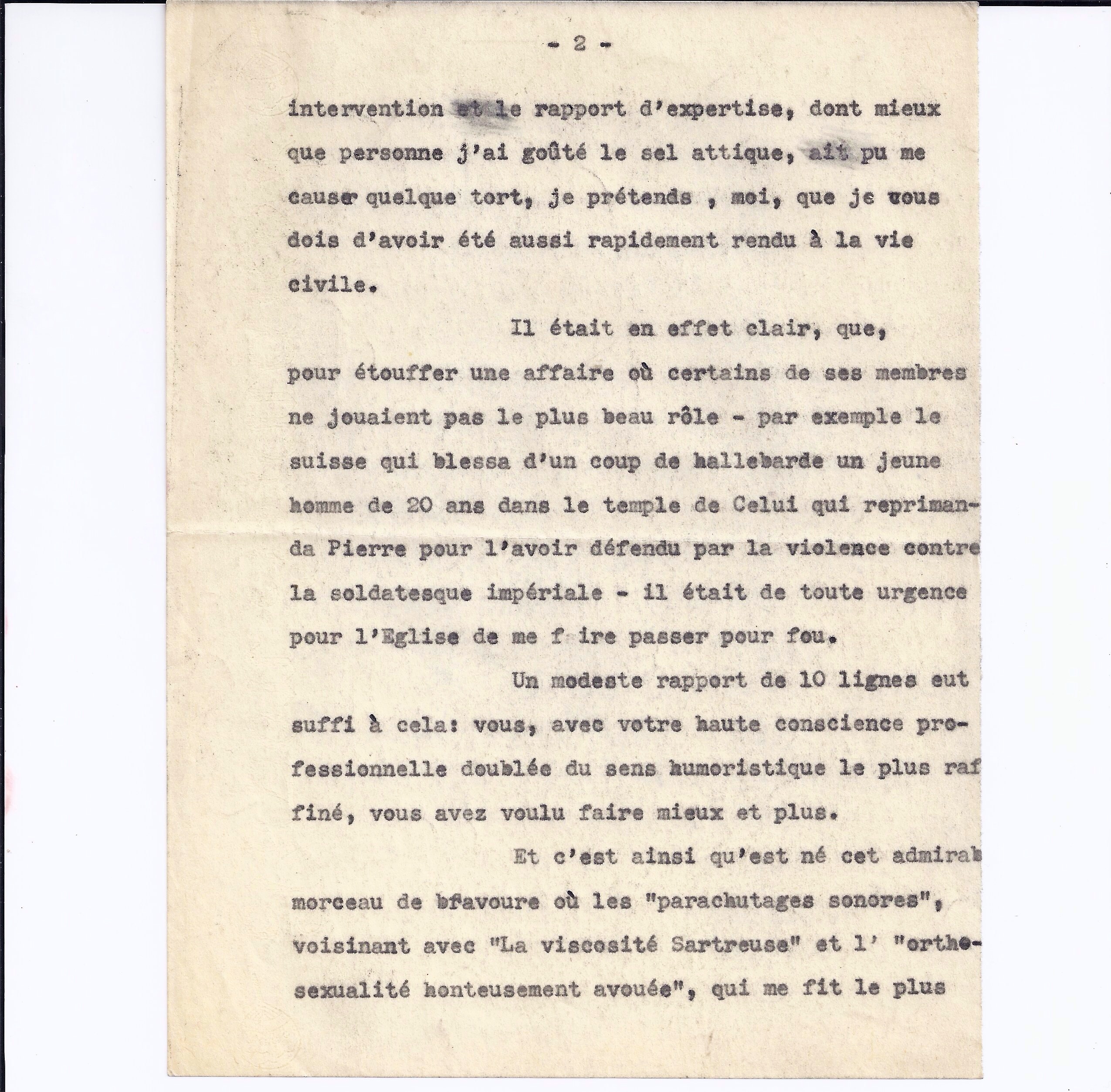
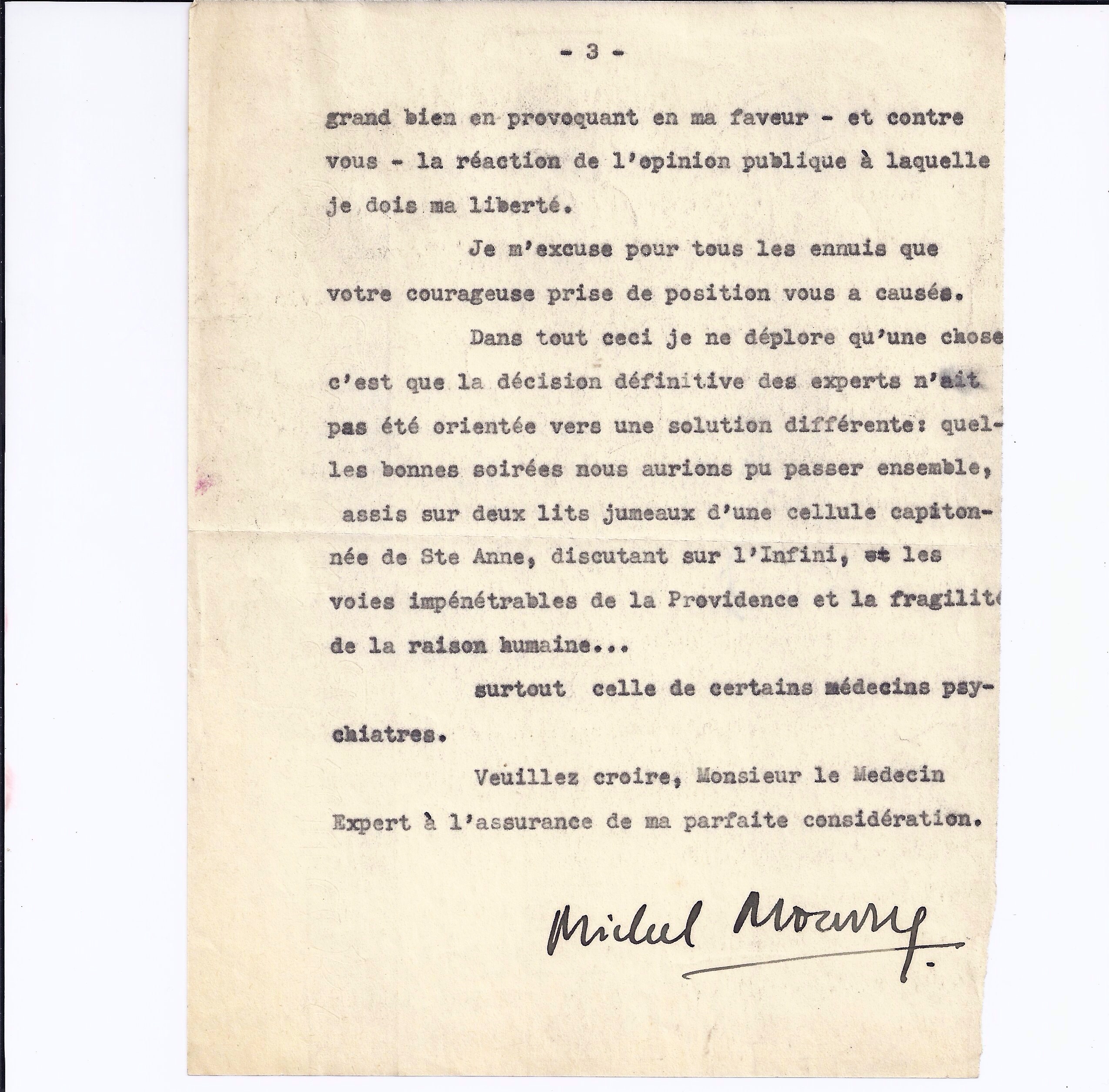
GUEST POST: Original letter from Michel Mourre, addressed to his psychiatrist

Letter addressed to “Monsieur le Medecin Expert”, signed by Michel Mourre, dated 23 April 1950. 3 p. [Paris, France] 1950; 21 x 15.5cm; carbon copy typescript signed in ink.

Here is a unique document from the pre-pre-history of the SI. Some Context: The founding action of the Internationale Lettriste (and the cause of its break from Isou’s Groupe Lettriste) was its disruption of Charlie Chaplin’s 1952 Paris press conference. Serge Berna was one of the signatories to the tract (’Finis les pieds plats’) distributed at that event.

Two years earlier, as a member of the Lettrists, Berna alongside Michel Mourre had co-authored another, more incendiary text. This text, denouncing religion, was delivered by Mourre (dressed in a Dominican monk’s habit, and with full clerical tonsure) from the pulpit of Notre-Dame Cathedral during the 1950 Easter Sunday mass. This so-called “Notre Dame affair” resulted in the arrest of Mourre, and his being declared insane by a court-appointed psychiatrist.

Mourre described the process in his book ‘In Spite of Blasphemy’. “At the Sante [prison] a psychiatrist and former specialist in psychiatric hospitals was preparing to assist justice with his soul-plumbing apparatus… He began by making me talk about Jean-Paul Sartre, then about Heidegger, then about Saint Thomas, and included an “imposition” on Leibnitz in his anxiety to find the flaw, the crack in my mind, the crack which he would eventually bring to light, broaden, deepen so as to produce a splendid 200-page report on it crowned with a certificate to prove me insane. The point was not so much to discover if I was mad or not, but to make me myself admit that I was…”

The uproar caused by the outlandish report produced by this psychiatrist, Robert Micoud, and it’s verdict of insanity created a second, greater scandal – and finally after 11 days in custody Mourre was released.

And so to this letter.

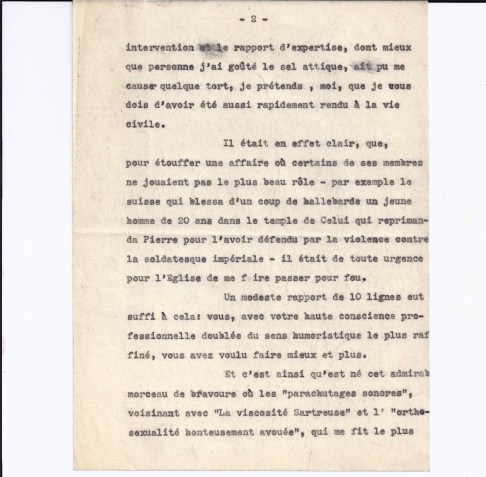
It was written by Mourre on 23 April 1950 – just 2 days after his release, and is addressed to “Monsieur le Medecin Expert”. On reading it soon becomes evident that this is the psychiatrist Robert Micoud. The letter is delightfully sarcastic, and since as far as we are aware it has never been seen in English translation – it is presented below:

“Mister Expert Doctor,

Unlike Henri Jeanson [1] who, without consideration for your eminent office, wrote to you: “I do not have the horror of knowing you”, I do have the honor and very great pleasure to have met you in the circumstances which we both know.

The Press has given great publicity to our single encounter, with all bemoaning that I had fallen into the clutches of the staunchest recruiting officer for the prison of St. Anne [2].


This is unfair, and I want to bring you the account of my sympathy and my gratitude in the case – where your opponents were likely trying to oust you from the position you hold with such brilliance and, even worse, send you to the Special Ward of the Jail in my place.


I more than anyone relish a fine wit, so, far from saying that your intervention and expert assessment could have caused me harm, I myself proclaim that I owe it to you that I have been so quickly returned to civilian life.


It was clear that, in order to stifle an affair where some of its members did not play the best role – for example the Swiss [Guard] who injured a young man of 20 with a blow of his halberd, in the Temple of He who rebuked Peter for having used violence against the imperial soldiery – it was of the utmost urgency for the Church to pass me off as insane.


A modest 10-line report would have sufficed for this: you, with your great professional conscientiousness and your highly-tuned sense of humour, you have wished to do more and better.


And thus was born this admirable piece of bravura where “sonorous parachute-drops” along with “The Sartrean viscosity” and “shamefully admitted ortho-sexuality” [3] did me so much good by arousing in my favour – and against yours – the reaction of the public to whom I owe my freedom.


I apologise for all the trouble that your courageous stance has caused you.


In all of this, I regret but one thing, that the final decision of the experts was not directed towards a different remedy: what fine evenings we could have spent together, sitting on twin beds in a stuffed cell in St. Anne, discussing the Infinite, the inscrutable ways of Providence and the fragility of human reason … particularly that of some psychiatrists.


Yours Faithfully, Mr. Expert Doctor

with the assurance of my complete esteem,


Michel Mourre”


[1] A French writer and journalist, who was a “satrap” in the College of Pataphysics.


[2] Parisian asylum located in the 14eme arrondissement.


[3] Greil Marcus provides more quotes from this report on p.283 of “Lipstick Traces” (Harvard, 1989). Amongst them: “ideational fugacity”, “nose-diving neologisms

image(1)(1)

image(2)(1)

image(3)(1)